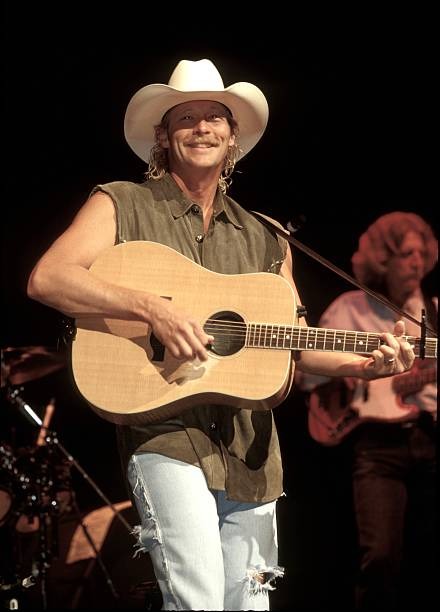
“Where Were You (When the World Stopped Turning)” – A Thoughtful Song Analysis
Introduction
There are moments in history when time seems to pause—when ordinary routines are suddenly interrupted by events that reshape collective memory. For many Americans, September 11, 2001, was one of those moments. In the weeks that followed, music struggled to find the right tone: how do you respond without oversimplifying grief?
It was during this uncertain period that Alan Jackson quietly introduced “Where Were You (When the World Stopped Turning),” a song that would become one of the most significant entries in his catalog. Rather than offering answers, the song posed a simple question—one that resonated widely.
Background: The Artist Behind the Song
Before analyzing the song itself, it helps to understand the artist who wrote it. Alan Jackson, born in 1958 in Newnan, Georgia, built his career on traditional country values—clear storytelling, minimal production, and emotional honesty.
By the early 2000s, Jackson was already an established figure in country music, with multiple No. 1 hits and platinum-selling albums. Known for songs like “Chattahoochee” and “Don’t Rock the Jukebox,” his style leaned toward everyday experiences rather than dramatic narratives.
This context is important. Jackson was not known for political commentary or overtly topical songs, which made the release of “Where Were You” particularly notable.
The Creation of the Song
A Personal Response, Not a Planned Release
Alan Jackson wrote “Where Were You (When the World Stopped Turning)” shortly after the events of September 11. According to interviews and reports from sources like Billboard and the Country Music Hall of Fame, he initially hesitated to release it, unsure whether it was appropriate.
The song debuted live at the 2001 CMA Awards, just weeks after it was written. That performance was understated—no elaborate staging, no dramatic delivery—yet it left a strong impression.
Immediate Public Reception
Following the performance, the song quickly gained traction. It was later released as a single and topped Billboard’s Hot Country Songs chart. It also crossed over to the Billboard Hot 100, reflecting its broad appeal beyond country audiences.
Lyrical Analysis: Simplicity as Strength
A Question Instead of a Statement
The central line—“Where were you when the world stopped turning?”—is both direct and open-ended. Rather than offering a fixed interpretation, the song invites listeners to reflect on their own experiences.
This approach avoids assigning blame or pushing a specific viewpoint. Instead, it creates space for personal memory, which likely contributed to its widespread resonance.
Everyday Details
The verses describe ordinary reactions:
- Watching events unfold on television
- Calling loved ones
- Feeling confusion or disbelief
These details ground the song in realism. There are no exaggerated metaphors or poetic abstractions—just observations that many listeners could recognize from their own lives.
Avoiding Simplification
One notable aspect of the song is its restraint. It does not attempt to explain the event or provide conclusions. In fact, one line explicitly acknowledges uncertainty: “I don’t know the difference in Iraq and Iran.”
This line, often discussed in critical reviews, reflects a broader theme—the limits of understanding during moments of crisis.
Musical Composition and Style
Traditional Arrangement
Musically, the song aligns with Alan Jackson’s established style. It features:
- Acoustic guitar as the primary instrument
- Minimal production layers
- A steady, unembellished tempo
This simplicity allows the lyrics to remain the focus.
Vocal Delivery
Jackson’s vocal performance is calm and measured. There is no attempt to heighten emotion through vocal theatrics. Instead, the delivery mirrors the reflective tone of the lyrics.
From a production standpoint, this choice reinforces the authenticity often associated with Jackson’s work.
Achievements and Recognition
“Where Were You (When the World Stopped Turning)” received significant recognition across the industry:
- Won Song of the Year at the CMA Awards
- Earned a Grammy Award for Best Country Song
- Reached No. 1 on Billboard’s Hot Country Songs chart
- Achieved strong crossover performance on the Billboard Hot 100
According to Billboard and RIAA data, the song remains one of the most impactful releases of Jackson’s career, both commercially and culturally.
Cultural Impact and Legacy
A Song That Captured a Moment
Unlike many topical songs that fade over time, “Where Were You” continues to be referenced in discussions about music’s role during national crises.
It is often included in retrospectives about post-9/11 cultural responses, alongside works from other genres. What sets it apart is its restraint—choosing reflection over reaction.
Influence on Country Music
The song also reinforced Alan Jackson’s position as a leading voice in traditional country music. At a time when the genre was evolving, this track demonstrated that simplicity and sincerity could still resonate widely.
Some critics have noted that the song helped set a standard for how country artists approach sensitive topics—favoring personal perspective over broad statements.
Alan Jackson’s Artistic Identity
To fully appreciate the song, it’s worth revisiting Jackson’s broader artistic approach:
- Focus on storytelling rather than spectacle
- Consistent use of traditional country instrumentation
- Themes centered on everyday life and shared experiences
“Where Were You” fits naturally within this framework, even though its subject matter is more specific than his usual themes.
Conclusion
“Where Were You (When the World Stopped Turning)” stands as a notable example of how music can respond to complex events without oversimplifying them. Alan Jackson’s approach—grounded, reflective, and restrained—allowed the song to connect with a wide audience while maintaining credibility.
More than two decades later, the song remains relevant not because it provides answers, but because it captures a moment of collective uncertainty in a way that feels genuine.
In the context of Alan Jackson’s career, it represents both a departure in subject matter and a continuation of his core strengths as a songwriter.
SEO Title
Where Were You Song Analysis: Meaning, Impact, and Alan Jackson’s Approach
Meta Description
Explore a detailed analysis of “Where Were You (When the World Stopped Turning)” by Alan Jackson, including its meaning, lyrics, impact, and cultural significance.
Slug URL
where-were-you-song-analysis
Alternative Headlines
- Alan Jackson’s “Where Were You” Explained: Lyrics, Meaning, and Legacy
- A Closer Look at “Where Were You” and Its Cultural Impact
- Why “Where Were You” Remains One of Alan Jackson’s Most Important Songs
Sources
- Billboard (chart performance and analysis)
- Recording Industry Association of America (RIAA) certifications
- Country Music Hall of Fame archives
- Rolling Stone coverage of post-9/11 music
- CMA Awards official records
- Grammy Awards official website