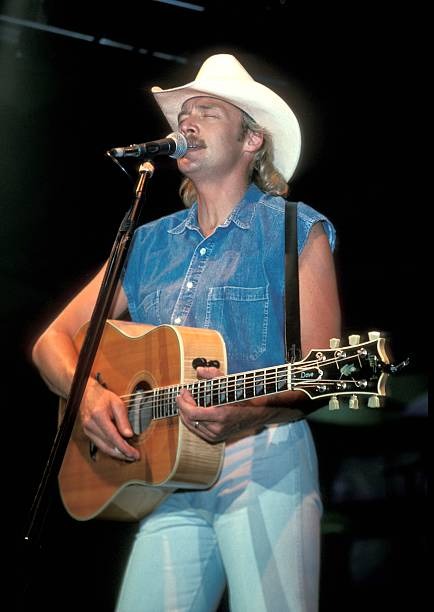
Introduction
Put on an old Alan Jackson song—maybe “Chattahoochee” or “Don’t Rock the Jukebox”—and something feels instantly different. It’s not just nostalgia. There’s a certain warmth, a kind of simplicity, and a storytelling style that feels almost untouched by time.
So what exactly makes older Alan Jackson songs stand apart? Why do they feel more personal, more grounded, and sometimes even more “real” than much of today’s music?
The answer lies in a mix of musical roots, storytelling approach, production choices, and the cultural moment in which those songs were created.
Who Is Alan Jackson? A Brief Background
Alan Jackson was born in 1958 in Newnan, Georgia, and grew up listening to gospel music before discovering traditional country artists like George Jones and Hank Williams. He moved to Nashville in the 1980s and gradually built a career that would define him as one of the leading voices of country music’s “neo-traditionalist” movement.
His early success came with albums like Here in the Real World (1990) and Don’t Rock the Jukebox (1991), which helped reintroduce traditional country sounds during a time of stylistic change. Over the years, Jackson has sold tens of millions of records, earned multiple Grammy Awards, and secured his place in the Country Music Hall of Fame.
His long career and consistent artistic direction make him a unique figure in country music history.
A Return to Traditional Country Sound
The Role of Neo-Traditionalism
One of the biggest reasons old Alan Jackson songs feel different is their strong connection to traditional country music. In the late 1980s and early 1990s, Jackson emerged as part of a group of artists who pushed back against the increasingly polished, pop-influenced sound of country music.
Instead, he embraced elements like:
- Steel guitar and fiddle
- Straightforward song structures
- Honky-tonk rhythms
- Acoustic-driven arrangements
Songs like “Here in the Real World” and “Chattahoochee” carry a sonic identity that feels rooted in earlier decades of country music. That connection gives them a timeless quality that still resonates today.
Less Production, More Presence
Compared to many modern recordings, older Alan Jackson songs often feature cleaner, less layered production. Instruments are more clearly separated, and the vocals are not heavily processed.
This simplicity creates a sense of closeness—as if the listener is sitting in the same room as the band. It’s not necessarily better or worse than modern production, but it does feel more immediate and human.
Storytelling That Feels Grounded
Everyday Life as the Centerpiece
Another defining characteristic of Alan Jackson’s early work is his focus on everyday stories. His songs don’t rely on elaborate narratives or abstract themes. Instead, they focus on moments people recognize:
- Growing up (“Chattahoochee”)
- Working-class life (“Here in the Real World”)
- Love and long-term relationships (“Remember When”)
These themes are not unique on their own, but Jackson’s ability to present them without exaggeration makes them stand out.
Specific Yet Universal
Old Alan Jackson songs often include small, specific details—places, actions, memories—that make them feel authentic. At the same time, they remain broad enough for listeners to relate to.
That balance is difficult to achieve. It’s one reason why his songs continue to feel personal even decades after their release.
A Voice That Doesn’t Overreach
Alan Jackson’s vocal style also contributes to the distinct feel of his earlier songs. His voice is steady, controlled, and rarely dramatic.
He doesn’t rely on vocal acrobatics or heavy emotional emphasis. Instead, he delivers lyrics in a way that allows the story to come through naturally.
This approach gives listeners space to interpret the emotion themselves. Rather than being told how to feel, they are invited to connect on their own terms.
The Cultural Context of the 1990s
A Different Musical Era
Old Alan Jackson songs were created during a period when country music was undergoing a shift. The early 1990s saw a revival of traditional sounds alongside the rise of mainstream country popularity.
Artists like Jackson helped define that era by blending authenticity with accessibility. His music appealed to both longtime country fans and newer audiences, creating a broad and lasting impact.
Fewer Commercial Pressures
While commercial success was always important, the industry environment of that time allowed for more artistic consistency. Albums were often built around a cohesive sound rather than individual hit singles.
This context helped artists like Alan Jackson maintain a clear identity, which is reflected in the consistency of his early catalog.
Notable Achievements and Career Highlights
Alan Jackson’s career achievements reinforce the lasting impact of his music:
- Over 75 million records sold worldwide
- More than 50 Top 10 hits on Billboard country charts
- Multiple CMA and ACM Awards
- Grammy Awards, including recognition for “Where Were You (When the World Stopped Turning)”
These milestones reflect not only commercial success but also long-term relevance. His songs have remained part of country music culture for decades.
Musical Style and Lasting Influence
A Signature Style
Alan Jackson’s style is defined by:
- Traditional country instrumentation
- Clear, narrative-driven lyrics
- Moderate tempos and uncluttered arrangements
This combination creates a listening experience that feels consistent and authentic.
Influence on Future Artists
Many modern country artists cite Alan Jackson as an influence, particularly for his commitment to storytelling and traditional sound. His work has helped shape expectations for what “authentic” country music can be.
Even as the genre evolves, his early songs continue to serve as a reference point for both artists and listeners.
Why Old Alan Jackson Songs Still Stand Out
So why do old Alan Jackson songs feel different?
It’s not just nostalgia. It’s a combination of:
- Traditional musical foundations
- Honest, relatable storytelling
- Minimalist production
- A steady, understated vocal style
- A cultural moment that valued authenticity
Together, these elements create music that feels grounded and enduring.
Conclusion
Old Alan Jackson songs carry a distinct quality that goes beyond time and trend. They reflect a period in country music where simplicity, storytelling, and authenticity were at the forefront.
While modern country music continues to evolve, Jackson’s early work remains a reminder of how powerful straightforward songwriting and honest delivery can be.
That difference is not just something you hear—it’s something you feel, often from the very first note.
SEO Title
Why Old Alan Jackson Songs Feel Different: A Look at His Timeless Sound
Meta Description
Explore why old Alan Jackson songs feel different. Discover his traditional style, storytelling, and the authenticity behind his timeless country music.
Slug URL
why-old-alan-jackson-songs-feel-different
Alternative Headlines
- What Makes Classic Alan Jackson Songs So Unique
- The Real Difference Behind Alan Jackson’s Early Music
- Why Alan Jackson’s Old Songs Still Sound Timeless
Sources
- Billboard
- Rolling Stone
- Recording Industry Association of America (RIAA)
- Country Music Hall of Fame
- Alan Jackson Official Website