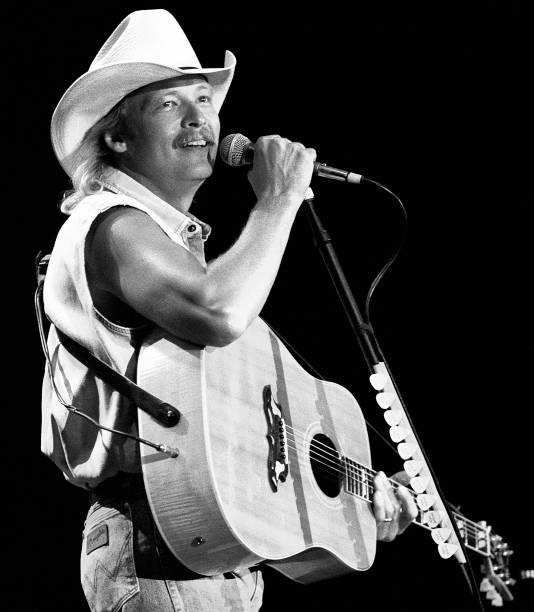
Why Alan Jackson’s Style Might Not Work in Today’s Industry
Introduction
Imagine turning on today’s country radio and hearing a stripped-down track—no heavy production, no crossover pop hooks, just a steel guitar and a voice telling a simple, honest story. It would likely stand out immediately. That sound, once central to mainstream country music, is closely associated with Alan Jackson.
But in an industry shaped by streaming algorithms, genre blending, and constant content output, would that same style still thrive today? While Jackson’s music remains deeply respected, there are clear reasons why his approach might face challenges in the modern landscape.
A Brief Look at Alan Jackson’s Career and Legacy
Before exploring the present, it’s important to understand the foundation. Alan Jackson rose to prominence in the early 1990s during a period often referred to as country music’s “neo-traditionalist” era. His breakthrough album Don’t Rock the Jukebox (1991) and later releases like A Lot About Livin’ (And a Little ’bout Love) (1992) established him as a defining voice of the genre.
Over the decades, Jackson has sold millions of records, earned multiple awards, and secured his place in the Country Music Hall of Fame. According to RIAA certifications, his catalog includes numerous multi-platinum albums. His songs—such as “Chattahoochee” and “Remember When”—are often cited by Billboard as enduring hits.
His influence is undeniable, but his style is rooted in a different era of industry expectations.
The Core of His Style: Simplicity and Tradition
Storytelling Over Production
At the heart of Alan Jackson’s music is storytelling. His lyrics tend to focus on everyday life, relationships, and small-town experiences. Unlike many modern productions, his songs rely less on layered instrumentation or digital enhancements.
This simplicity once defined authenticity in country music. Today, however, production often plays a major role in capturing attention—especially in the first few seconds of a track, which is critical in streaming environments.
Traditional Sound in a Genre That Keeps Expanding
Jackson’s sound draws heavily from classic country influences—fiddle, steel guitar, and steady rhythms. While these elements remain respected, modern country has increasingly blended with pop, rock, and even hip-hop.
Artists today often experiment with cross-genre sounds to reach broader audiences. In contrast, Jackson’s consistency—once a strength—might now be seen as limiting in a market that rewards stylistic flexibility.
How the Industry Has Changed
The Rise of Streaming and Algorithms
The shift from physical album sales to streaming platforms has fundamentally changed how music is consumed. Songs are often evaluated based on immediate engagement metrics—skips, playlist additions, and replay rates.
A slow-building, story-driven track—like many of Jackson’s—may not perform as strongly in this environment compared to high-energy, instantly engaging songs.
Visual Identity and Social Media Presence
Today’s artists are not just musicians—they are content creators. Platforms like TikTok and Instagram play a significant role in shaping an artist’s visibility.
Alan Jackson built his career in an era where music and radio airplay were central. His relatively low-key public persona contrasts with the constant visibility expected from modern artists.
Faster Release Cycles
Modern artists often release music more frequently to maintain relevance. Jackson’s approach, focused on carefully crafted albums released over longer periods, may not align with this pace.
Why His Approach Still Matters
Authenticity as a Long-Term Asset
While trends shift quickly, authenticity continues to resonate over time. Jackson’s music has shown strong longevity, with many songs remaining relevant decades after release.
This suggests that while his style may not dominate current charts, it still holds cultural and artistic value.
Influence on Modern Artists
Even in today’s evolving landscape, many artists cite Alan Jackson as an influence. His emphasis on songwriting and emotional honesty continues to shape how country music is understood at its core.
A Different Kind of Success
Success in today’s industry is often measured by streaming numbers and viral moments. Jackson’s career highlights a different model—one built on consistency, credibility, and long-term audience connection.
Could His Style Adapt Today?
It’s not impossible for a traditional artist to succeed now—but adaptation would likely be necessary.
A modern version of Alan Jackson might:
- Incorporate subtle production updates without losing core identity
- Engage more actively with digital platforms
- Balance traditional songwriting with contemporary release strategies
Some artists today attempt this balance, blending classic influences with modern expectations. However, it requires careful positioning to avoid losing authenticity.
Conclusion
Alan Jackson’s style represents a powerful chapter in country music history—one defined by storytelling, tradition, and emotional clarity. In today’s industry, shaped by speed, visibility, and evolving tastes, that same approach might face structural challenges.
Yet, that doesn’t diminish its value. If anything, it highlights a broader truth: music that prioritizes substance over trend may not always dominate the moment, but it often lasts far beyond it.
SEO Title
Why Alan Jackson’s Classic Style Might Struggle in Today’s Music Industry
Meta Description
Explore why Alan Jackson’s traditional country style may face challenges in today’s fast-paced, streaming-driven music industry—and why it still matters.
Slug URL
alan-jackson-style-modern-music-industry
Alternative Headlines
- Can Traditional Country Music Still Compete Today? A Look at Alan Jackson
- Why Alan Jackson’s Sound Feels Different in Today’s Industry
- Classic vs Modern Country: Would Alan Jackson Break Through Today?
Sources
- Billboard
- Rolling Stone
- Recording Industry Association of America (RIAA)
- Country Music Hall of Fame
- Official Alan Jackson Website