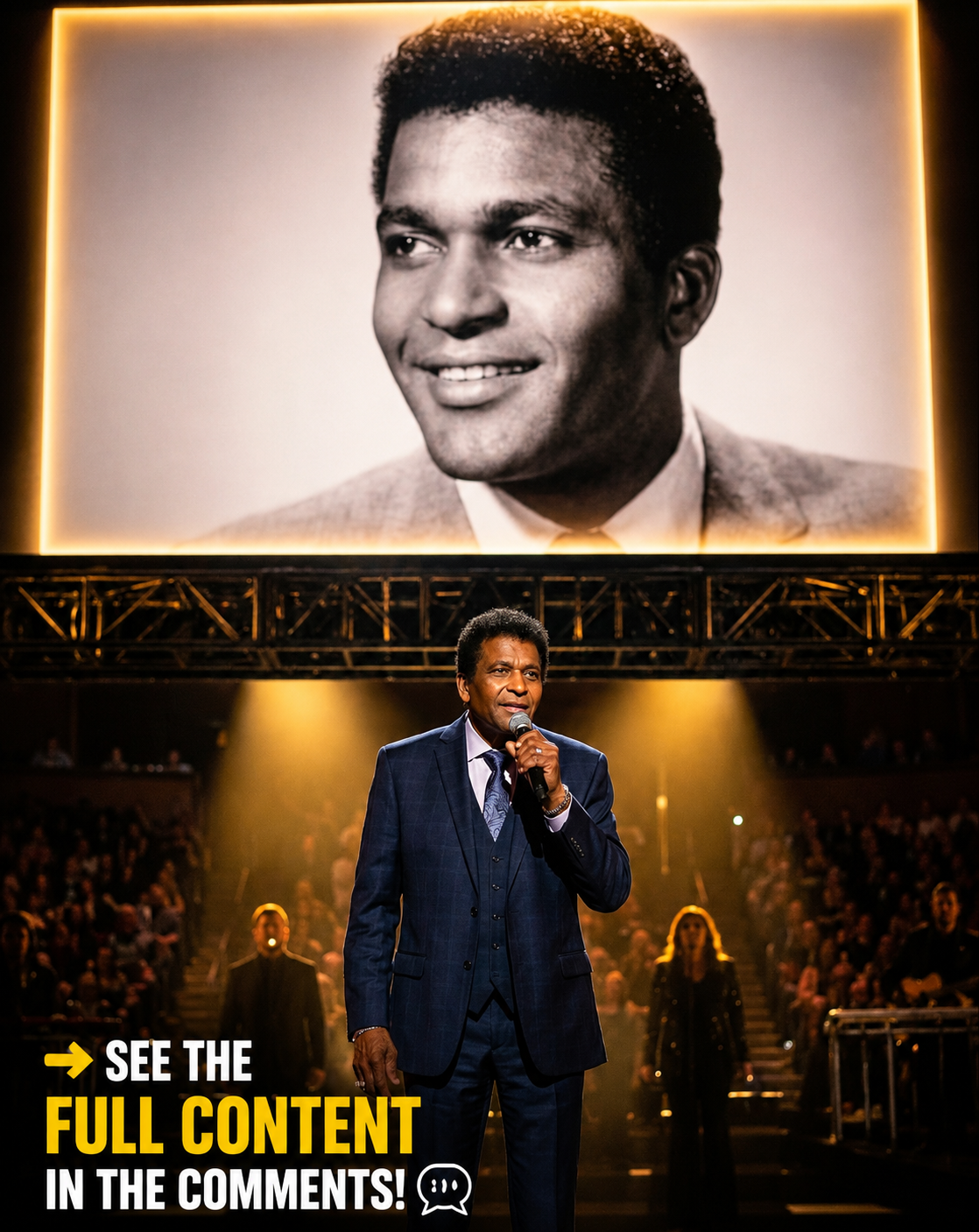
At 86, Charley Pride Sang One Last Time — And Country Music Didn’t Realize It Was Saying Goodbye
Introduction
Some performances become unforgettable because of their scale. Others remain in memory because of their honesty. When Charley Pride stepped onto the stage at the Country Music Association Awards on November 11, 2020, it did not feel like a farewell concert. There were no dramatic speeches, no emotional declarations, and no carefully orchestrated goodbye. Instead, there was simply a legendary voice, a familiar song, and a room filled with gratitude.
At 86 years old, Charley Pride stood before the country music world one more time to receive a lifetime achievement honor. The applause that welcomed him carried decades of admiration behind it. Fans and fellow artists were not just celebrating a successful singer. They were honoring a man whose career transformed country music through talent, dignity, and perseverance.
No one in the room could have known that only thirty-one days later, country music would lose one of its most beloved voices forever.
A Career That Changed Country Music Forever
From Mississippi Fields to Country Music History
The story of Charley Pride has always represented something larger than fame alone. Born in Mississippi as the son of sharecroppers, Pride grew up far from the bright lights of Nashville. His path into country music was never guaranteed, and for many years the industry itself seemed uncertain about making room for him.
Yet Pride continued moving forward with quiet determination.
Unlike many stars who arrive through massive publicity campaigns or carefully manufactured images, Charley Pride built his reputation through consistency and authenticity. His voice connected with listeners long before conversations about history and legacy surrounded his name. Fans embraced the warmth in his singing, the calm confidence in his delivery, and the sincerity that seemed present in every performance.
Over time, his success became impossible to ignore. Hit after hit turned him into one of country music’s defining artists, proving that great music could rise above barriers that once seemed permanent.
More Than a Symbol
Although Charley Pride eventually became an important cultural figure, he rarely presented himself as one. He focused on the music itself. That may be one reason his impact lasted so deeply across generations.
He did not build his career through confrontation or spectacle. Instead, he earned respect through discipline, professionalism, and songs that audiences genuinely loved. In doing so, Pride expanded the possibilities of what country music could become without ever losing the traditional spirit that made the genre special to millions of listeners.
By the time he appeared at the 2020 CMA Awards, his place in history had already been secured. Yet the emotional power of that evening came from something beyond awards or achievements. It came from seeing a living legend return to the stage one more time.
The Performance That Felt Deeply Personal
“Kiss an Angel Good Mornin’” One More Time
During the ceremony, Charley Pride chose to perform one of the songs most closely tied to his legacy: Kiss an Angel Good Mornin’.
It was not a lengthy performance. It was not designed to overwhelm the audience with production or nostalgia. The simplicity of the moment became its greatest strength.
As the music began, the atmosphere inside the room changed. The lights softened, the audience quieted, and Pride’s unmistakable voice carried through the venue once again. For longtime fans, the song instantly reopened decades of memories — radio stations playing through open car windows, family gatherings, dance halls, and quiet evenings at home.
The performance felt intimate rather than grand. And that intimacy is exactly what made it unforgettable.
A Human Moment, Not a Perfect One
Part of what continues to resonate about the performance is how human it felt. Charley Pride did not step onto the stage pretending that time had not passed. He openly admitted feeling nervous. His voice carried the weight of age, experience, and a lifetime spent performing.
But instead of weakening the moment, that honesty strengthened it.
There was no attempt to compete with his younger self. There was no need to prove anything to anyone. What remained was the warmth that had always defined his music. Every lyric sounded less like entertainment and more like gratitude shared between an artist and the audience that had followed him for generations.
Sometimes the most powerful performances are not the loudest ones. Sometimes they are the quiet moments where truth becomes impossible to ignore.
When The Performance Became a Farewell
Thirty-One Days Later
On December 12, 2020, the news arrived that Charley Pride had passed away at the age of 86.
Suddenly, the CMA appearance took on an entirely different meaning.
What had originally seemed like a heartfelt tribute to a legendary career was now remembered as the final public performance of one of country music’s greatest voices. Fans returned to the footage with different emotions. The smiles, the nervousness, the tenderness in his voice — all of it now felt sacred in hindsight.
The performance had not announced itself as a goodbye. That may be why it became even more emotional after his passing.
A Farewell Without Spectacle
There is something deeply fitting about the way Charley Pride left the stage for the final time. Throughout his career, he carried himself with remarkable grace. He never depended on controversy to remain relevant. He never relied on bitterness or dramatic reinvention.
And in the end, his final public appearance reflected those same qualities.
There was no grand farewell speech. No emotional attempt to summarize a lifetime. Just a familiar song sung by a man who understood the quiet power of sincerity.
That simplicity now feels incredibly moving.
Why The Moment Still Matters
The Power of Authenticity
In an entertainment world often driven by spectacle and noise, Charley Pride’s final performance reminds audiences of something timeless: authenticity lasts longer than trends.
Even at 86 years old, Pride still possessed the quality that made millions of listeners fall in love with his music decades earlier — honesty. His voice no longer sounded untouched by time, but that only made the performance feel more real.
For many viewers, the moment represented more than nostalgia. It became a reminder of what country music can be at its best: deeply human, emotionally direct, and grounded in genuine connection.
A Final Gift to Country Music
Whether Charley Pride understood that the performance would become his final goodbye is something no one can truly answer. But what remains undeniable is that country music received one last gift from him that night.
It came not through spectacle, but through sincerity.
Not through perfection, but through truth.
And perhaps that is exactly why the performance continues to resonate so deeply today.
Conclusion
The final public performance of Charley Pride at the 2020 CMA Awards now stands as one of country music’s most emotional modern moments. What first appeared to be a celebration of a legendary career slowly transformed into something far more meaningful — a quiet farewell from a voice that shaped generations.
Charley Pride did not leave the stage trying to rewrite history or demand attention. He simply sang the same way he had always sung: warmly, honestly, and with unmistakable grace.
And in the end, that was more than enough.