When the Outlaws Looked Back at the Audience
By the mid-1980s, The Highwaymen—Willie Nelson, Johnny Cash, and Waylon Jennings—had become more than a country supergroup. They carried the raw edges of country music into every room, embodying a kind of restless, stubborn freedom that was nearly impossible to tame. To fans, they were legends. But beyond that, they were symbols of a life lived on the road, shaped by experience, honesty, and resilience.
The Public Image: Legends of the Highway
The public saw men forged from the same material as their songs: highway dust, cigarette smoke, long nights, hard choices, and an authenticity that made polished Nashville nervous. Admired and sometimes feared, The Highwaymen reminded everyone that country music was not a product of boardrooms. It was born from worn hands, tired hearts, and musicians who had lived enough to sound real.
Fans came for the music, yes—but also for the myth of the men themselves. Each performance reinforced the image of outlaws larger than life, unstoppable and untamed.
Behind the Velvet Curtain
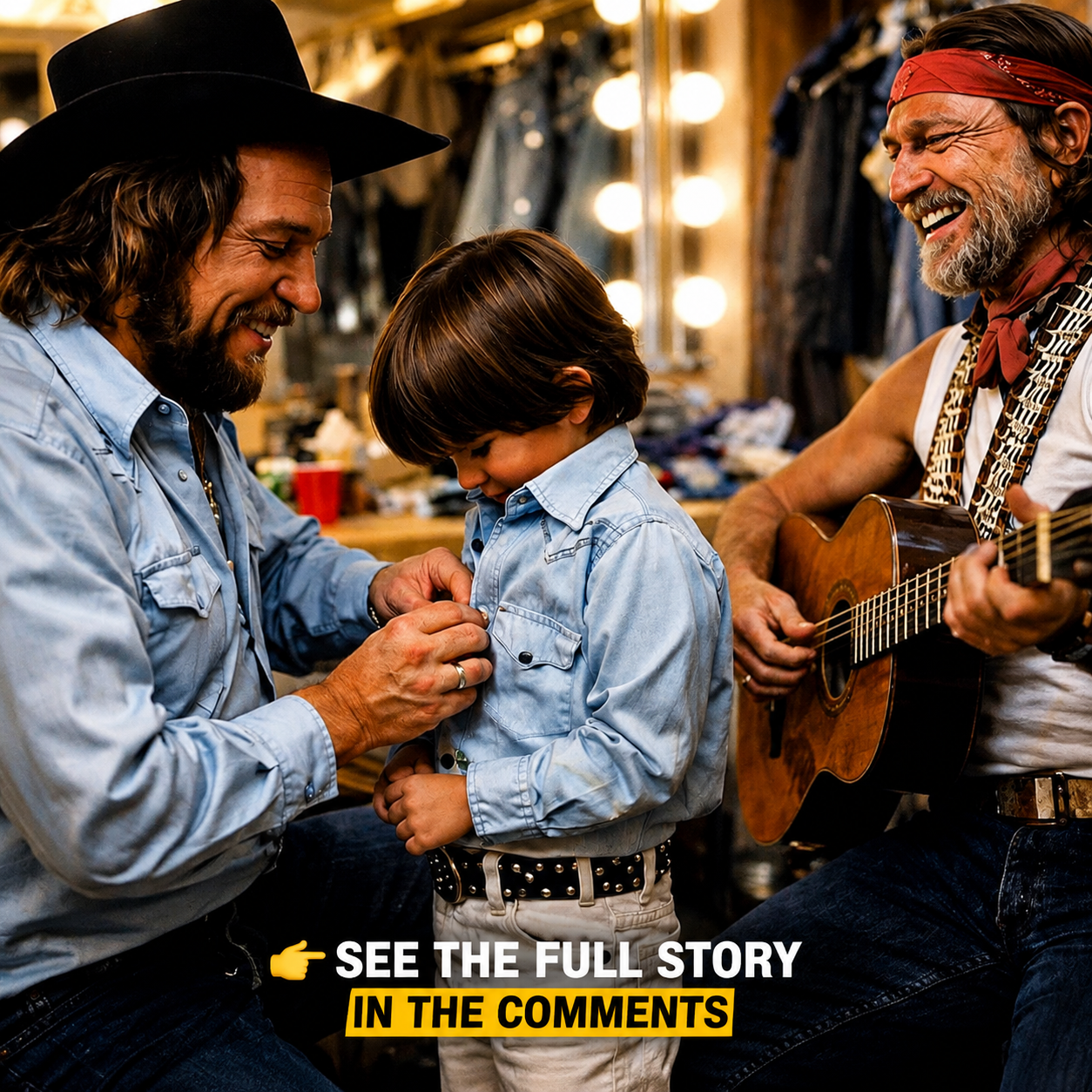
Yet backstage, life was quieter, more ordinary, and often invisible to the public. Hallways, dressing room mirrors, a shirt draped over a chair, or a guitar leaning against the wall: these small details hinted at the calm before the storm.
Imagine Waylon Jennings, focused on something simple—a loose button, a child’s shirt, a minor task unrelated to fame. Nearby, Willie Nelson might strum a guitar gently, not chasing perfection, but letting a melody float naturally—a lullaby rather than a battle cry. And Johnny Cash, tall and quiet, observing with a gravity that filled the room even in silence, reminded everyone that even the loudest men often carried private depths.
Before they were icons, they were fathers. Before they became symbols, they were men trying to create a world their children could understand. Even the wildest outlaws longed for a steady home.
The Men Their Children Knew
Children rarely see legends first—they see habits, routines, voices, jokes, and tired eyes over breakfast. Boots left by the door, hands tuning a guitar in a corner, or simple acts of care formed the version of their fathers the world seldom noticed.
For these outlaws, mythology softened in private moments. Not as an act, but as a way to provide a world that felt safe and steady. Fame and rebellion could wait; children’s needs came first. Even amidst chaos, the men simplified themselves for the people they loved most. Not as stars, not as rebels—just dads.
When the Curtain Rose
Then came the moment that transformed the quiet into thunder. The walk toward the stage. The lights breaking through the velvet. The audience leaning forward. And in that instant, imagine Waylon Jennings spotting his son in the crowd.
The outlaw image paused for a heartbeat. The performer remained, the voice still powerful, the presence enormous. But the gap between stage and family disappeared. Father and child connected, the enormity of fame reframed through the intimacy of love.
Even legends are shaken not by weakness, but by what matters most: the people who see them for who they truly are.
The Outlaws and the Home They Carried Inside
This duality—the wildness and the tenderness—is why the story of The Highwaymen continues to resonate. Willie Nelson, Johnny Cash, and Waylon Jennings were fearless, rebellious, and uncompromising. But beneath it all was loyalty, vulnerability, and a desire to protect a home—even if that home existed mostly in fleeting moments between tour dates and stages.
Perhaps the real miracle of the 1980s was not that outlaws could command arenas. Everyone knew they could. It was that when the lights hit and the crowd roared, fathers could still look back and see their children, and for one fleeting moment, the biggest names in country music became the men they had always been underneath it all: men hoping to be recognized by those they loved when the show was over.