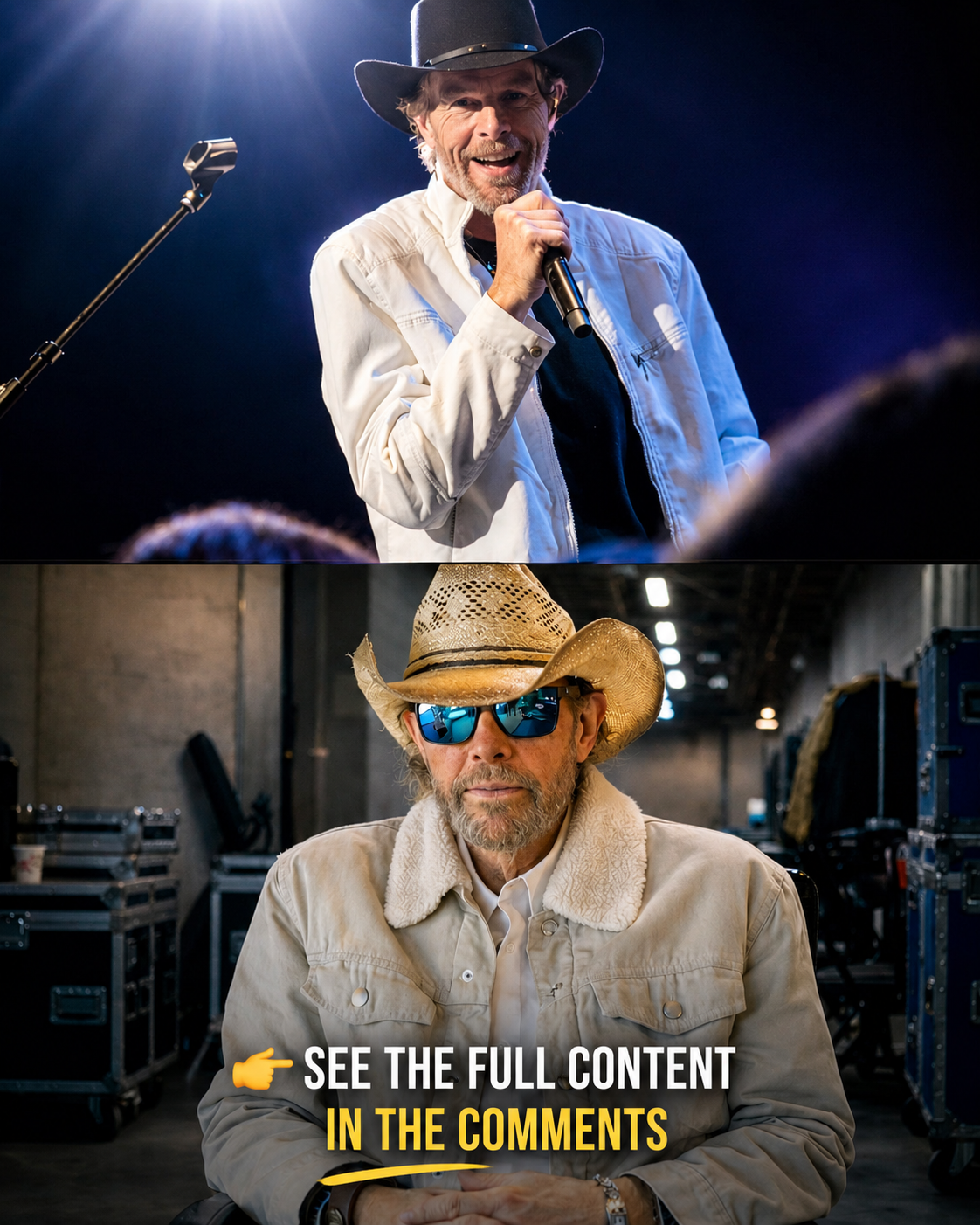
The Night Toby Keith Chose to Stand
Intro
Concert audiences usually remember the songs first. The chorus everyone sang together. The encore. The energy that filled the room when the lights came alive. But sometimes, a performance becomes memorable long before the music even begins.
That was the feeling inside Dolby Live at Park MGM in Las Vegas on December 14, 2023, when Toby Keith walked toward the stage carrying far more than a microphone.
Fans arrived knowing he had been battling serious illness. News about his health had already spread widely, and many in the audience came with a mixture of excitement and concern. They expected a country music legend performing through difficult circumstances. What they witnessed instead was something quieter, more personal, and far more powerful.
Before a single lyric filled the theater, the night had already said something unforgettable.
A Silent Decision Made Backstage
Behind the curtain, preparations moved carefully.
Crew members adjusted equipment. Musicians waited for their cue. The atmosphere carried a tension that didn’t normally exist before a concert. Nearby sat a wheelchair — not dramatic, not symbolic, simply practical. A precaution placed there in case the evening became too difficult physically.
Months of treatment had clearly taken their toll. His body had changed. Movements that once looked effortless now required concentration. Even standing for extended periods seemed uncertain.
At one point, the chair was gently suggested to him.
Toby Keith reportedly looked at it briefly before declining without discussion. No speech. No attempt to create a dramatic moment. Just a quiet refusal.
Out front, the audience had no idea that decision had already shaped the entire night.
When the Curtain Opened
The theater lights dimmed slowly, and the room settled into anticipation.
Then the curtain parted.
The first thing people noticed was not celebrity confidence or stage presence. It was determination.


His entrance was measured and deliberate. Every step looked careful, almost negotiated. Gone was the larger-than-life swagger audiences had associated with him for decades. Instead, there was visible effort.
The crowd grew unusually quiet.
Not because they were uninterested, but because they understood immediately that this moment carried weight beyond entertainment. Some fans who had lifted phones to record slowly lowered them again. Others simply watched in silence.
He reached the microphone and paused there.
No grand introduction followed. No explanation about pain or struggle. He simply stood facing the audience, steadying himself before the music began.
That silence became one of the most emotional parts of the evening.
The Meaning Behind Remaining Upright
For most people, standing is ordinary. For someone fighting serious illness, it can become symbolic.
That was what made the moment resonate so deeply with the audience. Sitting would have been understandable. No one in the theater would have questioned it. In fact, many probably expected it.
But remaining on his feet became its own quiet statement.
Not a declaration of invincibility. Not an attempt to hide weakness. The opposite, actually. The power of the moment came from how visible the struggle was.
For years, Toby Keith built a career around confidence and larger-than-life energy. His songs often carried humor, toughness, patriotism, and pride. Yet on that December night, strength looked different than it once had.
It looked like persistence.
It looked like dignity.
And before the first chord even played, the audience recognized it.
A Concert That Became Something More
As the performance continued, every song seemed to carry extra emotional weight.
Lyrics that once sounded celebratory suddenly felt more reflective. Familiar choruses took on new meaning because the audience could see the effort required behind every minute on stage.
This was not a carefully designed farewell narrative. It didn’t feel theatrical or staged for sympathy. In many ways, the emotional impact came precisely because nothing was overexplained.


The crowd responded differently than they might at a typical arena show. The applause felt less explosive and more heartfelt. People weren’t simply cheering a performer; they were acknowledging resilience unfolding in real time.
There are concerts built around spectacle, and then there are concerts remembered for honesty.
This became the second kind.
Why the Opening Moment Stayed With People
Afterward, many fans did not talk first about specific songs or favorite performances. They talked about the opening minute.
The walk to the microphone.
The visible effort.
The refusal to surrender to the chair waiting backstage.
Those details lingered because they reflected something deeply human. Audiences often admire artists for talent, fame, or charisma. But moments like this create a different connection altogether. They remind people that vulnerability can sometimes command more respect than perfection ever could.
Toby Keith never framed himself as heroic that night. He didn’t narrate the difficulty or ask the audience to feel sorry for him.
He simply chose how he wanted to meet them.
And that choice said everything.
Conclusion
Great performances are not always defined by flawless vocals or unforgettable production. Sometimes they are defined by resolve — by the quiet decisions audiences almost never see.
On that December evening in Las Vegas, Toby Keith reminded fans that courage does not always arrive loudly. Sometimes it appears in small moments: a steady breath, a difficult step forward, a refusal to sit down when standing still matters more.
Long after the final song ended and the theater lights returned, that image remained.
Not just of a country music star performing for his audience, but of a man determined to face them on his own terms.
And for many who were there, the music began long before the band ever played a note.