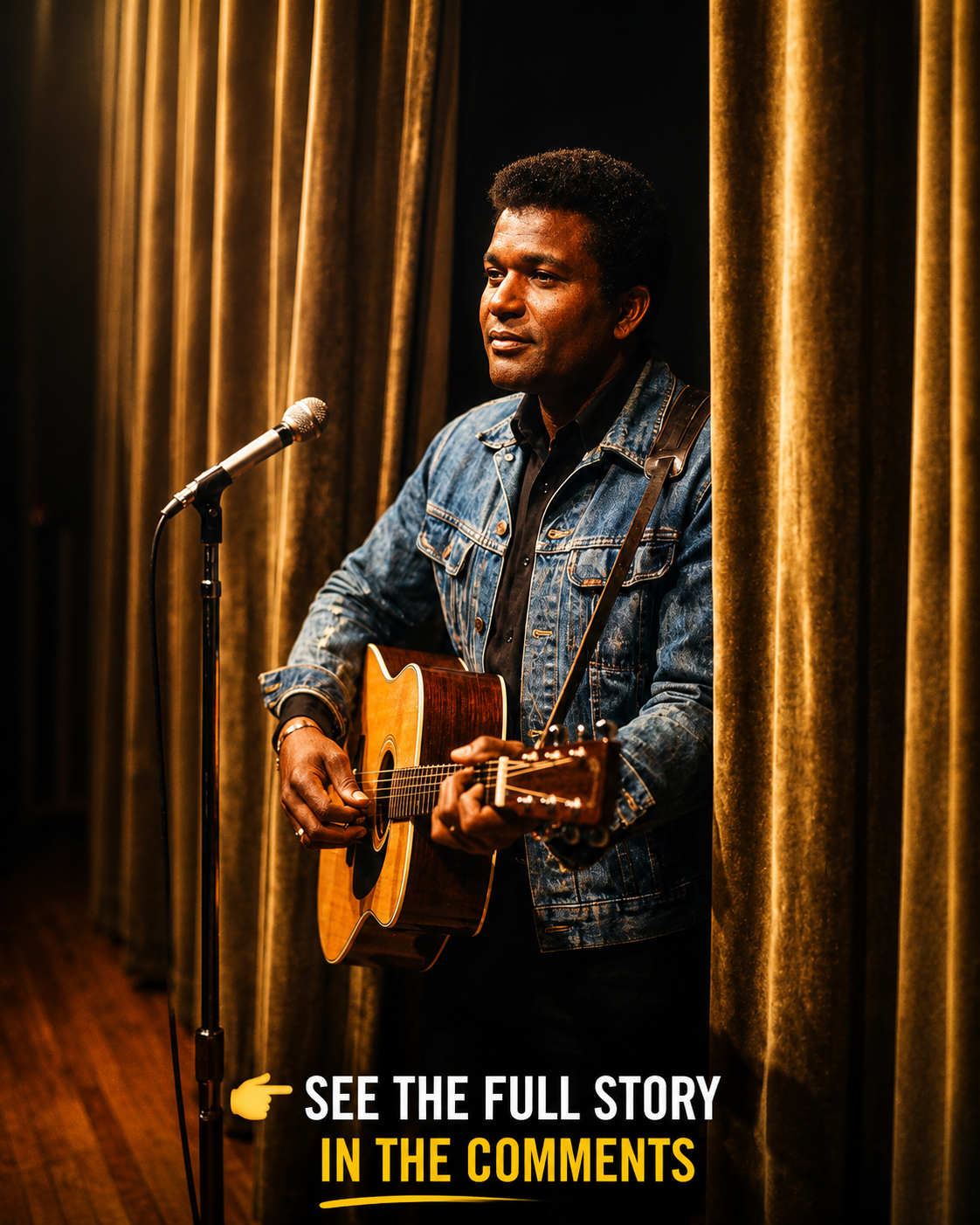
When Charley Pride Refused to Shrink for the Room
Introduction
Some moments in music history are remembered because of a perfect performance. Others endure because of what happened before the first note was even played. For Charley Pride, one unforgettable night became larger than a concert itself. It became a quiet confrontation between expectation and truth — and a reminder that sometimes the strongest statement a performer can make is simply refusing to hide who they are.
Behind the glowing lights of Nashville stages and polished country music traditions, there were still rooms filled with assumptions. And on this particular night, those assumptions followed Charley Pride all the way backstage.
A Voice Everyone Loved — Before They Saw Him
By the time this show arrived, Charley Pride was already a proven star. His music had crossed radio stations, state lines, and generations of listeners. Fans recognized the warmth in his voice instantly. He could deliver heartbreak with tenderness and sing about love in a way that felt deeply personal.
People already knew the sound.
What some people were not prepared for, however, was the man behind it.
The venue buzzed with the usual pre-show routine — stagehands moving equipment, musicians tuning instruments, producers checking schedules. But beneath the ordinary movement lingered a strange tension. Conversations became quieter whenever Pride passed through the hallway.
No one openly created conflict. That was part of what made the situation so uncomfortable. Everything was wrapped in politeness.
The “Problem” Was Never the Music
A promoter eventually approached with careful language and a rehearsed expression. He spoke softly, almost nervously, as if trying to avoid saying the real issue aloud.
“There’s been a little confusion with the audience,” he explained.
The word hung heavily in the air.
Not confusion about the setlist. Not confusion about ticket sales or performance timing. The “confusion” centered on expectations — specifically, what some concertgoers imagined a country music star should look like.
Promotional materials had avoided showing a photograph. Radio listeners had connected to the voice without seeing the performer. Somewhere along the way, assumptions had filled the gaps.
Now those assumptions were colliding with reality.
“Maybe You Should Say Something First”
The suggestions that followed were framed as friendly advice rather than direct criticism.
Someone proposed that Pride address the audience before singing. Maybe make a joke. Maybe ease the tension. Maybe reassure people before the performance officially began.
The implication was impossible to ignore.
They were not asking him to explain his talent. They were asking him to soften his identity.
That quiet pressure reflected a larger reality inside parts of the country music industry at the time. Fear often disguised itself as tradition, while prejudice was repackaged as “keeping audiences comfortable.” The burden of managing other people’s discomfort was placed on the person experiencing it.
And yet, throughout the conversation, Charley Pride remained calm.
The Quiet Strength Before the Spotlight
There are moments when anger would feel justified. Moments when walking away would seem understandable. Pride had every reason to challenge the people surrounding him backstage.
Instead, he stood silently for a while, listening to the crowd beyond the curtain.
Those fans already knew his songs. They had driven home with his music on the radio. They had connected their own memories to his lyrics. His voice had already entered their lives long before they entered the venue.
That mattered.
Charley Pride understood something bigger than the awkward hallway conversations unfolding around him: once the music started, the truth would become impossible to deny.
The Only Response He Needed Was a Song
When the stage lights finally hit, the audience reaction came in waves. Some people applauded instantly. Others hesitated, caught off guard by the sight before them. A few sat in stunned silence.
Pride let the room settle.
Then, with remarkable composure, he acknowledged the tension without surrendering to it.
“I hear there’s been some confusion,” he reportedly said in some retellings of the story. “So let’s clear it up.”
And then he sang.
No defensive speech followed. No attempt to make the audience comfortable. No apology for existing in a space some believed he did not belong in.
Just music.
And in that moment, the performance became something larger than entertainment. Every lyric carried weight because it proved what should have already been obvious: greatness does not ask permission.
A Night That Became Part of Country Music History
Stories about what happened afterward vary depending on who tells them. Some remember hesitation before the applause began. Others insist the audience erupted immediately. A few accounts claim certain people walked out, while others remember overwhelming support.
But the heart of the story has never changed.
Charley Pride refused to make himself smaller for the comfort of others. He refused to apologize for being exactly who he was.
That decision mattered far beyond a single concert hall.
Throughout his career, Pride helped reshape country music simply by standing confidently in spaces that once tried to exclude him. He didn’t rely on outrage or confrontation. Instead, he let the songs speak louder than the assumptions surrounding him.
Conclusion
The most powerful moments in music are not always the loudest. Sometimes they arrive quietly — through dignity, restraint, and the refusal to disappear.
That night, Charley Pride walked onto the stage carrying more than a microphone. He carried the weight of expectation, prejudice, and pressure to explain himself. Yet he answered all of it the same way he always had: with a song.
And once the audience heard it, there was no taking it back.