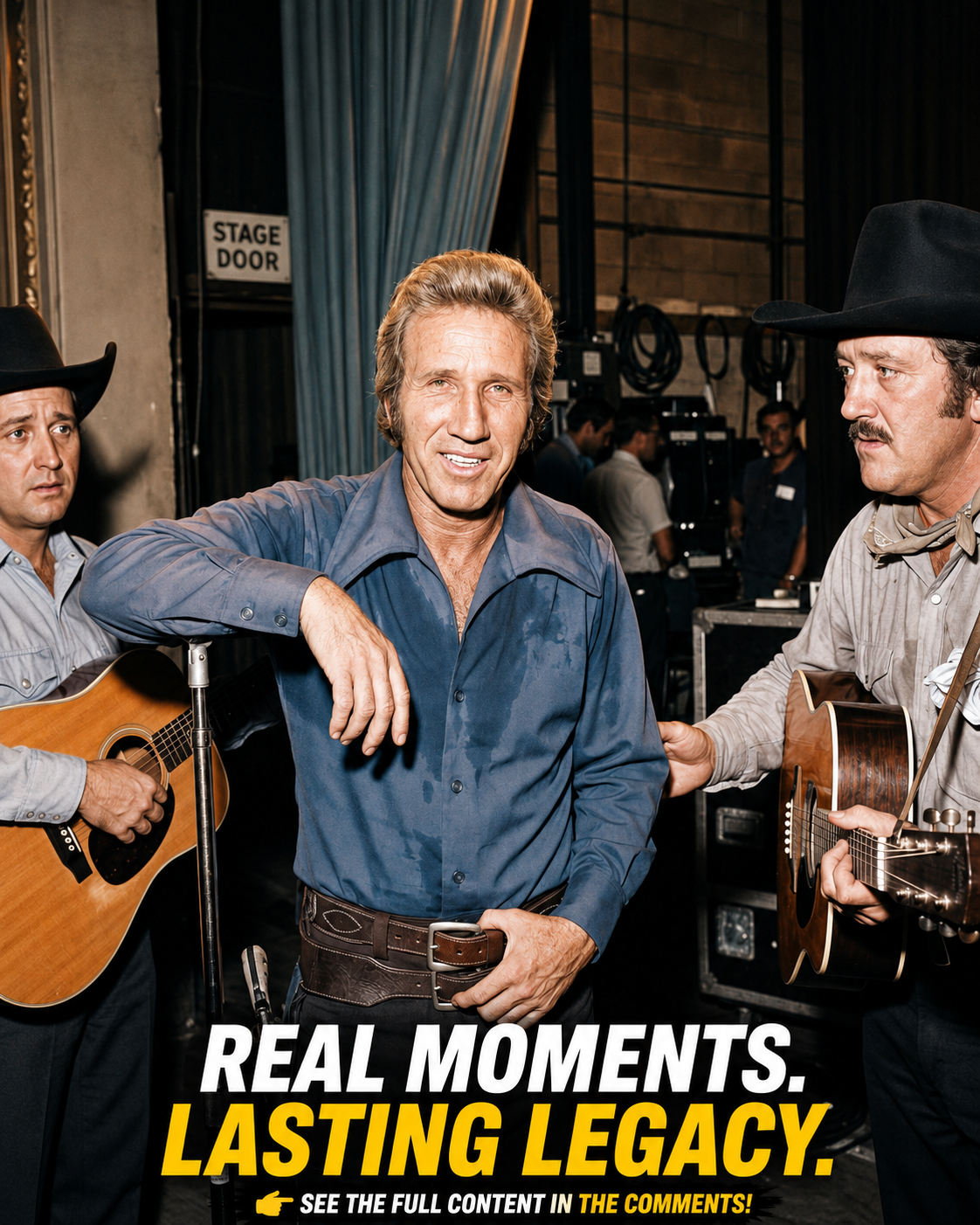
The Night Marty Robbins Refused to Walk Away From the Stage
Introduction
In 1969, backstage in Cleveland, legendary country singer Marty Robbins faced a moment that could have ended far differently. Before stepping in front of thousands of fans, Robbins was reportedly battling intense chest pain — the kind no performer could easily ignore. Yet despite the danger, he chose to continue with the show, delivering a performance that would later become one of the most unforgettable stories of his career.
For many fans, that night revealed something deeper than musical talent. It revealed the complicated devotion that can exist between an artist and the audience waiting beyond the curtain.
A Dangerous Moment Behind the Curtain
Backstage, the atmosphere was tense long before the concert began. According to stories shared by those who remembered the night, Marty Robbins was sweating heavily and struggling with severe discomfort in his chest. This was not ordinary fatigue from touring. The warning signs were serious enough that Robbins reportedly took nitroglycerin pills before preparing himself to walk onstage.
Still, outside the venue, nearly 3,000 fans were waiting to hear the voice behind classics like “El Paso,” the western ballad that helped turn Robbins into one of country music’s greatest storytellers.
For Marty Robbins, music had never simply been about singing songs. His performances transported listeners into vivid worlds filled with heartbreak, danger, romance, and lonely desert roads. Every lyric felt cinematic, and every performance carried emotional weight.
But that night in Cleveland, the real drama was unfolding far from the spotlight.
A Performer Determined to Finish the Show
Those close to Robbins reportedly understood how serious the situation had become. Guitarist Bobby Sykes was said to have witnessed the singer struggling backstage before the concert began. Yet when the time arrived, Marty Robbins stepped onto the stage as though nothing was wrong.
That decision became part of the legend.
Many performers continue because they feel obligated to entertain. But for Robbins, the stage seemed to represent something more personal. Performing was not just his profession — it was part of who he was.
As the concert continued, the strain reportedly became more visible. By the second song, Robbins’s shirt was said to be completely soaked with sweat. Even so, he continued smiling at the audience and maintaining control of his voice. Many fans in attendance likely never realized the extent of the battle happening behind his calm expression.
Ninety Minutes of Endurance
Throughout the show, Robbins reportedly leaned heavily against the microphone stand between songs. To the audience, it may have appeared like the relaxed posture of an experienced performer. In reality, those nearby understood he was using every bit of strength he had left just to remain standing.
What makes the story so powerful decades later is the silence surrounding the struggle. There was no public announcement, no dramatic pause, and no plea for sympathy. Robbins simply continued performing, determined to give the audience the show they had come to see.
For nearly ninety minutes, he remained onstage, carrying the concert through to the final song.
Only after the performance ended did the full weight of the moment arrive. According to accounts from that night, Marty Robbins collapsed backstage in the dressing room once the concert was over.
The Surgery That Followed
The Cleveland performance became a turning point in Robbins’s life.
Only weeks later, in January 1970, he underwent major heart surgery in Houston during an era when bypass procedures still carried enormous risk and uncertainty. Robbins reportedly survived a triple bypass operation connected to the pioneering cardiac work associated with renowned surgeons like Michael DeBakey and Denton Cooley.
For many artists, such an experience might have marked the end of life on the road. But Marty Robbins returned to performing only months later.
That return revealed something essential about his character. Robbins did not seem built for a quiet life away from music. The road, the audience, and the stage were deeply tied to his identity.
The Price of Dedication
The story of that Cleveland concert continues to resonate because it raises difficult questions about performers and the sacrifices they make.
Was Robbins motivated by loyalty to the fans who had purchased tickets? Did he refuse to disappoint the audience waiting for him? Or was he simply unable to imagine walking away while there was still music left to sing?
Perhaps it was all of those things at once.
Artists of Robbins’s era often worked through exhausting schedules, endless travel, and personal struggles hidden from public view. Audiences saw the polished performance, but rarely the physical or emotional cost behind it.
That night, songs like “El Paso” took on a different meaning. Robbins had spent years singing about characters forced to face impossible choices. In Cleveland, he found himself confronting one of his own.
And despite the pain, he walked onto the stage anyway.
Conclusion
The story of Marty Robbins in Cleveland remains unforgettable not simply because of the medical danger involved, but because it revealed the hidden burden many legendary performers carry. Behind the applause and bright stage lights was a man fighting through real physical suffering while refusing to let his audience down.
Whether his decision came from courage, determination, loyalty, or pure stubbornness, only Marty Robbins truly knew.
But that night, he reminded everyone of something timeless: sometimes the greatest battles are the ones the audience never sees.