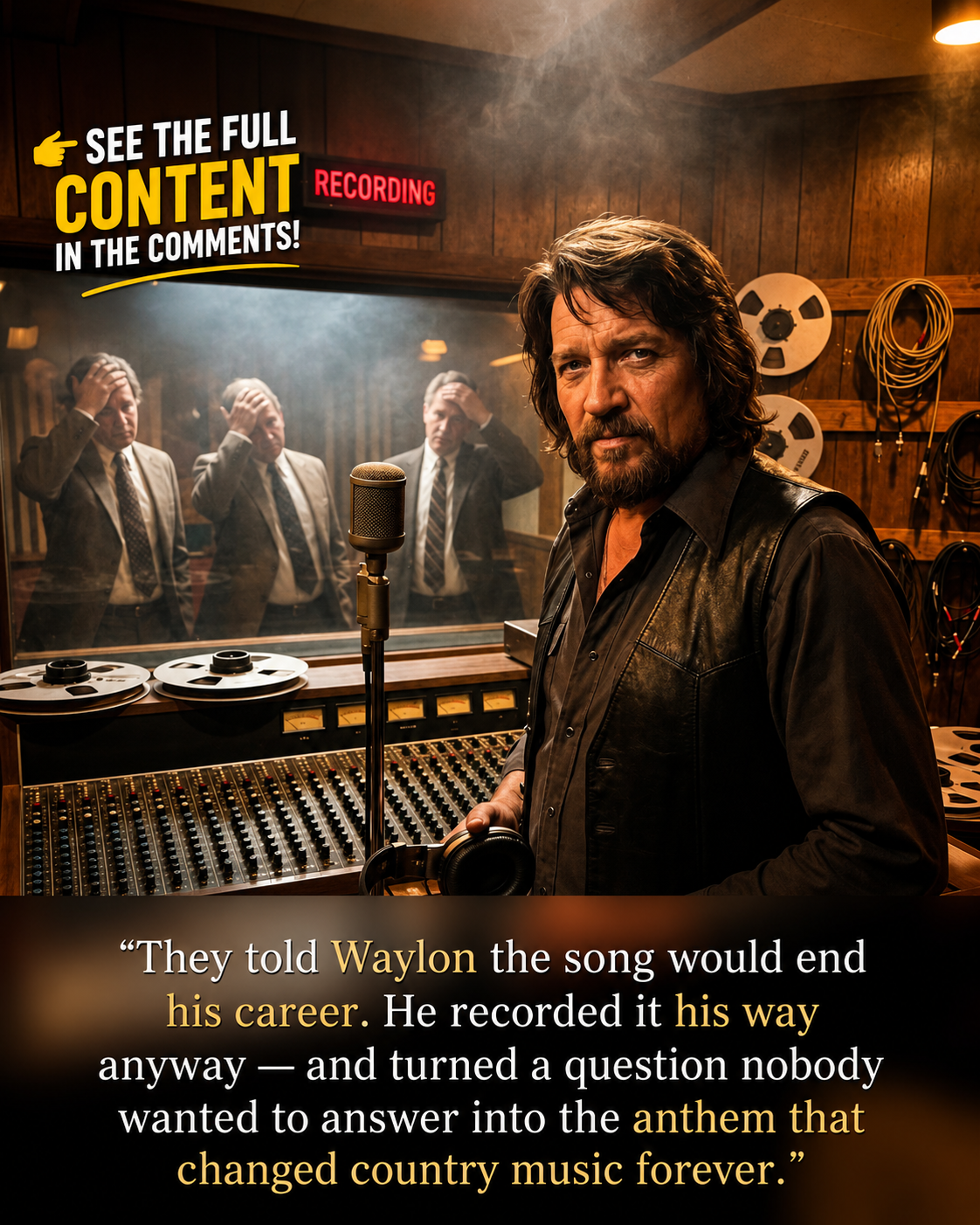
They Said This Song Would Ruin Waylon Jennings’ Career — Instead, It Changed Country Music Forever
Introduction
Some songs entertain audiences for a few minutes. Others leave a permanent mark on music history. For Waylon Jennings, Are You Sure Hank Done It This Way became more than just a hit record — it became a declaration of independence.
At a time when Nashville favored polished production, controlled artist images, and radio-friendly formulas, Jennings decided to challenge the system from the inside. Many believed the song was too bold, too confrontational, and too risky for mainstream country music. Yet instead of destroying his career, it helped define an entire movement and solidified his legacy as one of country music’s most fearless voices.
H2: A Song That Challenged Nashville Tradition
By the mid-1970s, country music had become increasingly commercialized. Record labels often controlled nearly every aspect of an artist’s image, from the songs they recorded to the clothes they wore. The industry rewarded polished perfection, but many artists and fans felt something important was being lost along the way.
Waylon Jennings had experienced that pressure firsthand. After years inside the Nashville machine, he grew frustrated with the lack of artistic freedom and the growing distance between country music and its roots.
That frustration became the driving force behind Are You Sure Hank Done It This Way. The song questioned whether country music had drifted too far from the honesty and emotional grit that artists like Hank Williams once represented.
Rather than quietly criticizing the industry, Jennings delivered the message directly and unapologetically.
H2: Why Industry Executives Considered It Dangerous
H3: A Risky Message for Mainstream Radio
At the time, many music executives believed the song was too aggressive for mainstream audiences. Its lyrics openly criticized the business side of country music, something few major artists dared to do publicly.
Industry insiders worried that the record could damage Jennings’ reputation, reduce radio support, and close important doors within Nashville. The song did not sound like a safe commercial release — it sounded like rebellion.
But that was exactly what made it powerful.
H3: Waylon Jennings Refused to Follow the Rules
Unlike an outsider criticizing the industry from a distance, Jennings understood the system because he had lived inside it for years. He knew what it felt like to lose creative control and be molded into a marketable image.
Instead of continuing to follow expectations, he chose authenticity over approval. Recording the song became a defining moment in his career and a turning point in country music history.
H2: The Song That Sparked the Outlaw Country Movement
When the record was finally released, audiences immediately connected with its honesty and attitude. The sound felt raw, energetic, and unapologetically real.
Listeners heard more than criticism — they heard freedom.
The song quickly became one of the defining anthems of the outlaw country movement, alongside artists like Willie Nelson and Johnny Cash. This movement rejected the overly polished Nashville formula and embraced personal storytelling, rough edges, and creative independence.
Rather than hurting Jennings’ career, the song elevated him into a symbol of artistic rebellion and authenticity.
H2: Why the Song Still Matters Today
H3: Its Message Remains Timeless
Decades later, Are You Sure Hank Done It This Way still resonates because the questions it raises never disappear completely.
Every generation of artists faces the same struggle between commercial success and creative honesty. Fans continue searching for music that feels genuine rather than manufactured, and Jennings’ song remains a reminder that authenticity always leaves the strongest impact.
H3: Honesty Became His Greatest Strength
The irony is impossible to ignore: the song many feared would destroy Waylon Jennings’ career ultimately became one of his most iconic recordings.
Its legacy was not built on perfect production or commercial safety. It endured because it had courage. Jennings said what many artists were afraid to say, and audiences respected him for it.
Conclusion
Waylon Jennings did not record Are You Sure Hank Done It This Way because it was safe. He recorded it because he believed country music needed honesty again.
What began as a risky challenge to Nashville’s system eventually became one of the defining moments of outlaw country music. The song proved that authenticity can be far more powerful than approval, and that sometimes the most unforgettable records are the ones willing to take the biggest risks.
Even today, the spirit behind the song continues to inspire artists and listeners alike — a reminder that real music does not ask permission to be heard.