How Dolly Parton Turned Mockery Into a Legacy the World Couldn’t Ignore
Introduction
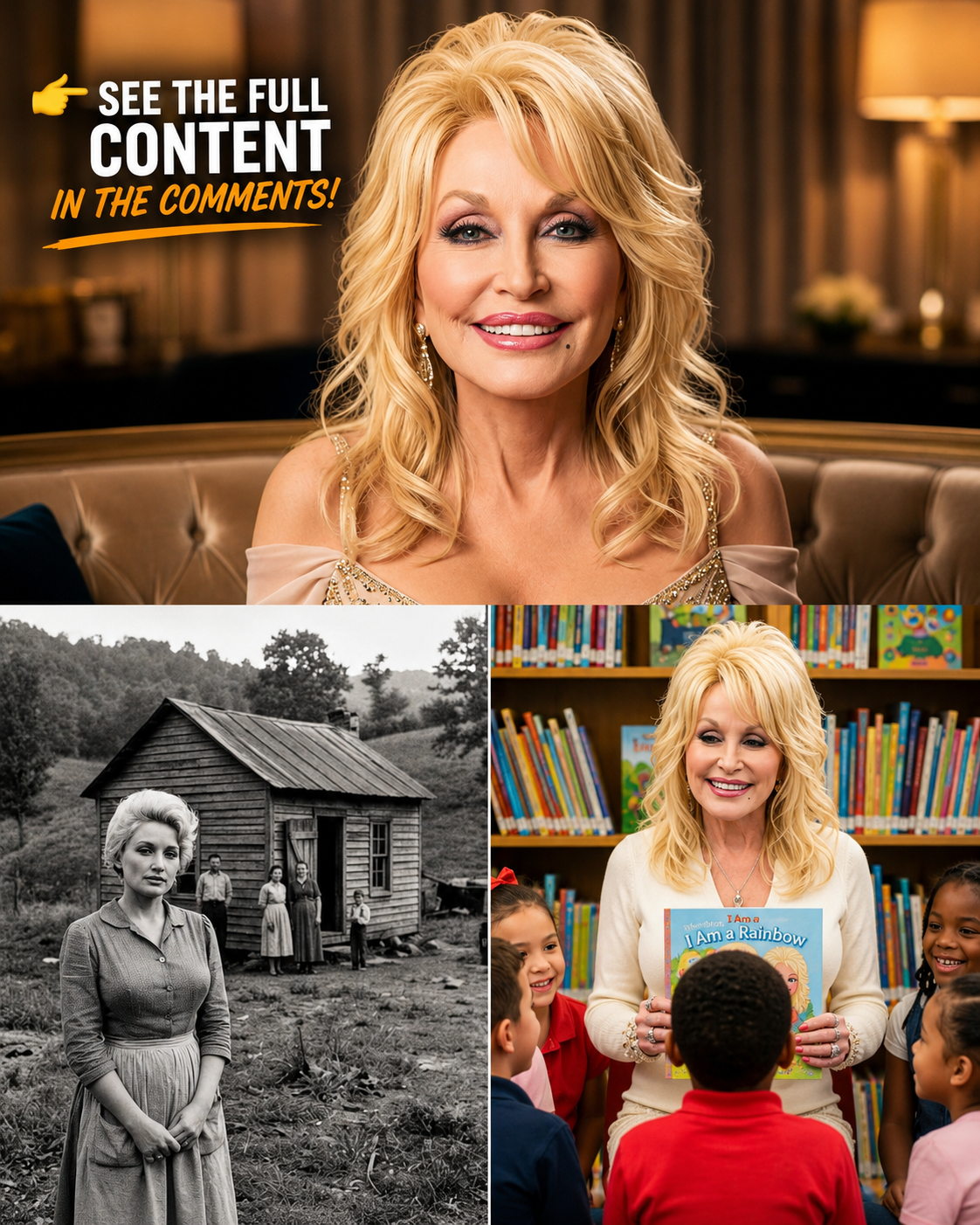
Long before the sold-out arenas, worldwide fame, and legendary status, Dolly Parton came from a life shaped by hardship. Born into a poor family in rural Tennessee, she grew up in a small cabin filled with siblings, struggle, and very little money. Family stories often recall that the doctor who delivered her was paid with a sack of cornmeal because that was all they had.
But even in those difficult years, something about Dolly stood out. She had a powerful imagination, a sharp sense of self, and a dream far bigger than the world around her. What began as survival slowly became one of the most remarkable careers in entertainment history.
From Poverty to Personality
Dolly Parton did not create her iconic look by accident. The wigs, bright makeup, sparkling outfits, and glamorous image became part of her identity long before the world understood it.
Growing up without luxury taught her how to create beauty from almost nothing. Instead of hiding who she was, Dolly leaned into it. While some people laughed at her appearance, she transformed those same qualities into a brand the world would never forget.
What critics saw as “too much,” Dolly Parton saw as confidence, creativity, and freedom. She understood early that standing out could become a strength.
Nashville Underestimated Dolly Parton
When Dolly first entered the country music industry, many people judged her before listening to her songs. Executives, critics, and audiences often focused more on her appearance than her talent. Some dismissed her with the stereotype of being a “dumb blonde,” assuming glamour and intelligence could not exist together.
They were wrong.
While others underestimated her, Dolly Parton quietly built one of the greatest songwriting catalogs in modern music. Behind the humor and charm was an artist with extraordinary discipline and emotional depth.
She was not simply performing music written by others. She was creating stories that connected deeply with millions of people. Her songs explored heartbreak, insecurity, love, resilience, and survival in ways that felt honest and unforgettable.
The Day Dolly Parton Wrote Two Classics
One of the most astonishing moments in Dolly Parton’s career is the fact that she wrote both Jolene and I Will Always Love You on the same day.
The two songs could not feel more different emotionally, which makes the achievement even more incredible.
“Jolene” — Fear and Vulnerability
“Jolene” captures jealousy and emotional desperation with haunting simplicity. The song feels immediate and deeply human, driven by vulnerability and fear of losing someone you love.
Its storytelling remains one of the clearest examples of Dolly’s songwriting brilliance.
“I Will Always Love You” — Grace in Letting Go
In contrast, “I Will Always Love You” carries tenderness, maturity, and emotional strength. Rather than anger or bitterness, the song expresses love through acceptance and farewell.
Years later, Whitney Houston would transform the song into a global phenomenon, introducing Dolly Parton’s writing to an even larger audience.
Together, these two songs proved something extraordinary: Dolly Parton was not just writing hits. She was writing emotions people struggled to put into words themselves.
Protecting Her Music and Her Future
Throughout her career, Dolly Parton repeatedly fought to maintain control over her work. At times, the industry pushed her toward a more commercial pop direction that did not fully represent who she was as an artist.
But Dolly trusted her instincts.
That independence became especially important when Elvis Presley wanted to record “I Will Always Love You.” For many artists, saying yes to Elvis would have been automatic. However, there was one condition attached to the deal: Dolly would have to give up part of the publishing rights.
She refused.
It was a bold business decision, and one that later proved incredibly wise. When Whitney Houston’s version became one of the biggest songs in music history, Dolly Parton retained ownership of the work she believed in from the beginning.
Her success was not only artistic. It was strategic.
More Than a Music Icon
As the years passed, Dolly Parton became far more than a country music star. Her influence expanded into film, television, business, and philanthropy.
Yet one of the most meaningful parts of her legacy may be Dollywood Foundation and the Imagination Library program, which has provided millions of books to children around the world.
The mission was deeply personal. Dolly’s father struggled to read, and that experience shaped her lifelong belief in literacy and education.
What makes her story so powerful is that success never seemed to harden her. Despite decades of fame, Dolly Parton remained known for her humor, kindness, generosity, and authenticity.
Conclusion
The people who once mocked Dolly Parton for her appearance failed to recognize what was standing in front of them: a brilliant songwriter, smart businesswoman, and cultural icon.
She did not spend her career trying to convince critics to take her seriously. Instead, she let the work speak for itself.
The image lasted. The music lasted. The empire lasted.
Most importantly, Dolly Parton lasted — not because she changed who she was, but because she fully embraced it.