Charley Pride Returned to Little Rock for a Checkup, but His Voice Gave Arkansas a Moment to Remember
Introduction
Charley Pride did not come back to Little Rock expecting a spotlight.
He had returned for something far more personal and quiet: a medical checkup. It was the kind of visit that carries private emotions, especially for someone whose life had been shaped by a voice millions of people knew by heart.
For Charley Pride, this was not simply another appointment. It was connected to one of the most fragile parts of his journey. Years earlier, doctors had discovered a tumor on his right vocal cord. For any singer, that would be a frightening diagnosis. For Pride, it touched the very gift that had carried him from humble beginnings into country music history.
That voice had filled concert halls, crossed radio airwaves, entered homes, and helped break through barriers that once seemed almost impossible. So when Charley Pride returned to Little Rock, the visit already carried deep meaning.
But what began as a checkup soon became something no one in the Arkansas Senate would forget.
A Personal Visit Became an Unexpected Public Moment
Charley Pride was not in Little Rock for a concert.
There was no arena waiting for him. No band was tuning backstage. No crowd had bought tickets to hear him sing. He had simply returned to the medical world that had once been tied to a difficult and uncertain chapter of his life.
Then came an invitation.
After his checkup brought him back to Arkansas, Charley Pride was welcomed into the Arkansas Senate. Suddenly, one of country music’s most beloved voices was standing in a room far removed from the stages where fans usually heard him.
This was not the Grand Ole Opry. It was not a music festival. It was not a theater filled with applause.
It was a chamber built for government, debate, decisions, and public service.
When Country Music Entered the Senate Chamber
The setting made the moment even more powerful.
The Arkansas Senate chamber was a place where people normally discussed laws, budgets, policies, and the future of the state. It was a room shaped by formal language, official records, and political responsibility.
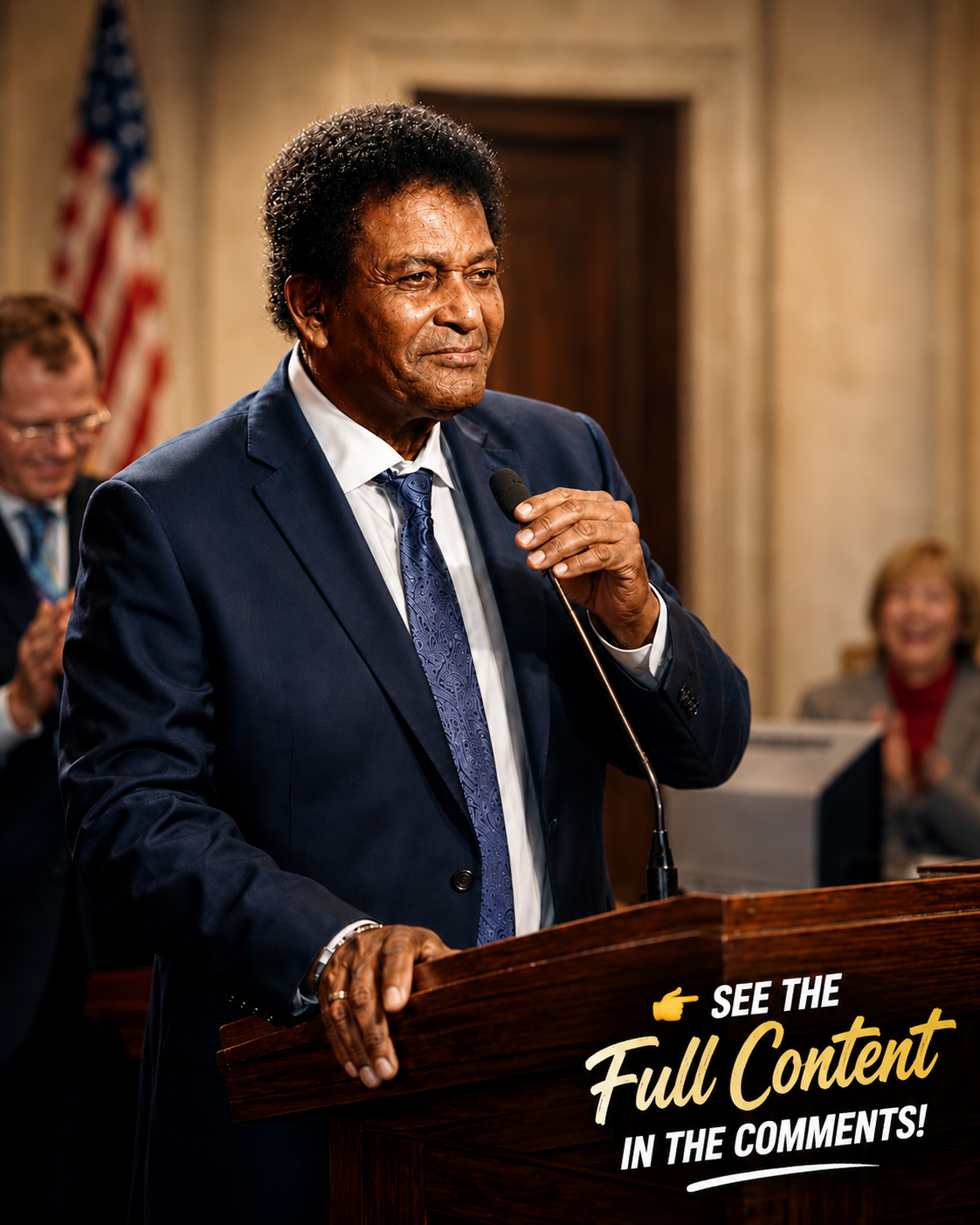
Then Charley Pride stepped in with a microphone.
That contrast is what made the moment feel so extraordinary. A man whose voice had helped define country music was now standing in a room usually reserved for speeches and votes. Instead of a campaign speech or a policy debate, the chamber was about to hear something much more human.
A song.
No law changed because Charley Pride sang that day. No political argument was settled. But for a few unforgettable moments, the usual rhythm of government paused.
People listened.
The Voice That Had Survived
Charley Pride sang five songs that day, but the number was not what mattered most.
What mattered was that the voice was still there.
The same voice that fans had loved for decades remained warm, steady, and unmistakable. It was not just a performance. It was proof that a gift people once feared might be damaged had endured.
For those in the room, it must have felt like country music history had suddenly become close enough to touch. Pride was not distant beneath stage lights. He was not separated from listeners by a packed arena or a concert schedule.
He was standing right there, singing in a place where music was never supposed to be the main event.
And somehow, that made the moment even more moving.
Why Charley Pride’s Voice Meant So Much
Charley Pride’s voice was never only about sound.
It carried the story of a man who entered country music during a time when the path was not easy. Pride did not force his way into people’s hearts with noise or spectacle. He sang with a sincerity that made people stop, listen, and feel.
His voice opened doors. It softened doubts. It reached audiences who may not have expected to be moved by him. Through song, Charley Pride became more than a successful country artist. He became a symbol of grace, courage, endurance, and quiet strength.
That is why his appearance in the Arkansas Senate mattered.
It was not just a country legend singing in an unusual place. It was a reminder that some gifts survive fear, illness, and uncertainty. It was a reminder that a career cannot be measured only by awards, chart positions, or applause.
Sometimes, the most powerful stage is not a stage at all.
The Checkup Brought Him Back, but the Voice Made the Moment
Charley Pride did not return to Little Rock that day to create a memory.
He came for a checkup. That was the ordinary part of the story. But by the end of the day, something ordinary had turned into something unforgettable.
He walked into a room built for government and filled it with country music. He stood in a place made for speeches and reminded everyone that a song can sometimes say what speeches cannot.
The checkup brought Charley Pride back to Little Rock. The invitation brought him into the Arkansas Senate.
But the voice did the rest.
Conclusion
For one unexpected day in Little Rock, the Arkansas Senate heard more than a performance.
It heard a voice that had survived.
Charley Pride’s song in that chamber was not about fame, ceremony, or applause. It was about resilience. It was about a man returning to the place connected to one of his most vulnerable chapters and proving, once again, that his gift still had power.
That day, Arkansas did not simply welcome a country music legend.
It witnessed the strength of a voice that history would never forget.