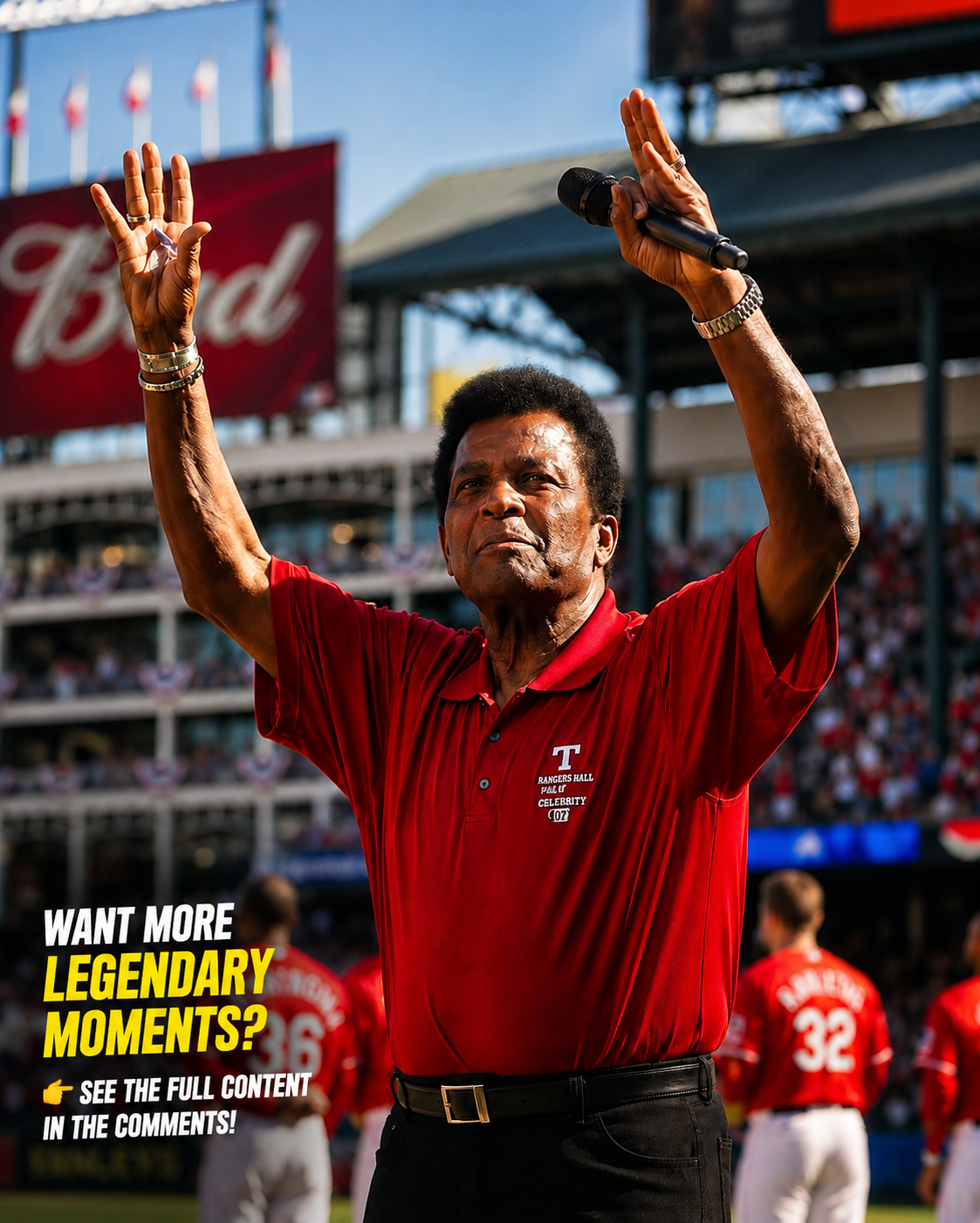
From Singing the Anthem for Ten Dollars to Owning a Piece of the Dream: Charley Pride’s Extraordinary Baseball Journey
Introduction
Long before he became one of country music’s most influential voices, Charley Pride was a young man balancing hard labor with ambitious dreams. While the world would later know him as a groundbreaking performer and Hall of Fame artist, there was a time when his future seemed tied more closely to baseball than music.
One unexpected opportunity at a small-town ballgame would set him on a path that connected both passions in ways few could have imagined.
A Working Man with Two Dreams
In 1960, Charley Pride was living in Montana and working long hours at a smelter. The job paid the bills, but it was not the life he hoped to build forever.
When the workday ended, Pride devoted himself to another passion—baseball. As a pitcher for a semi-professional team, he spent countless hours chasing a dream that had followed him since childhood. Like many young athletes, he hoped the sport would open doors to a better future.
Yet music was always present in the background.
One afternoon, while sitting in the dugout before a game, Pride casually sang to himself. It was not meant to attract attention, but someone noticed.
The team manager heard his voice and asked a simple question:
“Can you sing?”
That brief conversation would change everything.
The Ten-Dollar Performance That Started It All
The manager offered Pride an extra ten dollars to sing the national anthem before that evening’s game.
Today, ten dollars may seem insignificant, but for a hardworking young man in 1960, it represented meaningful extra income. More importantly, it was recognition that his voice had value.
Pride accepted the offer and stood before the crowd to perform “The Star-Spangled Banner.”
The moment may have seemed ordinary to those watching, but it marked the beginning of a remarkable journey.
Singing Through Difficult Times
Performing was not always easy.
As a Black man from Mississippi during a period of deep racial division in America, Pride often faced audiences who were uncertain about accepting him. Some welcomed him warmly, while others did not.
Still, he continued singing.
Rather than responding with bitterness, Pride relied on talent, professionalism, and quiet determination. Over time, his voice accomplished something powerful—it encouraged people to listen beyond their assumptions.
Music became a bridge where acceptance sometimes had not yet arrived.
From Local Ballparks to National Stages
The singer who once earned ten dollars before a baseball game would eventually perform before millions.
As his country music career flourished, Pride became one of the genre’s biggest stars. His success led to opportunities that few could have imagined during those early Montana days.
In 1974, he performed the national anthem at Super Bowl VIII. Other prestigious appearances followed, including performances connected to Major League Baseball and the World Series.
For Pride, the anthem carried special meaning.
Every performance reflected the road he had traveled—from Mississippi cotton fields to professional stages, from baseball dreams to music history. The song became intertwined with his own story of perseverance and achievement.
A Pioneer Who Changed Country Music
Beyond commercial success, Pride helped reshape country music itself.
He entered spaces where few expected him to succeed and earned respect through his artistry. Without demanding acceptance, he demonstrated through every performance that talent and character could overcome barriers.
His achievements opened doors for future generations while establishing him as one of the most important figures in the genre.
Coming Full Circle with the Texas Rangers
Nearly fifty years after singing before small baseball crowds, Pride’s connection to the sport took an extraordinary turn.
In 2010, he joined the ownership group of the Texas Rangers.
For someone who had once dreamed of building a career on the baseball field, the moment felt almost poetic. The young pitcher who had spent years chasing opportunities in semi-pro leagues was now helping guide a Major League Baseball franchise.
It was a remarkable full-circle moment.
The man who had once accepted ten dollars to sing before a game no longer stood on the sidelines. He had become part of baseball history itself.
The Final Anthem
One of the most memorable moments of Pride’s later years came in July 2020.
At the Texas Rangers’ new stadium, he performed the national anthem before the team’s first regular-season game in the venue.
The circumstances were unlike anything anyone had experienced before. Because of the COVID-19 pandemic, the seats were empty. There were no cheering fans, no applause, and no crowd noise.
Only Charley Pride’s voice filled the stadium.
The scene carried a powerful sense of reflection. Decades earlier, he had sung before audiences that were uncertain about him. Now he stood in a ballpark connected to a team he partially owned, singing into silence.
The moment felt both historic and deeply moving.
Just months later, Pride passed away from complications related to COVID-19, bringing an end to one of the most inspiring stories in American music.
Conclusion
Charley Pride’s life was never defined by a single dream. He pursued baseball, built a legendary music career, broke barriers, and ultimately found a way to connect both passions in an unforgettable way.
From earning ten dollars to sing before a local game to becoming part-owner of a Major League Baseball team, his journey stands as a testament to perseverance, courage, and faith in one’s talents.
His voice may be gone, but the story behind it remains one of the most remarkable success stories in both country music and baseball history.