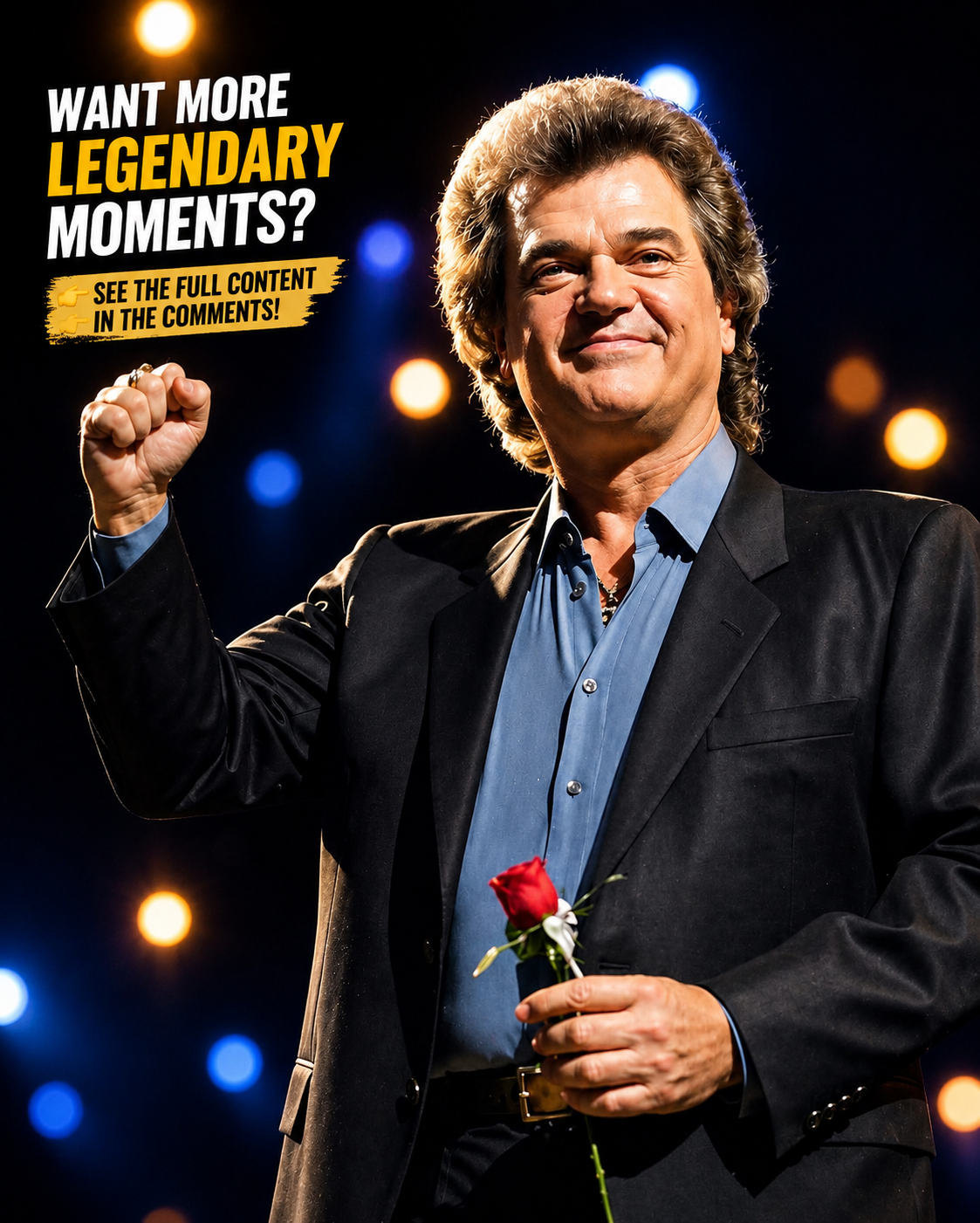
Intro
Some country songs become popular. Others become part of people’s lives. For Conway Twitty, one song accomplished both. “Hello Darlin’” was more than a chart-topping hit—it became the voice of heartbreak, longing, and memories that never truly fade.
Long before he became one of country music’s most recognizable stars, Conway Twitty was Harold Lloyd Jenkins, born on September 1, 1933, in the small Mississippi community of Friars Point. From humble beginnings along the Mississippi River to sold-out concert halls across America, his journey was built on a remarkable ability to understand and express ordinary human emotions.
That gift would eventually produce one of the most unforgettable songs in country music history.
H2: A Young Dreamer from Mississippi
Growing up in rural Mississippi was not glamorous. Conway Twitty was raised in a hardworking family, where responsibility arrived early and success required determination. His father worked as a ferryboat captain, and life revolved around simple values, honest labor, and close-knit community ties.
Those early experiences shaped the artist he would become. He paid attention to the stories around him—the struggles of working people, the joys of family life, and the heartbreak that often accompanied love. Years later, those observations would provide the emotional foundation for many of his greatest songs.
Before country music embraced him, Twitty explored other musical styles and found success in rock and roll. Yet his greatest achievements were still ahead.
H2: The Birth of “Hello Darlin’”
H3: Simplicity That Spoke Volumes
In 1970, Conway Twitty introduced a song that seemed almost effortless in its concept. “Hello Darlin’” told the story of an unexpected encounter between former lovers. There were no dramatic confrontations, no elaborate lyrics, and no complicated storytelling.
Instead, the song relied on a simple greeting and the emotions hidden behind it.
What made the record extraordinary was its authenticity. Twitty delivered every line with restraint and sincerity, allowing listeners to hear the pain, affection, and regret beneath the words. Rather than performing for an audience, he sounded like a man speaking directly to someone he had never stopped loving.
That emotional honesty transformed the song into something timeless.
H3: A Connection with Millions
Listeners immediately recognized themselves in the story. Almost everyone has experienced a relationship that left a lasting mark, and “Hello Darlin’” captured that feeling perfectly.
The song quickly climbed the charts and became one of the most celebrated country recordings of its era. Yet its success could not be measured solely by sales or radio play. It connected with people on a deeply personal level, making it far more than just another hit record.
H2: The Signature Song of a Legendary Career
Over the course of his remarkable career, Conway Twitty achieved milestones that few artists could match. He recorded 55 No. 1 singles and sold more than 50 million records worldwide.
Despite those accomplishments, “Hello Darlin’” remained uniquely important.
Whenever Twitty stepped onto a stage, audiences eagerly waited for those familiar opening words. The moment he spoke them, a bond formed instantly between performer and listener. Fans knew every line, yet the emotional impact never diminished.
Many songs showcased Conway Twitty’s vocal talent and commercial success. “Hello Darlin’” revealed something deeper—it reflected the heart behind the artist.
H2: The Final Chapter
On June 4, 1993, Conway Twitty performed in Branson, Missouri, continuing the demanding schedule he had maintained throughout much of his life. To those in attendance, it appeared to be another memorable evening with a country music icon.
Few could have imagined it would be among his final performances.
After the show, Twitty became seriously ill. He was rushed to a hospital, where he passed away the following morning at just 59 years old.
The news shocked the country music world. Fans had come to view his voice as a permanent presence—one of those rare sounds that seemed destined to endure forever. His passing left a void that many felt could never truly be filled.
H2: The Music He Never Stopped Chasing
One of the most touching aspects of Conway Twitty’s legacy is the belief that he remained creatively inspired until the very end. Family members and those close to him have recalled that he continued working on ideas and songs during his final weeks.
There is something profoundly moving about that image.
Even after decades of success, countless awards, and record-breaking achievements, he was still searching for the next melody, the next story, and the next lyric that might capture a piece of human experience.
That dedication reveals the essence of who Conway Twitty truly was. He was not simply a superstar. He was a songwriter who never stopped listening to life and turning its emotions into music.
Conclusion
More than three decades after his passing, Conway Twitty’s influence remains strong. New generations continue to discover his recordings, and “Hello Darlin’” still resonates with listeners who understand the power of love, loss, and memory.
His greatest achievement was not the number of records he sold or the chart positions he earned. It was his ability to make people feel understood.
With just two words, Conway Twitty created a connection that has lasted for generations.
“Hello Darlin’” was never merely a song. It became a lasting conversation between an artist and the people who continue to carry his music in their hearts.