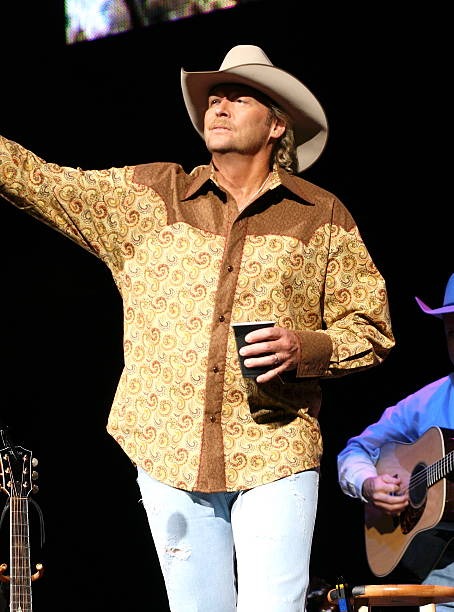
What “Where Were You (When the World Stopped Turning)” Really Means — And Why It Still Resonates Today
Introduction
There are songs that capture a moment—and then there are songs that become that moment. When Alan Jackson quietly debuted “Where Were You (When the World Stopped Turning)” at the 2001 Country Music Association Awards, the room fell into a rare kind of silence. No elaborate production, no dramatic staging—just a simple melody and a question that millions of people had been asking themselves.
More than two decades later, the song remains one of the most recognizable responses to the events of September 11, 2001. But its meaning goes deeper than a historical reference. To understand why it still resonates, it helps to look at the context in which it was written, the artist behind it, and the unique way the song approaches grief, confusion, and humanity.
Alan Jackson: A Voice Rooted in Honesty
Early Life and Career
Born in 1958 in Newnan, Georgia, Alan Jackson emerged in the late 1980s as part of country music’s “neotraditional” movement. His sound blended classic honky-tonk influences with contemporary storytelling, helping him stand out during a time when country music was evolving rapidly.
Musical Style and Achievements
Jackson’s style is often defined by simplicity and sincerity. Songs like “Chattahoochee,” “Remember When,” and “Drive (For Daddy Gene)” reflect everyday life, family, and personal memory—topics that resonate broadly without feeling forced.
Over his career, he has earned multiple Grammy Awards, Country Music Association Awards, and Academy of Country Music honors. He is also a member of the Country Music Hall of Fame, a recognition of his long-standing influence on the genre.
The Context Behind the Song
A Nation Searching for Words
Following the attacks of September 11, 2001, the United States—and much of the world—entered a period of collective shock. Public figures, including musicians, faced an unusual challenge: how to respond to an event that seemed almost impossible to process.
According to interviews cited by sources like Billboard and the Country Music Hall of Fame, Alan Jackson initially struggled with whether he should even write about the tragedy. He has said that he didn’t feel qualified to offer political commentary or grand statements.
Writing From Uncertainty
Instead of trying to explain what happened, Jackson chose a different approach: asking questions. The song’s central line—“Where were you when the world stopped turning?”—is not rhetorical. It reflects genuine confusion and invites listeners to reflect on their own experiences.
This decision shaped the entire tone of the song. Rather than presenting answers, it creates space for shared reflection.
What the Song Really Means
A Personal, Not Political, Perspective
One of the most striking aspects of “Where Were You (When the World Stopped Turning)” is what it avoids. The song does not assign blame, promote ideology, or attempt to interpret the event in geopolitical terms.
Instead, it focuses on individual reactions:
- Watching the news in disbelief
- Calling loved ones
- Turning to faith or community
By doing so, Jackson shifts the focus from what happened to how people felt. This makes the song accessible to a wide audience, regardless of personal beliefs.
The Power of Simplicity
Musically, the song is understated. It relies on acoustic instrumentation and a steady, almost conversational vocal delivery. This simplicity mirrors the emotional tone—quiet, reflective, and unforced.
Critics from outlets like Rolling Stone have noted that this restraint is part of what makes the song effective. It does not attempt to overwhelm the listener; instead, it allows the weight of the subject to speak for itself.
Shared Memory and Collective Experience
At its core, the song is about memory. Nearly everyone who lived through that day remembers where they were, what they were doing, and how they felt. By framing the song around that shared experience, Jackson creates a kind of musical time capsule.
It’s not just a tribute—it’s a record of collective emotion.
Reception and Cultural Impact
Immediate Response
When Jackson performed the song at the 2001 CMA Awards, it received a standing ovation. The performance was widely covered by major media outlets and quickly became one of the defining musical moments of that period.
The song went on to top the Billboard Hot Country Songs chart and crossed over into the Billboard Hot 100, an uncommon achievement for a traditional country ballad.
Critical Recognition
The song earned several awards, including a Grammy for Best Country Song. It has also been recognized by the Country Music Hall of Fame as an important cultural artifact tied to a specific historical moment.
Long-Term Legacy
More than 20 years later, the song continues to be referenced in discussions about how artists respond to tragedy. It is often cited as an example of how music can provide comfort without overstepping into sensationalism or speculation.
Why It Still Resonates Today
Timeless Themes
Although rooted in a specific event, the themes of the song—uncertainty, empathy, and reflection—are not limited to one moment in history. These are universal human experiences that remain relevant in times of crisis.
A Different Kind of Tribute
Many songs written in response to major events aim to inspire or uplift. Jackson’s approach is quieter. It acknowledges confusion and vulnerability, which can feel more authentic to listeners who experienced the event firsthand.
A Reminder of Music’s Role
The song also highlights the role of music as a form of documentation. Just as photographs or news footage capture visual history, songs like this capture emotional history.
Alan Jackson’s Broader Legacy
Beyond this single track, Alan Jackson’s career reflects a consistent commitment to authenticity. His work has helped preserve traditional country sounds while still reaching modern audiences.
He has influenced a generation of artists who value storytelling and emotional honesty over production-heavy trends. In that sense, “Where Were You (When the World Stopped Turning)” is not an outlier—it’s a natural extension of his artistic identity.
Conclusion
What does “Where Were You (When the World Stopped Turning)” really mean? The answer is both simple and complex. It’s not a political statement or a definitive interpretation of history. Instead, it’s a reflection—of a moment, of a nation, and of the individuals who lived through it.
By choosing to ask questions rather than provide answers, Alan Jackson created a song that continues to resonate long after the event itself. It reminds listeners that sometimes, the most meaningful response is not to explain—but to remember.
SEO Title
What “Where Were You (When the World Stopped Turning)” Really Means – Alan Jackson’s Most Powerful Song Explained
Meta Description
Explore the true meaning behind Alan Jackson’s “Where Were You (When the World Stopped Turning)” and why this 9/11 tribute still resonates today.
Slug URL
what-where-were-you-meaning-alan-jackson
Alternative Headlines
- The Real Meaning Behind Alan Jackson’s Most Emotional Song
- Why “Where Were You” Still Matters More Than 20 Years Later
- How Alan Jackson Captured a Nation’s Memory in One Song
Sources
- Billboard
- Rolling Stone
- Country Music Hall of Fame
- Recording Academy (Grammy Awards)
- Alan Jackson Official Website