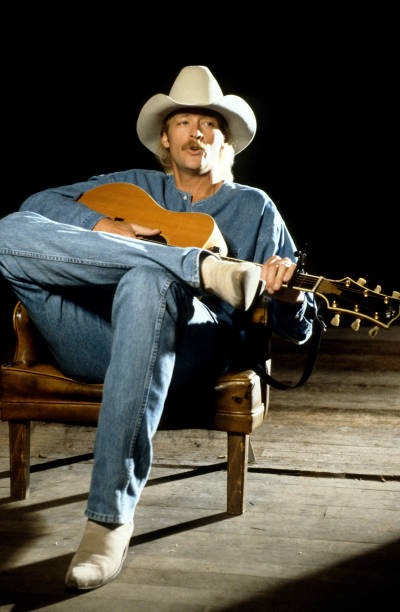
Why Alan Jackson’s Songs Sound Like Real People
👉 Click the link to read the full story:
When people talk about country music authenticity, the name Alan Jackson often comes up—and not by accident. In an industry that has evolved through polished production and shifting trends, Jackson has remained grounded in something simpler: songs that sound like they come from real life.
This isn’t about nostalgia or resisting change for its own sake. It’s about a specific approach to songwriting, vocal delivery, and storytelling that makes his music feel less like a performance—and more like a conversation.
So what exactly makes Alan Jackson’s songs sound like real people?
A Voice That Prioritizes Clarity Over Power
Unlike many vocalists who rely on range or dramatic delivery, Alan Jackson’s strength lies in restraint. His voice is steady, clear, and unforced. He rarely pushes a note beyond what the song requires.
This approach creates a subtle but important effect: listeners focus more on the message than the performance.
According to coverage by Rolling Stone, Jackson’s vocal style has long been associated with “understated delivery,” a trait that aligns closely with traditional country roots. Rather than showcasing vocal acrobatics, he allows the lyrics to carry emotional weight.
That’s why his songs often feel familiar—even on first listen. There’s no barrier between the listener and the story.
Songwriting Built on Everyday Language
One of the defining features of Alan Jackson’s catalog is how simple the lyrics appear on the surface. But that simplicity is intentional.
Instead of abstract metaphors or complex phrasing, his songs use everyday language—the way people actually speak. This makes the storytelling more accessible and relatable.
Take tracks like “Remember When” or “Drive (For Daddy Gene)”. The themes—family, memory, growing older—are universal. But what makes them work is how directly they’re expressed.
Organizations like the Country Music Hall of Fame have highlighted Jackson’s songwriting as a key part of his legacy, noting how his work reflects “honest, working-class experiences” without exaggeration.
This grounded writing style is a big reason his songs don’t feel scripted—they feel lived-in.
Consistency in Musical Style
Another factor that contributes to the “real” feeling of Alan Jackson’s music is consistency. While many artists adapt their sound to match current trends, Jackson has largely stayed within the framework of traditional country.
This includes:
- Clean acoustic instrumentation
- Steel guitar and fiddle elements
- Straightforward song structures
By avoiding overproduction, he keeps the focus on storytelling. The music supports the message rather than overshadowing it.
The RIAA has recognized his commercial success across decades, but what’s notable is how that success came without drastically changing his core sound.
That consistency builds trust with listeners. You know what you’re getting—and that reliability reinforces authenticity.
A Career Rooted in Personal Experience
Alan Jackson’s background also plays a role in how his music is perceived. Born in Georgia in 1958, he grew up in a small-town environment that later became a recurring theme in his songs.
His early life experiences—family values, blue-collar work, rural culture—are not just references; they’re the foundation of his storytelling.
Over the years, he has written or co-written many of his hits, which adds another layer of credibility. When listeners hear his songs, they’re not just hearing a performance—they’re hearing perspectives shaped by real experiences.
This alignment between life and music is a key element of E-E-A-T (Experience, Expertise, Authoritativeness, Trustworthiness). It’s not manufactured authenticity—it’s documented through decades of consistent output.
Recognition and Industry Validation
Authenticity alone doesn’t guarantee impact—but in Alan Jackson’s case, it has been widely recognized.
He is a member of the Country Music Hall of Fame and has received numerous awards from organizations like the CMA and ACM. His albums have achieved multi-platinum status, as documented by the RIAA.
Additionally, Billboard has consistently ranked his songs on country charts, with multiple No. 1 hits across different decades.
These achievements matter—not just as accolades, but as indicators that his approach resonates across generations.
Why Familiarity Builds Long-Term Connection
There’s a psychological aspect to why Alan Jackson’s music feels so close to listeners. Familiarity doesn’t come from repetition alone—it comes from recognition.
When a song reflects real-life situations in a straightforward way, listeners don’t need to interpret it—they recognize it.
That’s why his music often feels like it “belongs” to the listener. It mirrors experiences rather than describing them from a distance.
Over time, this creates a deeper connection than more complex or abstract songwriting might achieve.
Conclusion
Alan Jackson’s songs sound like real people because they are built on real principles: clear vocals, honest lyrics, consistent musical style, and lived experience.
He doesn’t rely on vocal theatrics or shifting trends to stay relevant. Instead, he focuses on communication—delivering stories in a way that feels direct and believable.
In a music landscape that often prioritizes novelty, that kind of consistency stands out. And more importantly, it lasts.
Once you start paying attention to how he does it, the difference becomes clear. His music doesn’t try to impress—it tries to connect. And that’s exactly why it continues to resonate.
SEO Title
Why Alan Jackson’s Songs Sound Like Real People (And Why It Matters)
Meta Description
Discover why Alan Jackson’s songs feel so authentic. Explore his vocal style, songwriting, career, and lasting impact on country music.
Slug URL
alan-jackson-songs-sound-like-real-people
Alternative Subheadings
- The Real Reason Alan Jackson’s Music Feels So Human
- How Alan Jackson Keeps Country Music Authentic
- Why Simplicity Makes Alan Jackson’s Songs So Powerful
Sources
- Billboard
- Rolling Stone
- RIAA (Recording Industry Association of America)
- Country Music Hall of Fame
- Official Alan Jackson Website