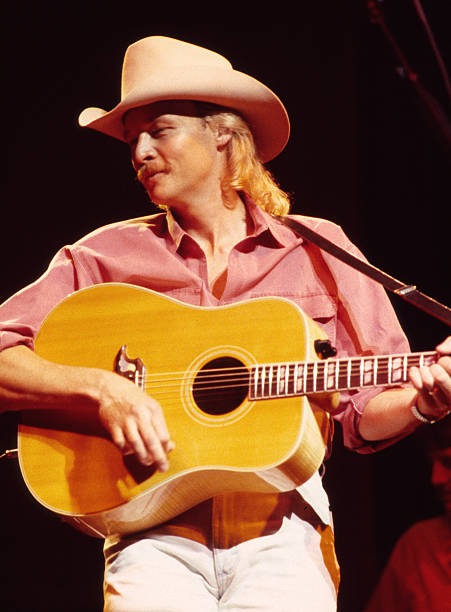
A Career Built on Passion and Talent: The Enduring Legacy of Alan Jackson
Introduction
On a quiet country road, somewhere between memory and melody, a familiar tune drifts through the air—simple, honest, and unmistakably heartfelt. It’s the kind of song that doesn’t demand attention but earns it anyway. That’s the essence of Alan Jackson’s music. For decades, his work has stood as a reminder that authenticity still has a place in modern country music. But how did a soft-spoken artist from Georgia build a career that continues to resonate across generations?
Early Life and Humble Beginnings
Born in Newnan, Georgia, in 1958, Alan Jackson grew up in a modest household shaped by gospel music and traditional country sounds. His early influences included legends like George Jones and Hank Williams—artists known for their raw storytelling and emotional depth.
Before fame, Jackson worked as a construction worker while pursuing music on the side. A turning point came when his wife, Denise, helped him make industry connections in Nashville. His persistence paid off when he signed with Arista Nashville in the late 1980s, marking the beginning of a career defined by both passion and discipline.
Rise to Stardom in the 1990s
A Breakthrough Era
The 1990s proved to be a defining decade for Alan Jackson. His debut album, Here in the Real World (1990), introduced audiences to a refreshing blend of traditional country and contemporary themes. Songs like “Chasin’ That Neon Rainbow” and the title track quickly established him as a voice of authenticity.
Throughout the decade, Jackson released a string of successful albums, including Don’t Rock the Jukebox and A Lot About Livin’ (And a Little ’bout Love). These records produced chart-topping hits and earned widespread recognition from organizations like Billboard and Recording Industry Association of America.
Signature Songs and Cultural Impact
Tracks such as “Remember When,” “Chattahoochee,” and “Drive (For Daddy Gene)” became staples of country radio. Rather than chasing trends, Jackson leaned into storytelling—often drawing from personal experiences. This approach not only resonated with listeners but also helped preserve the narrative tradition of country music.
Musical Style: Tradition Meets Simplicity
A Commitment to Authenticity
Alan Jackson’s music is often described as “neotraditional country,” a style that emphasizes classic instrumentation and straightforward storytelling. Unlike many of his contemporaries, he avoided heavy production or crossover pop influences, choosing instead to remain rooted in traditional sounds.
His songs frequently explore themes of love, family, faith, and everyday life. This consistency has contributed to a strong and loyal fan base. While some artists evolve by changing their style dramatically, Jackson’s evolution has been more subtle—refining rather than reinventing.
Songwriting as a Core Strength
A significant aspect of Jackson’s career is his role as a songwriter. He has written or co-written many of his biggest hits, giving his music a personal and credible voice. This creative control has allowed him to maintain a clear artistic identity over decades.
Major Achievements and Recognition
Alan Jackson’s career is marked by numerous accolades that reflect both commercial success and critical respect. He has earned multiple awards from institutions such as the Country Music Association and the Academy of Country Music.
In 2017, he was inducted into the Country Music Hall of Fame, a milestone that solidified his place among the genre’s most influential figures. His albums have sold millions of copies worldwide, with several achieving multi-platinum status according to the RIAA.
Beyond awards, Jackson’s influence is evident in how often his songs are covered, referenced, or cited by newer artists. His ability to maintain relevance without compromising his style is a rare achievement in the music industry.
Lasting Influence and Legacy
Inspiring Future Generations
Alan Jackson’s impact extends beyond his own discography. Many contemporary country artists credit him as an inspiration, particularly for his dedication to traditional sounds. In an era where genre boundaries often blur, his work serves as a benchmark for authenticity.
A Voice That Endures
Even as country music continues to evolve, Jackson’s songs remain widely played and appreciated. His music appeals not only to long-time fans but also to younger listeners discovering classic country for the first time.
It’s fair to say that Alan Jackson didn’t just build a career—he helped shape a standard. His work reminds us that passion and talent, when combined with consistency and integrity, can create something that lasts far beyond trends.
Conclusion
Alan Jackson’s journey from a small-town upbringing to becoming a cornerstone of country music is a testament to the power of staying true to one’s roots. His career, built on genuine passion and undeniable talent, offers a compelling example of how authenticity can lead to lasting success.
While the music industry continues to change, Jackson’s legacy remains steady—grounded in storytelling, simplicity, and sincerity. And in a world often driven by fleeting moments, that kind of legacy feels more valuable than ever.
SEO Title
Alan Jackson: A Career Built on Passion and Talent in Country Music
Meta Description
Explore how Alan Jackson built a legendary country music career through authenticity, timeless songs, and lasting influence.
Slug URL
alan-jackson-career-passion-talent
Alternative Headlines
- The Story Behind Alan Jackson’s Timeless Country Music Career
- How Alan Jackson Shaped Modern Country with Tradition
- Alan Jackson’s Journey: From Small Town Roots to Country Legend
Sources
- Billboard
- Rolling Stone
- Recording Industry Association of America (RIAA)
- Country Music Hall of Fame
- Official Alan Jackson Website