Intro

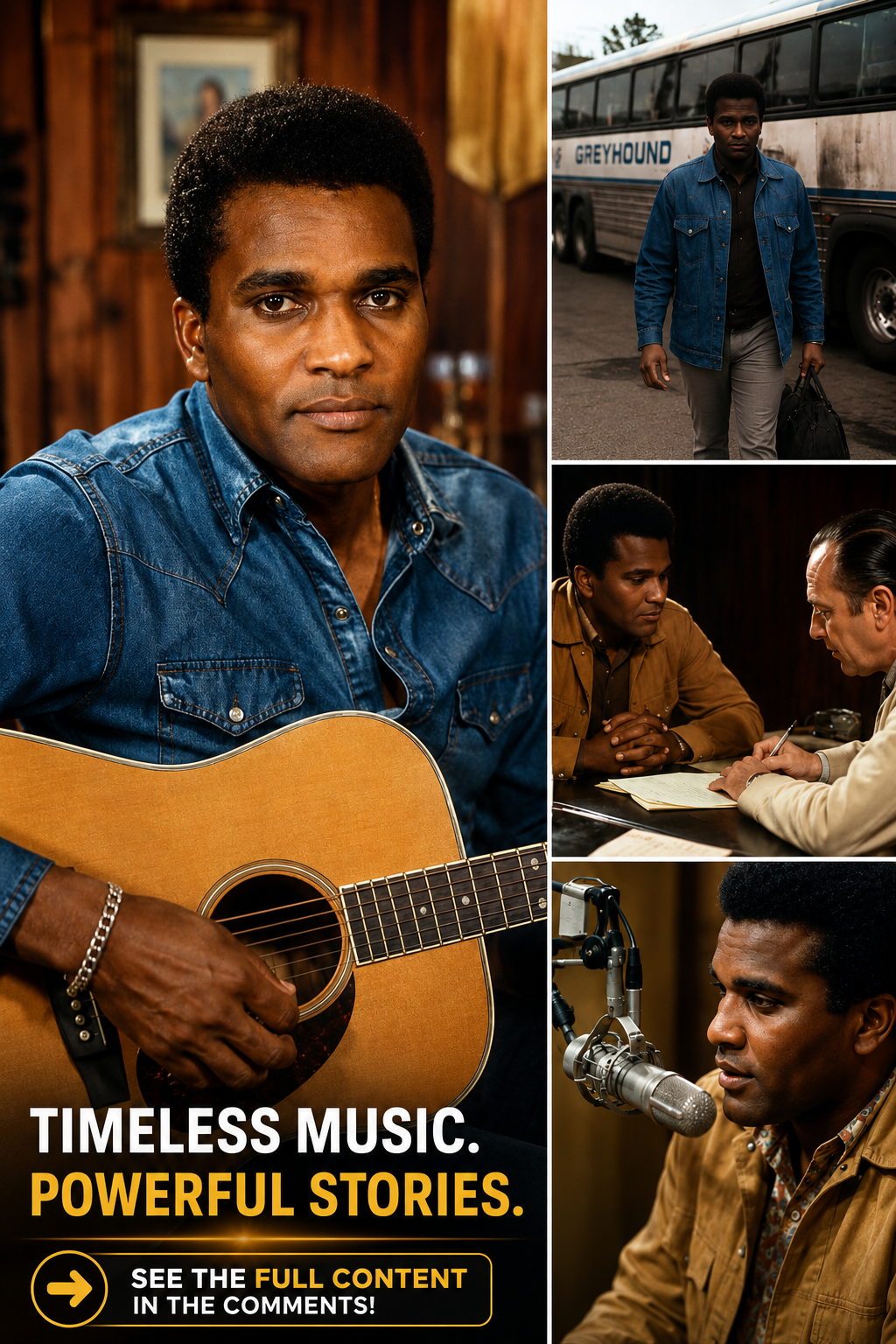
Some of the most important moments in history begin quietly. There are no crowds, no headlines, and no signs that anything extraordinary is about to happen. For Charley Pride, one of those moments came after a disappointing baseball tryout. What seemed like the end of a lifelong dream became the first step toward a future that would transform country music forever.

When Baseball Was the Dream

Long before he became a country music icon, Charley Pride dedicated himself to baseball. He believed the sport would be his path to success and spent years pursuing opportunities on the field. Like many young athletes, he envisioned a future built around competition, determination, and the possibility of playing at the highest level.

Baseball was not simply a hobby—it was his primary ambition. Music existed in his life, but it remained secondary while he focused on building a career as an athlete.

Unfortunately, not every dream unfolds as planned. After attending a tryout with the New York Mets organization, Pride realized the future he had imagined might not be within reach.

A Suggestion That Changed Everything

Years before that disappointing moment, country singer Red Sovine had offered Pride a simple piece of advice. If he ever decided to pursue music seriously, he should visit Cedarwood Publishing in Nashville.

At the time, it seemed like casual guidance. Yet those words stayed with Pride.

After the baseball opportunity faded, he found himself traveling through Nashville. Instead of dwelling on disappointment, he remembered Sovine’s recommendation and decided to take a chance on something different.

Choosing Hope Over Defeat

Many people would have returned home feeling defeated. Pride chose another path.

Armed with little more than determination, a strong voice, and a willingness to try, he decided to see whether Nashville might offer possibilities that baseball no longer could.

It was a small decision, but one that would alter the course of his life.

The Walk That Led to History

After arriving at the Greyhound bus station in Nashville, Pride made his way to Cedarwood Publishing.

There was nothing glamorous about the journey. No record deal was waiting for him. No industry executives were expecting his arrival. He was simply a hopeful young man willing to knock on a door and ask for an opportunity.

The uncertainty of that walk made it remarkable. Pride had no guarantees that anyone would listen to him or take his talent seriously. Yet he understood that success often requires taking chances before the outcome is known.

Meeting the Right Person at the Right Time

At Cedarwood Publishing, Pride met Jack Johnson, who immediately recognized something special.

Johnson saw potential in a voice that stood apart from the crowd. At a time when country music offered very few opportunities for Black performers, finding someone willing to listen was significant.

Their meeting was not dramatic or widely publicized. It was a simple conversation between two people. Yet history often turns on moments that seem ordinary at the time.

A Demo Recording Opens New Doors

After hearing Pride sing, Johnson recorded a few songs as a demonstration tape.

That recording became far more important than either man could have imagined. It served as a bridge between uncertainty and possibility, creating opportunities that would eventually launch one of the most influential careers in country music history.

When Pride left Nashville, he was no longer carrying only disappointment from baseball. He was carrying hope that a new future might be waiting.

The path ahead was still uncertain, but for the first time, it was visible.

From Unknown Singer to Country Music Pioneer

What followed is now part of country music history.

Charley Pride went on to become one of the genre’s most successful and respected artists. He broke barriers, earned countless awards, and inspired generations of performers who followed him.

Yet none of those achievements would have happened without a simple decision to keep moving forward after rejection.

His remarkable career can be traced back to one ordinary walk through Nashville and one person willing to listen.

Why the Story Continues to Inspire

People often focus on success while overlooking the difficult moments that came before it. Charley Pride’s journey reminds us that setbacks are not always endings.

Sometimes a closed door redirects us toward something greater.

His story demonstrates the power of perseverance, courage, and faith in possibility. When one dream seemed to disappear, he found the confidence to pursue another. That decision not only changed his own life but also left a lasting impact on country music.

Conclusion

Charley Pride arrived in Nashville believing that baseball had let him down. Instead, he discovered an opportunity that would shape the rest of his life. A piece of advice, a walk from a bus station, and a chance meeting at Cedarwood Publishing became the foundation of an extraordinary career.

What looked like rejection turned out to be redirection. And because Charley Pride chose to keep going, country music gained one of its most groundbreaking and influential voices.

You Missed

IN 1988, VERN GOSDIN SANG ABOUT A NAME CUT INTO A TOMBSTONE. YEARS LATER, LIFE MADE THAT LYRIC HIS OWN. The song was Chiseled in Stone, but Vern Gosdin did not write it from his own tragedy. He wrote it with Max Barnes, a songwriter who had already lived through a pain no parent should ever know. Max’s eighteen-year-old son, Patrick, had died in a car accident years before. That loss stayed with him quietly, until one day in a Nashville writing room, he gave Vern a sentence that carried all of it. “You don’t know about lonely ’til it’s chiseled in stone.” Vern did not need to shout the line. He never did. They called him “The Voice” because he could break a heart by barely lifting his own. He sang it gently, slowly, and with a kind of sorrow that sounded older than the song itself. In 1989, Chiseled in Stone won CMA Song of the Year. For Vern, success had arrived late, when he was already fifty-five. Standing there, he thanked Max for the words that had come from another man’s grief. At the time, Vern had not yet paid that price himself. Then came January 2002. His son Marty was murdered in Ellijay, Georgia. Marty was forty-three years old. After that, Vern stepped away from singing for a while. And when he finally returned, the people who heard him perform Chiseled in Stone noticed something had changed. He sang it slower. He sang it deeper. He stayed on the word lonely just a little longer than before. And when he reached the line about the tombstone, he often looked down, as if the floor could hold the weight of what the crowd could not see. For fourteen years, people thought they understood that song. After Marty’s death, they realized Vern himself had only been borrowing the pain when he first recorded it. In 1988, he carried Max Barnes’s sorrow. In 2002, he carried his own. Vern Gosdin died on April 28, 2009, in a Nashville hospital. He was laid to rest at Mount Olivet Cemetery, where his name was eventually carved into stone — just like the song had warned. The Voice was silent. But one of the most revealing turns in Vern’s life happened long before the world truly knew him. Back in 1964, while he was in Los Angeles, Vern was offered a place in a band that would soon help reshape American music. He refused. The reason he said no explains more about Vern Gosdin than any award ever could. It explains why, decades later, he could sing Chiseled in Stone as if every word had been waiting for him all along. Listen to this song in the 𝗳𝗶𝗿𝘀𝘁 𝗰𝗼𝗺𝗺𝗲𝗻𝘁.

IN 1976, GEORGE JONES AND TAMMY WYNETTE STOOD AT THE SAME MICROPHONE AGAIN — 14 MONTHS AFTER THEIR MARRIAGE HAD ENDED. The song was about a wedding ring that lasted longer than the love it once promised. George Jones was 44. Tammy Wynette was 33. They had already lived through the kind of love country music is made from — beautiful, painful, unforgettable, and finally broken. Their divorce became official in January 1975, but fans still could not separate them. At Tammy’s concerts, people kept asking the same question: “Where’s George?” Then came “Golden Ring.” Written by Bobby Braddock and Rafe Van Hoy, the song followed one small ring through hope, marriage, heartbreak, and loss. A young couple sees it in a Chicago pawn shop. They buy it, marry with it, fight under it, and eventually let it go. In the end, the ring returns to the pawn shop window, waiting for another couple who still believes love will last. For George Jones, recording with Tammy again was not easy. He later admitted it was not something he wanted to do. The memories were too heavy. But once the music started, the pain became part of the performance. Tammy Wynette sang like someone still holding on to the dream. George Jones answered with a voice full of weariness, regret, and truth. They were no longer husband and wife, but their voices still knew each other perfectly. “Golden Ring” reached No. 1 in August 1976. In life, George Jones and Tammy Wynette had signed the papers and walked away from their marriage. But in country music, they were still being pulled back together — one song, one memory, one microphone at a time. What remained between George Jones and Tammy Wynette in their voices, even after it disappeared from their home? Listen to this song in the 𝗳𝗶𝗿𝘀𝘁 𝗰𝗼𝗺𝗺𝗲𝗻𝘁

THE FINAL NIGHT OF CONWAY TWITTY’S LIFE STARTED LIKE ANOTHER NIGHT ON THE ROAD — UNTIL EVERYTHING CHANGED AFTER THE SHOW. June 4, 1993. Branson, Missouri. Conway Twitty had just finished performing at the Jim Stafford Theatre. The crowd had heard that unmistakable voice one more time. After leaving the stage, he talked with his band about the songs they might do the following night, then made his way back to the tour bus. That was when the night turned frightening. Once on the bus, Conway was struck by severe pain. What should have been a normal post-show ride became a moment of panic and fear. He was taken to a hospital in Springfield, Missouri, where doctors discovered an abdominal aortic aneurysm. He was only 59 years old. That detail still makes the story hard to accept. Conway Twitty’s final hours were not spent quietly reflecting on his fame, his awards, or the records he had broken. They were spent the same way he had lived for so many years — focused on the music, his band, his fans, and the next show waiting ahead. By then, Conway had already built a country music legacy few could match, with 40 Billboard country No. 1 hits and a stage name inspired by Conway, Arkansas, and Twitty, Texas. But beneath all the success, he remained a singer who belonged to the road. He was not acting like a legend ready to stop. He was still planning the next song. That final night in Branson became the last chapter of Conway Twitty’s life — and what happened after he stepped off that stage is a story many fans still don’t fully know. Listen to this song in the 𝗳𝗶𝗿𝘀𝘁 𝗰𝗼𝗺𝗺𝗲𝗻𝘁