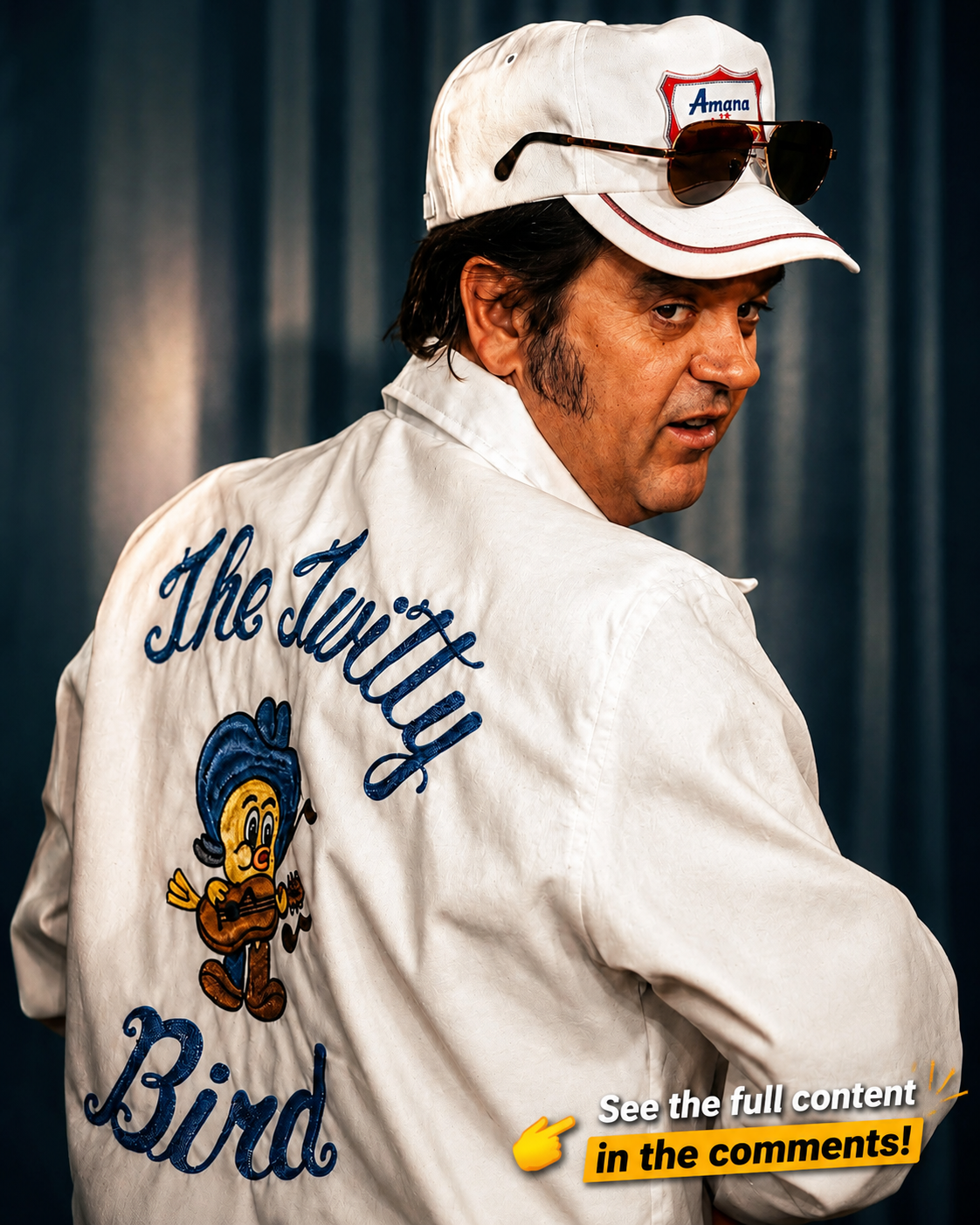
Conway Twitty’s Greatest Victory: Winning Over the City That Once Rejected Him
Introduction
Long before he became one of the most successful artists in country music history, Conway Twitty was already a household name. His popularity was so widespread that his name found its way onto the Broadway stage, becoming part of a joke audiences instantly understood. Few entertainers ever reach that level of recognition.
Yet despite his fame, Twitty would soon face one of the toughest challenges of his career. When he decided to leave the world of rock and pop behind and pursue country music, he discovered that success in one genre guaranteed nothing in another. The city he hoped would welcome him instead greeted him with doubt.
What followed became one of the most remarkable comeback stories in country music history.
H2: From National Celebrity to Country Music Newcomer
By the late 1950s and early 1960s, Conway Twitty had established himself as a major recording star. His smooth vocals and chart success made him one of the most recognizable performers in America.
His fame extended beyond radio and record stores. Broadway writers even borrowed his name for a character in the musical Bye Bye Birdie, a sign that Twitty had become a cultural figure known far beyond the music industry. Eventually, the character’s name was changed, but the incident demonstrated just how famous he had become.
At that point, his future in popular music seemed secure. Few could have predicted that he would soon take a risk that might jeopardize everything he had built.
H2: The Risky Decision That Changed His Career
Rather than continue following the path that had already made him successful, Twitty chose to pursue country music.
It was not a fashionable move at the time. Switching genres was often viewed with suspicion, especially when an artist came from the pop and rock world. Many country traditionalists believed outsiders could not truly understand the culture and values that defined the genre.
For Twitty, the transition was far more difficult than expected.
H3: Nashville Was Not Ready to Accept Him
Country radio programmers, industry executives, and many longtime fans questioned whether he belonged. To them, Conway Twitty was still a former rock-and-roll star attempting to reinvent himself.
Some stations showed little interest in playing his music. Others simply ignored it. The response was not just cautious—it was often openly dismissive.
For several years, his country recordings struggled to gain momentum. The artist who had once enjoyed widespread success suddenly found himself fighting for recognition all over again.
H2: Persistence Finally Paid Off
Many performers would have returned to the genre where they were already comfortable. Twitty chose a different path.
Instead of complaining about the resistance he faced, he focused on improving his craft and proving himself through his music. He continued recording, performing, and refining his approach to country storytelling.
His determination finally began to pay off in 1968 when “The Image of Me” became a major success and reached the country Top 10.
The breakthrough did not instantly erase years of skepticism, but it changed the conversation. Nashville started paying attention.
H2: Becoming One of Country Music’s Biggest Stars
Once he earned a foothold in country music, Conway Twitty never looked back.
His rich voice, emotional delivery, and ability to connect with listeners made him a perfect fit for songs about love, heartbreak, devotion, and regret. Audiences embraced him, and hit records followed one after another.
What had once seemed like an unlikely career move soon appeared inevitable. Twitty had found the audience that would define the rest of his career.
H3: Breaking Records and Making History
Over the following decades, Conway Twitty built one of the most impressive careers country music had ever seen.
He accumulated an astonishing 55 number-one hits, setting a benchmark that stood for years. His success placed him among the genre’s all-time greats and cemented his legacy as one of country music’s most influential voices.
More importantly, he achieved that success in the very place where people once questioned whether he belonged.
H2: A Legacy Built on Determination
Conway Twitty’s story is about more than chart records and awards. It is a lesson in perseverance.
He entered country music carrying the label of an outsider. Rather than allowing rejection to define him, he used it as motivation. Through patience, consistency, and talent, he earned the respect that was never freely given.
The industry that initially doubted him eventually celebrated him as one of its greatest stars.
Conclusion
Few artists have experienced a journey quite like Conway Twitty’s. He was famous before Nashville accepted him and legendary after Nashville could no longer deny his impact.
His career proves that rejection is not always the end of the story. Sometimes it is simply the beginning of a much greater chapter.
Broadway once turned his name into a joke. Nashville once questioned his place in country music. In the end, Conway Twitty outlasted both opinions and became one of the defining voices in the history of the genre. His music, his records, and his influence continue to remind generations that persistence can accomplish what talent alone sometimes cannot.