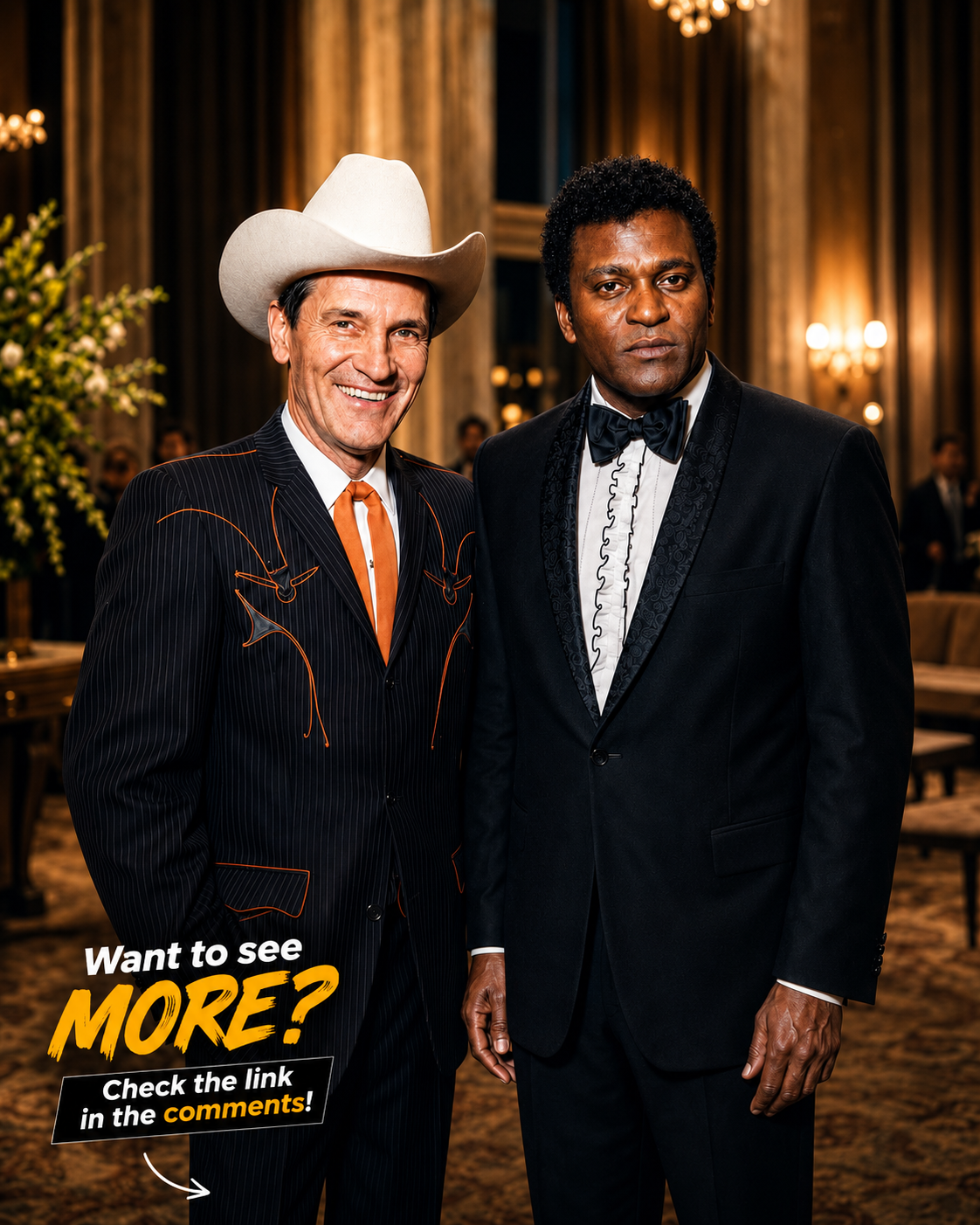
ERNEST TUBB LEFT THIS WORLD IN 1984. BUT CHARLEY PRIDE SPENT THE NEXT 36 YEARS SHOWING WHY ONE NIGHT IN JANUARY 1967 COULD NEVER BE FORGOTTEN. Charley Pride’s road to country music history was never simple. In 1967, Nashville was still a place where a Black man stepping onto the Grand Ole Opry stage carried a weight far heavier than a guitar. He was the son of sharecroppers from Sledge, Mississippi. He grew up around cotton fields, a Sears guitar, a Philco radio, and a dream that first pointed toward baseball. Before country music ever opened its doors to him, Pride had already learned to love the sound from far away. Then came Ernest Tubb. The Texas Troubadour was not just another singer. He was one of the men who helped shape the world Charley Pride was hoping to enter. When Pride made his Grand Ole Opry debut in January 1967, it was Ernest Tubb who introduced him. That moment was more than a formal announcement. It was a country music legend lending his voice to a young man standing before an uncertain room. Pride was nervous, and anyone in his place would have been. But once he walked out, history changed. The boy from Mississippi cotton fields became one of the most powerful and important voices country music would ever know. When Ernest Tubb passed away on September 6, 1984, Charley Pride was 50 years old. His own journey was far from over. He would later become a Grand Ole Opry member in 1993, enter the Country Music Hall of Fame in 2000, and carry his legacy all the way to his final year in 2020. Some kindness can never be repaid with words. It lives on through the stages you respect, the doors you open, and the names you keep alive. Maybe the real story is not only what Ernest Tubb said that night. Maybe it is how many lives changed because he chose to say Charley Pride’s name when the world was not fully ready to hear it. Listen this song in the π—³π—Άπ—Ώπ˜€π˜ π—°π—Όπ—Ίπ—Ίπ—²π—»π˜

The Night Ernest Tubb Opened the Door for Charley Pride

Introduction

There are moments in country music that last far longer than the sound of applause. Some happen during a chorus, some beneath the lights of the Grand Ole Opry, and some in the simple act of one respected man speaking another man’s name.

For Charley Pride, one of those moments came in January 1967, when Ernest Tubb introduced him on the Grand Ole Opry stage. It was more than a formal announcement. It was a gesture of trust, courage, and recognition at a time when country music was still learning how wide its own doors could open.

Charley Pride would spend the rest of his life proving that he belonged there.

A Voice That Carried Country Before Nashville Listened

Long before Charley Pride became one of country music’s most celebrated voices, he was a boy from Sledge, Mississippi, growing up around hard work, cotton fields, and music that reached him through the radio.

Country music was not something he discovered after fame found him. It had already become part of him. The sound, the stories, the sorrow, and the honesty of the genre lived in his heart long before Nashville placed a spotlight on his face.

Before the awards, before the sold-out crowds, and before history books called him a pioneer, Charley Pride was simply a man with a country voice and a dream that refused to leave him.

From Baseball Fields to Country Stages

For a time, baseball seemed like the path Charley Pride might follow. He played in the Negro Leagues, traveling from town to town, chasing opportunity with discipline and hope.

Those years gave him more than athletic experience. They taught him endurance. They taught him how to keep going when doors closed, when plans changed, and when the road ahead was uncertain.

But music never disappeared. Even while baseball carried him across different places, the voice remained. The dream remained. Country music was waiting for the right moment to call him forward.

Ernest Tubb’s Introduction Meant Everything

A Legend Standing Beside a New Voice

When Charley Pride stepped onto the Grand Ole Opry stage in January 1967, the moment carried a weight that few artists could fully understand. He was not just another new singer hoping to win over an audience. He was a Black country artist standing in one of the most sacred spaces in the genre.

That night, Ernest Tubb’s role mattered deeply.

Known as the Texas Troubadour, Ernest Tubb was already a giant in country music. His name carried respect. His presence made people listen. When he stood before an audience, he brought with him the authority of a man who had helped shape the sound of the genre itself.

So when Ernest Tubb introduced Charley Pride, it was not just an introduction. It was a public act of belief.

A Door Opened Before Everyone Was Ready

Sometimes history changes because a crowd is prepared. Other times, it changes because one person with influence is willing to move first.

Ernest Tubb did not need a long speech to make the moment powerful. By saying Charley Pride’s name on that stage, he helped create space for the audience to hear the singer before judging the man.

And then Charley Pride sang.

Once his voice filled the room, the truth became impossible to ignore. He was not a novelty. He was not an experiment. He was not a passing headline.

He was a country singer.

Charley Pride Made the Moment Undeniable

The pressure on Charley Pride that night must have been enormous. He was standing in front of an audience that may have known his records before they knew his face. The room could have become tense. The moment could have gone wrong.

Instead, his voice carried him through.

Charley Pride sang with warmth, control, and honesty. He had the kind of voice that did not beg for acceptance. It simply revealed the truth. He belonged in country music because country music had always belonged in him.

That night did not remove every obstacle from his path, but it proved something important. Talent could silence doubt. A great song could reach beyond fear. And one powerful performance could begin changing the way people saw the future of the genre.

The Debt That Became a Lifetime Legacy

Ernest Tubb passed away on September 6, 1984. By then, Charley Pride had already become one of the most important and successful artists country music had ever known.

But the meaning of that 1967 introduction did not fade.

In 1993, Charley Pride became a member of the Grand Ole Opry. In 2000, he was inducted into the Country Music Hall of Fame. Across decades, he carried himself with grace, dignity, and strength, understanding both the honor and the burden of being the first in rooms where others had not yet been welcomed.

The debt Charley Pride owed to Ernest Tubb was not something he could repay with a single thank-you. It was repaid through a lifetime of excellence.

Every stage he stood on, every song he delivered, every younger artist he inspired, and every barrier he helped weaken became part of that repayment.

More Than an Introduction

What Ernest Tubb did that night was larger than a few words spoken into a microphone. He gave Charley Pride more than a stage entrance. He gave him a moment of protection, respect, and public recognition in a room where that support truly mattered.

And Charley Pride honored that moment by becoming impossible to dismiss.

He did not spend his life asking country music to make room for him. He proved, again and again, that the room should have included him all along.

Conclusion

The night Ernest Tubb said Charley Pride’s name remains one of those quiet but powerful moments in country music history. It was not loud. It was not dramatic. But it mattered.

Because sometimes a single introduction can change the way an audience listens. Sometimes one respected voice can help another voice be heard. And sometimes, when the right name is spoken at the right time, history begins to move.

Charley Pride took that moment and turned it into a legacy. Ernest Tubb opened the door, but Charley Pride walked through it with a voice strong enough to change country music forever.

You Missed

HE LEFT BEHIND ONE NAME, FOUND ANOTHER SOUND, AND TAUGHT COUNTRY MUSIC HOW HEARTBREAK SHOULD FEEL. BUT CONWAY TWITTY’S TRUE POWER WAS NEVER JUST IN THE CHARTS β€” IT WAS IN THE WAY HE MADE A SONG FEEL PERSONAL, AS IF EVERY WORD HAD BEEN saved for one listener alone. Before the world knew him as Conway Twitty, he was Harold Lloyd Jenkins, a Mississippi boy with big dreams, a love for baseball, and a voice that carried both rock-and-roll fire and something softer underneath. At first, he chased the bright lights. He followed the energy of youth, the pull of fame, and the sound of a world that was changing fast. Then country music opened a different door. Or maybe it simply gave him the room his voice had been waiting for. When Conway Twitty found his place in country, he did not have to force anything. He did not need to shout. He could ease into a lyric, drop his voice just enough, and turn a simple sentence into something that felt private, honest, and almost dangerous. Nashville had many great voices. Conway Twitty had closeness. He sang about love, regret, temptation, goodbye, and second chances like he understood every wound behind the words. Beside Loretta Lynn, he became one half of a duet partnership country fans never forgot. On his own, he became the singer people played when their hearts were too heavy to explain. But Conway Twitty did not become timeless simply because he moved from one genre to another. He became timeless because he learned how to make silence, softness, and restraint feel stronger than a scream. And one song proved that better than anything else β€” a song so intimate it almost felt too personal for radio, yet once listeners heard it, they could not look away. Listen to this song in the π—³π—Άπ—Ώπ˜€π˜ π—°π—Όπ—Ίπ—Ίπ—²π—»π˜

HE WAS 67 WHEN HIS SUV SLAMMED INTO A BRIDGE AT NEARLY 70 MILES AN HOUR. HIS HEART STOPPED TWICE IN THE HELICOPTER. WHEN HE OPENED HIS EYES AGAIN, THE SONG HE HAD SUNG FOR DECADES FINALLY MADE SENSE. George Glenn Jones was never expected to make it that far. He came from the Big Thicket of East Texas, raised under the shadow of a hard-drinking, violent father who forced him to sing β€” and punished him if he refused. As a boy, George learned that his voice could calm the storm in the room. As a man, that same voice became one of the greatest country music had ever heard. By his thirties, he was a legend. By his forties, he was β€œNo Show Jones,” missing paid concerts and leaving behind lawsuits, anger, and broken trust. By his fifties, even hiding the car keys could not stop him. When his wives tried to keep him away from the liquor store, he once climbed onto a riding lawn mower and drove eight miles down a Texas road just to get there. By 1999, many people close to him wondered how much time he had left. Then March 6 arrived. There was a bottle of vodka in the vehicle. There was a bridge outside Nashville. There was twisted metal, a torn liver, a punctured lung, and rescuers cutting him free with the Jaws of Life. Doctors told Nancy Jones he probably would not make it through the night. But George Jones lived. Three days later, when he woke up in that hospital bed, he made a promise to God. β€œIf you let me get through this, I’ll never drink again. I’ll never smoke again. I’ll become the man I should have been.” And this time, George meant it. He stared down the bottle and said no. Not just once. Forever. For the next fourteen years, George Jones walked onstage sober. He sang with a clearer heart. He told crowds across America, β€œIf I can do it, you can too.” Some men spend their lives running from their demons. The rare ones turn around, face them, and finally say goodbye. And the song Nancy played for him in the hospital room near the end β€” the one he had avoided listening to since 1980 β€” revealed the truth of the man behind the voice. Listen to this song in the π—³π—Άπ—Ώπ˜€π˜ π—°π—Όπ—Ίπ—Ίπ—²π—»π˜.

HE WAS 86 WHEN THAT DEEP BARITONE FINALLY FELL SILENT. For so many years, Charley Pride stepped into places where not everyone was ready to welcome him. Yet by the time his journey ended, America understood something it should have seen all along: Charley Pride had not simply been singing country music. He had been changing it. Born Charley Frank Pride in Sledge, Mississippi, he came from a family of sharecroppers and once dreamed of making his name in baseball. But life led him toward a different kind of field β€” one lit by stage lights, carried by steel guitars, and filled with songs about heartache, faith, love, and home. Before the awards, the gold records, and the Country Music Hall of Fame, he was a quiet man with a powerful voice and an even stronger spirit. In the 1960s, when he walked onto certain stages, people sometimes stared before they listened. Doubt filled the room before applause did. Then Charley began to sing. With songs like β€œAll I Have to Offer You (Is Me),” β€œIs Anybody Goin’ to San Antone,” and β€œKiss an Angel Good Mornin’,” he did more than climb the charts. He showed the world that country music belonged to any voice honest enough to carry its truth. Charley Pride never answered prejudice with bitterness. He answered with grace. He answered with songs that were steady, warm, and unforgettable. As the years passed, his legacy became more than fame. It became a path for others to follow. When Charley Pride passed away on December 12, 2020, country music lost far more than a star. It lost a man whose dignity spoke louder than doubt, and whose voice helped reshape an entire genre. Behind the gentle smile and golden sound was a life of courage, love, and quiet strength that still echoes today. Listen to this song in the π—³π—Άπ—Ώπ˜€π˜ π—°π—Όπ—Ίπ—Ίπ—²π—»π˜.