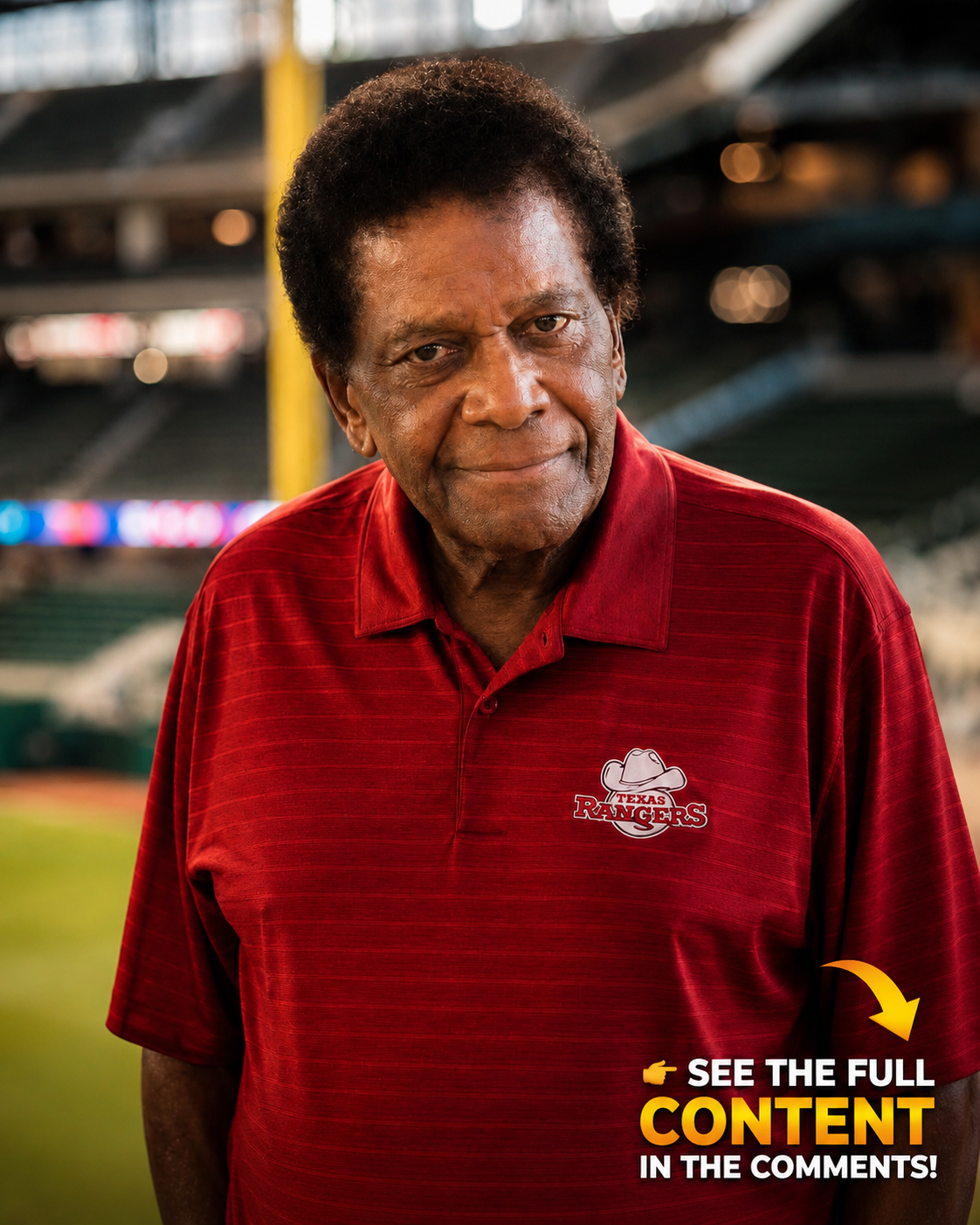
Charley Pride’s Last Anthem: The Quiet Performance That Became a Piece of History
Introduction
Farewell moments are often remembered for packed arenas, emotional speeches, and thunderous applause. Yet some of the most meaningful goodbyes happen in silence, away from the spotlight.
For country music legend Charley Pride, one of those unforgettable moments arrived during the summer of 2020. Standing alone in a Major League Baseball stadium with no crowd in attendance, he delivered a performance that would later be viewed as one of the most symbolic moments of his remarkable life.
The Dream That Began on a Baseball Diamond
Before Charley Pride became one of country music’s most celebrated voices, his heart belonged to baseball.
Growing up in rural Mississippi, he dreamed of making a career on the field. He possessed talent, determination, and a passion for the game, but he also faced the harsh realities of segregation in America. Opportunities were limited, and many doors remained closed despite his abilities.
Pride spent time playing professional baseball in the Negro Leagues, pursuing a dream that seemed just out of reach. Although his path eventually led elsewhere, the lessons he learned from those years—resilience, patience, and perseverance—would shape the rest of his life.
Turning Setbacks Into Opportunity
When baseball failed to provide the future he imagined, Pride turned toward music.
The transition was not easy. Country music in the 1960s was not known for diversity, and many industry figures questioned whether audiences would accept a Black artist in a genre dominated by white performers.
But Pride never relied on controversy or confrontation. He trusted his voice, his songs, and his character.
That decision changed country music forever.
A Career Defined by Grace and Excellence
As his music reached listeners across America, Charley Pride quickly proved that talent could overcome prejudice.
Songs such as Kiss an Angel Good Mornin’ helped transform him into one of the genre’s biggest stars. His smooth voice, authentic storytelling, and warm personality connected with audiences regardless of background.
Over the years, Pride collected awards, chart-topping hits, and industry recognition. More importantly, he became a symbol of progress within country music, opening doors for future generations of artists.
Winning Hearts Without Raising His Voice
What made Pride unique was the way he handled challenges.
He rarely sought attention for the obstacles he faced. Instead, he allowed his work to speak for itself. Through professionalism and quiet confidence, he earned the respect of fans and fellow musicians alike.
His success became one of the most significant stories in country music history.
The Empty Stadium That Told a Bigger Story
In July 2020, America was living through a very different reality.
The COVID-19 pandemic had forced the cancellation of concerts, sporting events, and public gatherings. Stadiums that once held thousands of cheering fans stood completely empty.
At Globe Life Field in Texas, Charley Pride stepped onto the field to perform the national anthem before a baseball game.
At 86 years old, he walked toward the pitcher’s mound with the calm presence that had defined his entire career.
The scene carried a deeper meaning than many realized at the time.
Here was a man who had once dreamed of playing professional baseball, now standing in the center of a Major League stadium decades later. Not as a player, but as a respected icon and part-owner of the Texas Rangers organization.
A Powerful Moment Without an Audience
The absence of spectators made the moment even more emotional.
There were no cheers, no distractions, and no noise competing with the music. The empty seats created a sense of reflection, allowing history to speak for itself.
As Pride sang the anthem, his voice echoed through the stadium, carrying the weight of a lifetime of experiences.
For many who later watched the performance, it felt like more than a ceremonial song. It felt like a full-circle moment.
A Final Chapter Few Recognized
Only a few months after that performance, Charley Pride passed away.
What seemed like a routine appearance suddenly took on a new significance. The anthem became one of the final public performances of a man whose life had broken barriers and inspired millions.
Unlike many legendary artists who end their careers with farewell tours and grand celebrations, Pride’s final memorable moment came in near silence.
Yet that silence spoke volumes.
It represented a journey from a young baseball player chasing impossible dreams to a country music pioneer who changed the industry forever.
Conclusion
Charley Pride’s final performance was not accompanied by roaring crowds or dramatic fanfare. Instead, it unfolded in an empty stadium during an uncertain moment in history.
Perhaps that is why it remains so powerful.
Standing on a baseball field he once could only dream of reaching, Pride delivered one last anthem with dignity, gratitude, and grace. It was a reminder that true greatness does not always need an audience.
Sometimes history is made in the quietest moments—and Charley Pride’s last song is proof of that.