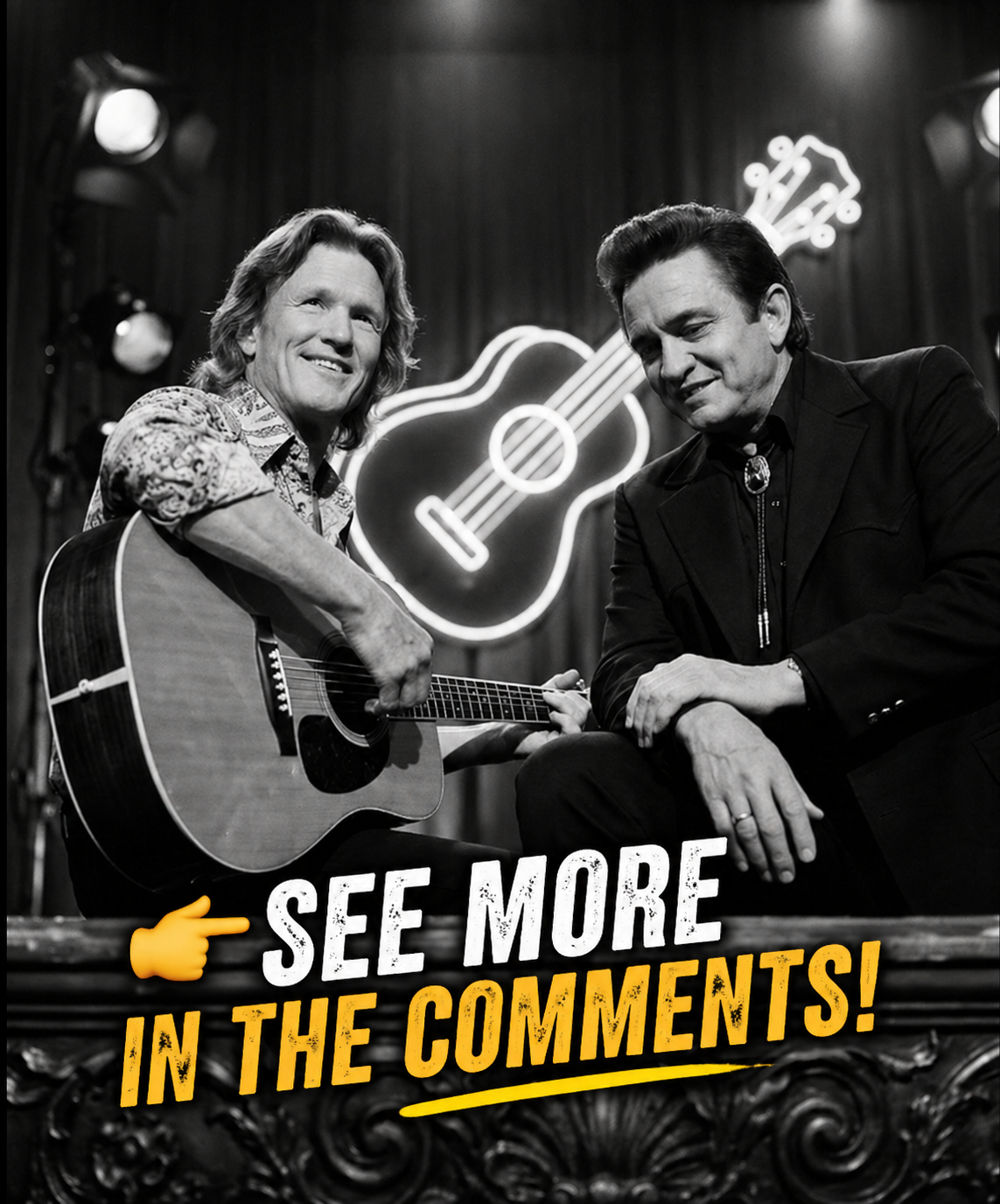
“JOHNNY CASH WAS PUSHED OUT OF THE GRAND OLE OPRY IN 1965 — AND ONLY ONE VOICE IN NASHVILLE REFUSED TO LOOK AWAY.” By the mid-1960s, Johnny Cash was unraveling in full view of the public. Missed shows, mounting anger, and a growing dependence on pills had begun to overshadow the music. Then came the night at the Grand Ole Opry when everything broke — literally. In a moment of frustration, Cash dragged a microphone stand across the stage, smashing the footlights. It wasn’t just a mistake. In Nashville’s eyes, it was the last one. The response was swift and absolute. The invitations stopped. The phone went quiet. The same industry that had lifted him up now shut its doors without hesitation. At that time, Kris Kristofferson was far from the spotlight. He was sweeping floors as a janitor at Columbia Recording Studios, writing songs in the silence of late nights after his shifts. He had no influence, no recognition, and no clear path forward. But he had conviction. To anyone who would listen, he insisted that Cash wasn’t finished — that he was still the greatest songwriter alive. Years later, when Cash began to rebuild his career with The Johnny Cash Show, he wasn’t looking for polished hits or safe material. He needed something real — something that reflected the place he had been. Kristofferson walked in with exactly that. The song was “Sunday Mornin’ Comin’ Down.” It wasn’t glamorous. It was raw. A portrait of loneliness, regret, and quiet realization — the kind of truth most artists avoided. Cash listened. Then sat in silence. When he performed it live, the network had one request: change a single word. Replace “stoned” with something softer. Something acceptable. He didn’t. Cash sang it exactly as written — “stoned” — and looked straight into the camera. The song went on to win CMA Song of the Year. But its real impact ran deeper than awards. It marked a turning point — proof that even after being cast aside, Cash still knew exactly what mattered in a song. Some artists wait for forgiveness. Johnny Cash never did. He endured long enough for the silence to fade — and when it did, Kris Kristofferson had already written the words that would help bring him back.

The Unseen Moments That Shaped Country Music Legends

Country music history is filled with larger-than-life figures, unforgettable performances, and quiet acts of devotion that often go unnoticed. Behind the chart-topping hits and the glittering stages are stories of resilience, loyalty, and love—moments that reveal the human heart behind the legend. From Johnny Cash’s fall from grace to Charley Pride’s quiet battles, these narratives remind us that the true power of music often lies in the struggles and triumphs offstage.


Johnny Cash: Standing Tall After the Fall

By the mid-1960s, Johnny Cash’s personal struggles had begun to overshadow his music. Missed shows, public outbursts, and substance abuse painted a picture of a man at odds with himself and the industry. His infamous Grand Ole Opry incident, where he dragged a mic stand across the stage and shattered footlights, led Nashville to effectively erase him from their circle. Calls stopped, invitations vanished, and the city that had once celebrated him went silent.

Yet in the midst of this isolation, Kris Kristofferson, then a little-known janitor and songwriter, saw something others didn’t: the enduring greatness of Johnny Cash. When Cash returned to public view on the ABC television show in 1969, Kristofferson handed him “Sunday Mornin’ Comin’ Down”. A song about loneliness, regret, and the raw ache of human experience, it resonated deeply with Cash. Defiantly keeping the original lyric “stoned” despite network pressure, Cash performed the song live, cementing his comeback and proving that even in abandonment, his instincts remained unparalleled.


Charley Pride: Breaking Barriers in Silence

In the 1960s, country music was not ready for a Black artist. Charley Pride recorded sixteen tracks for RCA Victor without ever appearing on an album cover. His early singles were played on radio with listeners assuming he was white. Pride’s label deliberately hid his identity, believing that the country audience would reject a Black man.

When he finally stepped onto a stage, audiences were stunned into silence—a silence that turned into devotion as he sang. Over the years, Pride sold over 70 million records, won three Grammys, and became the first Black member of the Country Music Hall of Fame. Yet he never forgot the early years of hidden identity and quiet perseverance. Even at 86, Pride stood on a baseball field with 40,000 empty seats, singing the anthem and demonstrating that one voice, when steadfast, can overcome decades of bias.


Heartfelt Dedications: Tim McGraw, Faith Hill, and George Strait

Country music isn’t just about public triumphs; it’s about private devotion. Tim McGraw’s surprise reunion with Faith Hill during a performance for 18,000 fans illustrated a lifetime of partnership and shared struggles. After 29 years of marriage and three daughters, Hill’s unexpected presence brought McGraw to laughter and tears, reminding everyone that personal milestones often outshine public applause.

Similarly, George Strait, after 54 years with his wife Norma, addressed the audience in a way that transcended performance. In front of fans, he revealed the intimacy of a lifetime together, singing not for the crowd but for the woman who had walked beside him through decades of love and loss.


Waylon Jennings: Redemption and Love

Waylon Jennings’ story also underscores the humanity behind the legend. After a heart attack in 1988, Jennings’ first act was an apology to his wife Jessi Colter for something she had never known. Twenty-one years of substance abuse had taken their toll, yet his concern was not for himself—it was for the person who had remained steadfast through the worst of his life. In these intimate moments, fans glimpse the vulnerability and depth that fuel an artist’s heart and creativity.


Conclusion: The Human Stories Behind the Music

These stories reveal that country music’s magic is as much about the human spirit as it is about melodies and lyrics. Johnny Cash’s defiance, Charley Pride’s perseverance, and the heartfelt gestures of McGraw, Strait, and Jennings remind us that the most profound moments often happen beyond the spotlight. They teach us that resilience, love, and integrity are the true legacies of these iconic artists—qualities that resonate far beyond the stage and studio.

You Missed

““WE GO BACK A LONG WAY — BUT SOMETIMES YOU HAVE TO DRAW A LINE.” What was meant to be a landmark night in Memphis — a rare collision of country soul and rock energy — has quietly unraveled, leaving more questions than answers. The June 9th concert was set to unite two iconic worlds, with Ronnie Milsap and Bruce Springsteen sharing the same stage. Fans expected something unforgettable. Instead, they got silence. In a statement that carried both weight and restraint, Milsap confirmed he would no longer be part of the event. He didn’t go into specifics, but his words hinted at something deeper than scheduling conflicts. He spoke about staying true to himself — about reaching a point where personal values outweigh even the biggest opportunities. For many, the surprise isn’t just the cancellation. It’s the history behind it. The two artists weren’t strangers passing through the same industry — they shared years of mutual respect. That’s what makes the decision feel heavier, almost like the end of a chapter no one saw closing. Now, the venue that was expected to be filled with music will remain still. Tickets are being refunded through Ticketmaster, and fans are left holding onto what could have been. No official explanation has filled in the gaps. No dramatic headlines confirmed. Just a quiet withdrawal from a moment that once promised to be historic. And maybe that’s what lingers most — not the cancellation itself, but the unanswered question behind it: what changed enough for someone to walk away from a night that had everything going for it? “

“””WILLIE NELSON SAW A LINE OF HORSES WAITING FOR THE UNTHINKABLE — AND REFUSED TO LOOK AWAY.”” He had driven that road before, past the same gates, the same silence. But that day felt different. Willie Nelson slowed his truck as he passed a slaughterhouse near his Texas ranch. Behind the metal fencing stood dozens of horses — restless, uncertain, their eyes following every movement. There were no sounds except the shifting of hooves and the weight of what was about to happen. He didn’t hesitate. Willie pulled over, stepped out, and made a decision most people would never even consider. Papers were signed. Money changed hands. And just like that, every single horse in those pens was given a second chance. Trailers were called in, and instead of heading toward the end, they were redirected somewhere else entirely — a place called home. Later, Willie would quietly reflect on that moment. “”They were looking right at me,”” he said. “”What was I supposed to do — just drive on?”” Today, those horses live at his ranch in Luck Ranch, where open land stretches for miles and the days move a little slower. They graze under wide Texas skies, no longer defined by fear, but by freedom. And among them, there is one horse whose story stands out — a past so difficult, so unexpected, that even someone like Willie, who has seen a lifetime of hard things, still finds it hard to talk about. Because sometimes, saving a life doesn’t just change theirs — it stays with you forever. “