“Keith Needs to Be in Here Before Me” — A Legacy That Refused to Fade
Introduction
When Garth Brooks received the call in 2012 announcing his induction into the Country Music Hall of Fame, the expected reaction would have been celebration. Instead, there was hesitation—something deeper than modesty.
His response was simple, but it carried weight far beyond the moment:
“Keith needs to be in here before me.”
He wasn’t referring to a contemporary rival or a rising star. He was speaking about Keith Whitley—an artist who had passed away more than two decades earlier, yet remained deeply woven into the soul of country music.
The Voice That Bridged Generations
More Than a Performer
Keith Whitley didn’t just sing songs—he inhabited them. Every lyric he delivered felt less like a performance and more like a confession. There was a vulnerability in his voice that made listeners feel as though they were hearing something deeply personal.
For artists like Garth Brooks, Whitley represented a vital connection between classic country legends such as Merle Haggard and George Jones, and the modern wave that would define the 1990s.
Without that bridge, the evolution of country music might have taken a very different path.
A Rise That Seemed Unstoppable
Chart-Topping Momentum
By the late 1980s, Keith Whitley’s career was accelerating at an extraordinary pace. He achieved five consecutive No. 1 hits—an accomplishment that signaled not just popularity, but lasting resonance.
His songs didn’t fade after their chart run. They lingered, echoing in the hearts of listeners long after the final note.
A Future Already Written
At the same time, the Grand Ole Opry was preparing to extend one of the highest honors in country music—an invitation to join its historic stage.
Everything pointed toward a future that seemed certain.
Until it wasn’t.
The Day Everything Changed
A Sudden Loss
On May 9, 1989, Keith Whitley passed away at the age of 34 due to alcohol poisoning. The news was abrupt, devastating, and left the music world in shock.
Just two weeks later, he was expected to receive his Grand Ole Opry invitation. Instead, that moment became one of country music’s most haunting “what ifs.”
His career didn’t slowly fade—it froze in time, suspended at the height of its promise.
The Influence That Never Disappeared
Carrying the Torch
Even after his passing, Keith Whitley’s presence never truly left. His style, phrasing, and emotional honesty became a blueprint for those who followed.
Artists like Alan Jackson, Clint Black, and Travis Tritt—often referred to as the “Class of ’89”—helped reshape country music in the 1990s.
Yet behind their success was an unspoken truth: each of them carried pieces of Keith Whitley forward.
This wasn’t imitation. It was inheritance.
A Long-Awaited Recognition
Thirty-Three Years Later
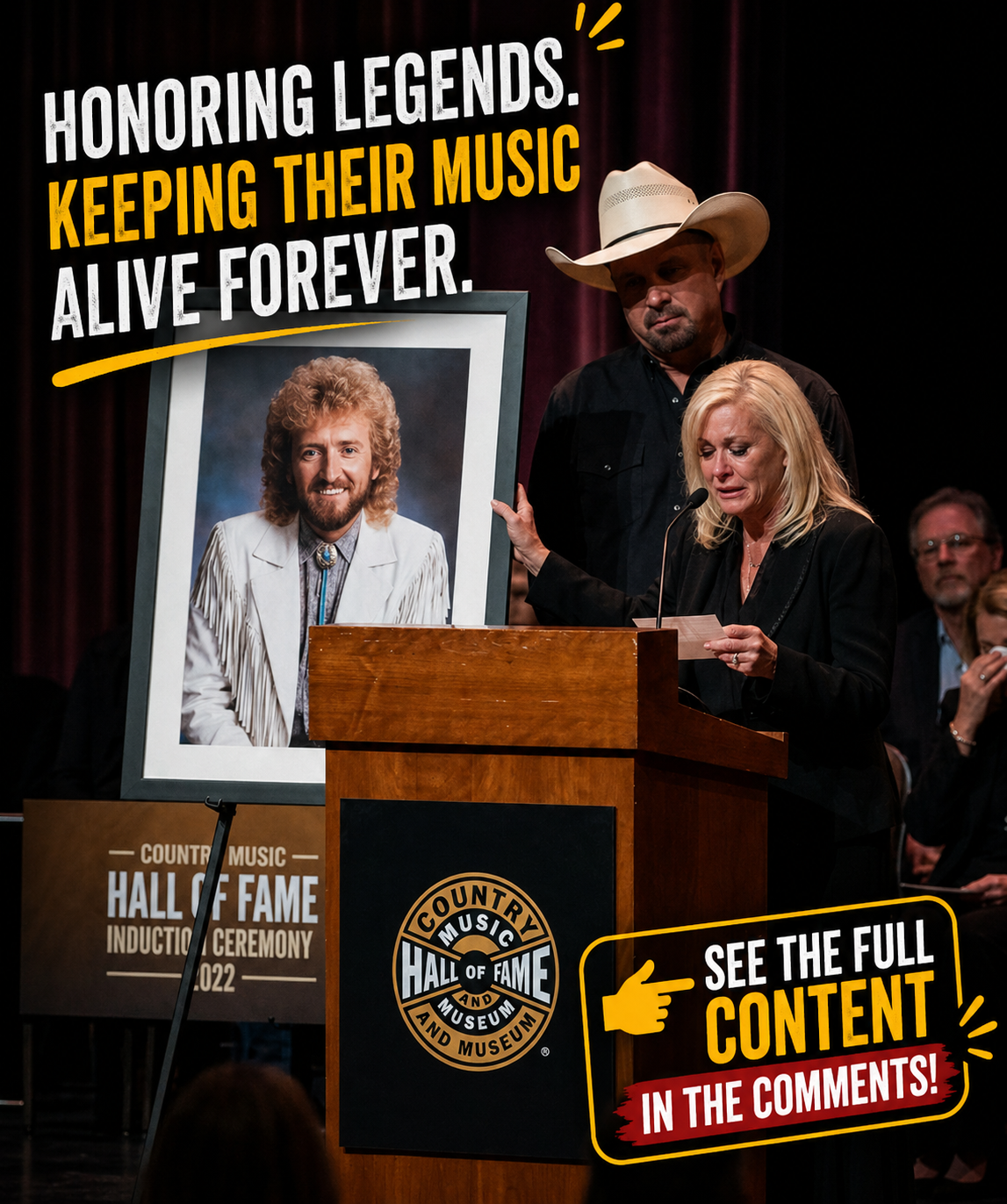
It wasn’t until 2022—thirty-three years after his passing—that Keith Whitley was officially inducted into the Country Music Hall of Fame.
By then, his influence had already been felt across generations. The recognition simply gave a formal name to something the industry had long understood.
A Voice for His Story
On that night, it wasn’t Keith Whitley who stood at the podium. It was Lorrie Morgan—his wife, who had lived with both his brilliance and his absence.
Her speech did not follow a polished script. Instead, it reflected on moments—quiet, personal, and deeply human.
She spoke not only of loss, but of reflection—the kind that comes with time, memory, and the weight of things left unsaid.
A Legacy That Still Lives
Keith Whitley’s story did not end in 1989. It continues every time his music is played, every time an artist leans into a lyric with honesty, and every time a listener feels understood through a song.
Garth Brooks’ words in 2012 were not just a statement—they were a reminder.
Some legacies are not measured by time, but by impact.
And even decades later, Keith Whitley still feels like someone who should have walked into that Hall of Fame room first.
Conclusion
Keith Whitley’s journey remains one of country music’s most powerful and unfinished stories. His voice, filled with vulnerability and truth, continues to shape the genre long after his passing.
His legacy lives not only in awards or recognition, but in the artists he inspired and the emotions he left behind in every note.
Perhaps that is what makes his story endure—
not the years he lost, but the timeless connection he created.