Introduction
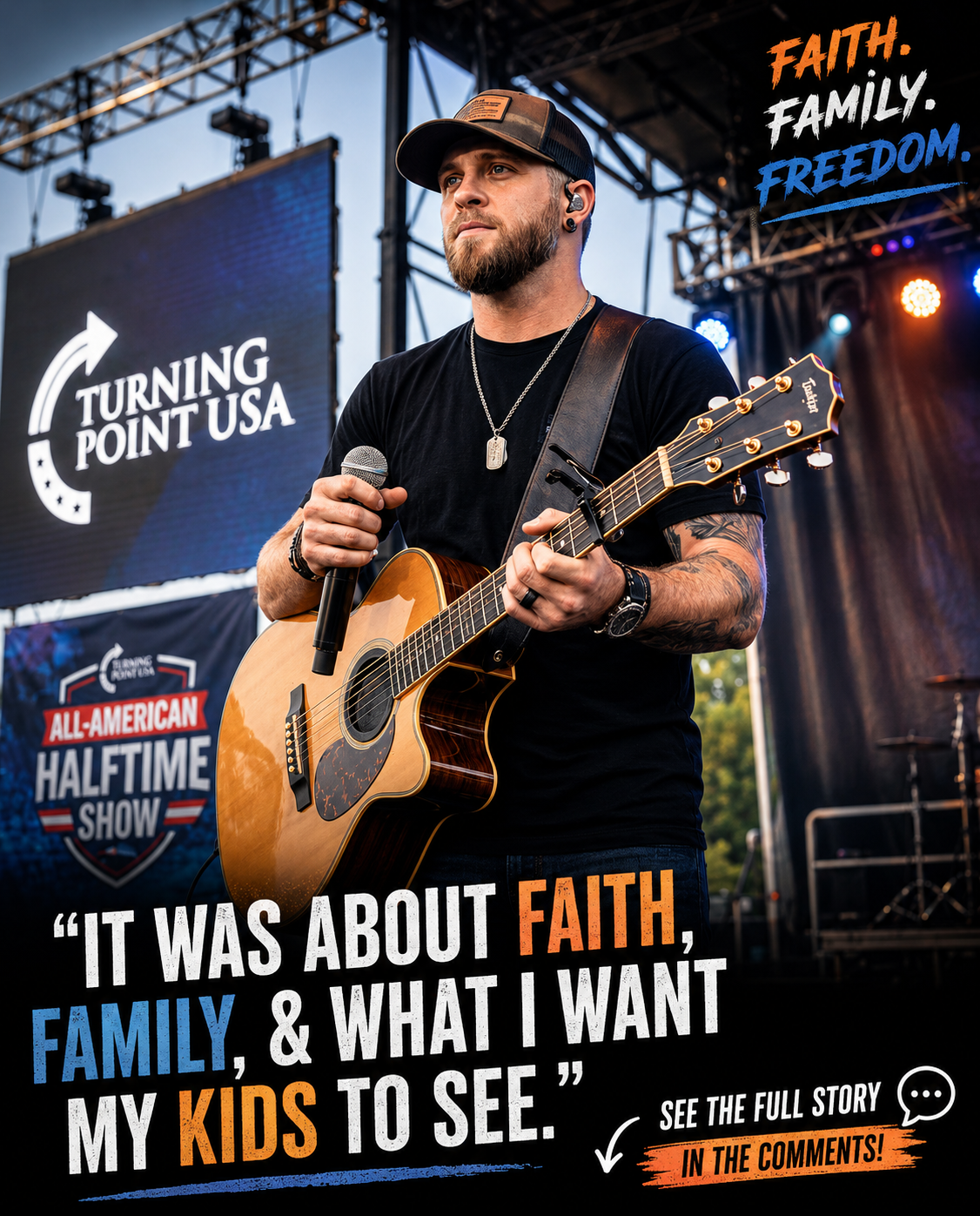
In today’s fast-moving media landscape, it’s easy for public figures to be defined by headlines before their stories are fully understood. When news surfaced about Brantley Gilbert’s involvement in the All-American Halftime Show organized by Turning Point USA, reactions came quickly. Many viewed the decision through a political lens. However, Gilbert has consistently described the moment as something far more personal—an expression of his values, his faith, and his commitment to family.
The Opportunity That Meant More Than Politics
For many observers, the event immediately sparked political discussions. Yet Brantley Gilbert explained that his motivation had little to do with partisan debates.
Rather than viewing the invitation as a political endorsement, he saw it as an opportunity to represent the principles that have guided his life for years. To Gilbert, the performance offered a chance to stand on a significant stage while remaining true to the beliefs that shape who he is away from the spotlight.
He emphasized that his decision was rooted in personal convictions and the example he hopes to set for his family, particularly his children.
A Journey Shaped by Faith and Growth
From Personal Struggles to Purpose
Brantley Gilbert’s career has never been built on perfection. Throughout the years, he has openly discussed the challenges, mistakes, and personal battles that helped shape his perspective.
Those experiences became a foundation for the messages found in his music. Instead of simply entertaining audiences, Gilbert often uses his platform to share stories of resilience, redemption, and personal transformation.
Because of that journey, he believes music should carry meaning beyond the stage. His songs frequently reflect lessons learned through hardship and the belief that people can overcome difficult chapters in their lives.
Why His Music and Values Are Connected
Gilbert has often explained that separating his faith from his work is impossible. The values that guide his personal life naturally influence the messages he shares with fans.
For him, performing at a major event was not about creating division. It was about demonstrating that growth, forgiveness, and perseverance remain important themes worth sharing with a broader audience.
The Challenge of Talking About Unity
A Difficult Conversation in a Divided Climate
The discussion surrounding Gilbert’s halftime appearance highlights a larger reality: nearly every public decision today is interpreted through competing viewpoints.
Because Turning Point USA is associated with conservative political perspectives, many people automatically connected the performance to political ideology. Gilbert understood that criticism would follow, but he maintained that intention matters.
Rather than seeking approval from everyone, he focused on communicating what the opportunity meant to him personally.
Looking Beyond Labels
What resonated with many supporters was Gilbert’s effort to shift attention away from political labels and toward common human experiences.
His message centered on values such as family, faith, responsibility, and personal growth—principles that often transcend political affiliations. Whether people agreed with his decision or not, he encouraged audiences to consider the person behind the headlines.
A Father’s Perspective
Among all the reasons Gilbert shared, perhaps the most emotional involved his role as a father.
He spoke about imagining his children watching him perform on a major stage and the memories that moment could create. While public debate may eventually fade, family moments often remain significant for a lifetime.
From his perspective, the opportunity represented more than a career milestone. It was a chance for his children to see him pursue his purpose with conviction and confidence.
For many parents, that motivation is easy to understand. Public opinion changes, but family memories often endure.
Looking Ahead
The conversation surrounding Brantley Gilbert’s halftime performance is unlikely to disappear anytime soon. Some critics will continue to interpret the event through a political framework, while supporters may focus on his stated intentions and personal values.
What remains clear is that Gilbert views the decision through a different lens. He sees it as an opportunity to promote unity, share his personal journey, and stay true to the beliefs that have shaped his life.
Conclusion
Brantley Gilbert’s halftime appearance became a topic of national conversation, but for the country singer, the decision was never primarily about politics. Instead, it reflected his commitment to faith, family, and the lessons learned throughout his personal journey.
In a culture often driven by assumptions and quick judgments, Gilbert’s message is simple: look beyond the headline and remember that every public decision begins with a human story.