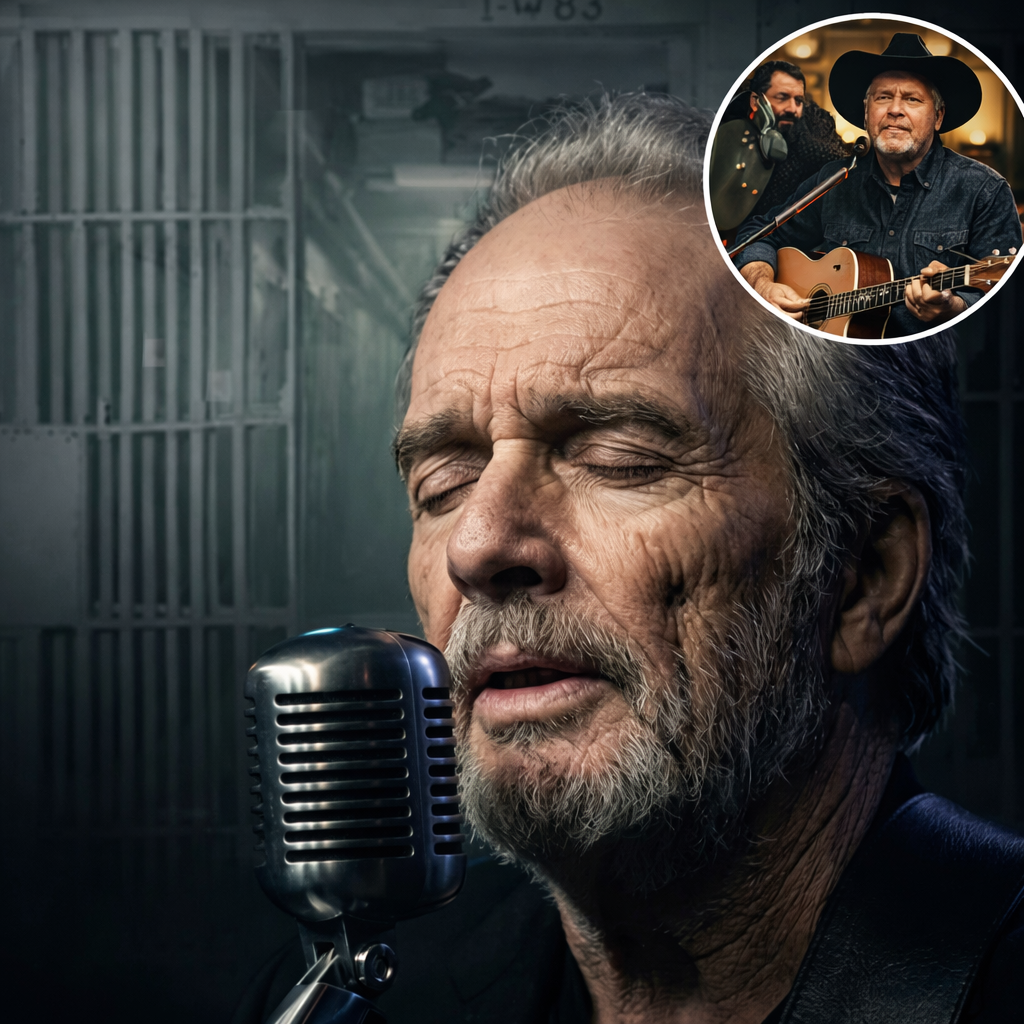
The Song Merle Haggard Carried Out of San Quentin
Before becoming one of country music’s most iconic voices, Merle Haggard was inmate number A45200 at San Quentin. Long before sold-out tours and accolades, there was a young man trapped inside prison walls, learning just how heavy memory can be when there is nowhere to put it.
At 20, Merle watched a scene that would remain etched in him forever: a man walking toward his death, pausing only to ask for a song. It was a simple, human moment — and one that would eventually transform into one of Merle Haggard’s most haunting records.
A Memory That Refused to Fade
After leaving prison, Merle built a career singing about the lives of ordinary people — their struggles, regrets, and resilience. His voice was never borrowed; it was earned. But fame could not outrun that moment in the prison yard.
That memory followed him into studios, onto stages, and into the quiet spaces where songs are born. Out of that silence came “Sing Me Back Home”, a song that never sought flash or fame — it sought truth.
Some songs entertain a crowd. This one was written so Merle would no longer have to carry that memory alone.
The Man Behind the Song Remains Unnamed
Merle never fully explained the story. He let it breathe in shadow. By keeping it vague, “Sing Me Back Home” became both personal and universal. It’s about one man — and, somehow, about every man who has ever longed for one last solace before the dark closes in.
When Merle performed it live, the energy shifted. The entertainer gave way to something quieter, something real. Lines slowed. Breaths deepened. It was not a hit being delivered — it was memory being relived, carefully, one phrase at a time. That crack in his voice near the end? Not weakness. Recognition.
More Than a Hit, More Than a Legend
Merle Haggard’s achievements are staggering: 38 #1 hits, over 40 million records sold, a Presidential pardon. Yet none of it could erase what he saw that day. “Sing Me Back Home” endures not because it is perfect — it endures because it bears witness. It is a song that reminds us: some moments are too heavy, too real, to ever leave us.
It’s not just about death. It’s about dignity, memory, and the strange mercy of music. Merle gave that moment a voice — and once you hear it, you understand why he never sang it the same way twice.