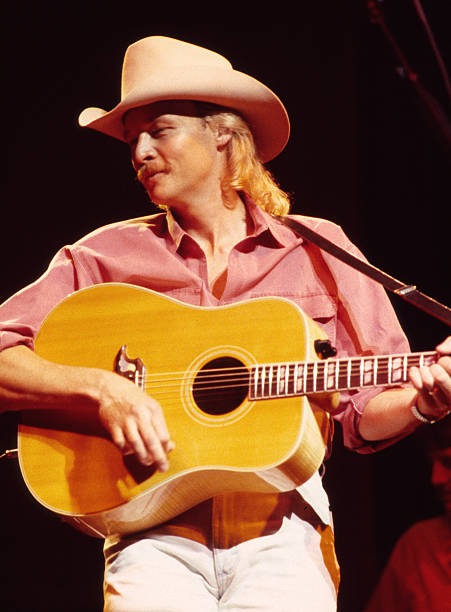
The Truth About His Early Days: How Alan Jackson Built a Country Legacy from the Ground Up
Introduction
Before the sold-out arenas, platinum records, and industry awards, Alan Jackson’s story began in a far quieter place—small-town Georgia, where country music wasn’t a career plan but simply part of everyday life. It’s easy to look at his long list of achievements today and assume success came quickly. The reality, however, is more grounded: Jackson’s early years were shaped by persistence, modest beginnings, and a steady commitment to staying true to traditional country roots.
Understanding those early days reveals not just how he became successful, but why his music continues to resonate decades later.
Growing Up in Rural Georgia
Alan Jackson was born on October 17, 1958, in Newnan, Georgia. He grew up in a working-class family, living in a small home built around his grandfather’s old tool shed. Life was simple, and like many families in the American South, music was part of the cultural fabric.
Interestingly, Jackson wasn’t immediately drawn to country music. As a teenager, he listened more to gospel and southern rock influences. It wasn’t until later—particularly after exposure to artists like Hank Williams Jr. and Gene Watson—that he began to appreciate the storytelling depth of traditional country.
This late but meaningful connection to the genre would shape his musical identity: rooted in tradition, yet personal and unforced.
Moving to Nashville: A Risk Without Guarantees
One of the most defining decisions in Jackson’s early career was his move to Nashville in the mid-1980s. At the time, he wasn’t a polished performer or industry insider. He worked various jobs, including as a mailroom clerk at The Nashville Network (TNN), while trying to break into the music scene.
A widely noted turning point came through his wife, Denise Jackson, who reportedly helped connect him with country legend Glen Campbell. While stories differ in detail, what’s consistent is that Jackson’s early opportunities came from persistence rather than privilege.
He didn’t arrive in Nashville with a ready-made deal—he built connections slowly, often while balancing financial uncertainty.
The First Break: Arista Nashville
Jackson’s big break came when he signed with Arista Nashville in 1989, under the leadership of industry executive Clive Davis. His debut album, Here in the Real World (1990), marked the beginning of his rise.
What stood out immediately was his commitment to traditional country sounds during a time when the genre was evolving toward more polished, pop-influenced production. Songs like “Chasin’ That Neon Rainbow” and the title track reflected a grounded, relatable perspective—something audiences quickly embraced.
The album’s success wasn’t explosive overnight, but it was steady and meaningful. It established Jackson as a credible voice in country music, not just another emerging act.
Staying True to Traditional Country
One of the most important truths about Alan Jackson’s early days is his refusal to chase trends. In the late 1980s and early 1990s, country music was undergoing a shift, with artists experimenting with crossover appeal. Jackson, however, leaned into classic instrumentation—steel guitars, fiddles, and straightforward storytelling.
This choice wasn’t necessarily the easiest path. It required confidence in a style that some considered outdated at the time. Yet it became one of his defining strengths.
His early work aligned him with the “neotraditional country” movement, alongside artists who sought to preserve the genre’s roots while still reaching modern audiences.
Early Success and Recognition
By the early 1990s, Jackson had already begun to see significant recognition. His second album, Don’t Rock the Jukebox (1991), produced multiple hit singles and solidified his position in the industry.
From there, his career trajectory accelerated:
- Multiple chart-topping singles on Billboard’s country charts
- Platinum-certified albums recognized by the RIAA
- Industry awards and nominations that reflected both commercial success and critical respect
Importantly, these achievements were built on consistency rather than sudden spikes of fame. Jackson’s early career demonstrates how steady output and authenticity can create long-term credibility.
The Role of Songwriting in His Early Career
Unlike many artists who rely heavily on external writers, Alan Jackson played a significant role in writing his own material. This was evident even in his early albums, where personal themes and relatable narratives stood out.
Songs about working-class life, love, faith, and nostalgia weren’t abstract—they felt lived-in. That authenticity became a cornerstone of his appeal.
It also reinforced his credibility within the industry, positioning him not just as a performer but as a storyteller in the tradition of classic country artists.
Influence of Faith and Personal Values
Another often-overlooked aspect of Jackson’s early years is the influence of faith and personal values. Raised in a religious household, these themes subtly shaped his worldview and, by extension, his music.
While not always overt, elements of spirituality and humility can be traced through his lyrics and public persona. This grounded approach contributed to his relatability and long-standing connection with audiences.
Building a Lasting Legacy from Humble Beginnings
Looking back, the truth about Alan Jackson’s early days is less about dramatic breakthroughs and more about quiet persistence. His journey reflects a combination of timing, talent, and a clear sense of identity.
By the mid-1990s, he was no longer just an emerging artist—he had become a defining figure in country music. Yet the foundation of that success remained rooted in the choices he made early on: staying authentic, writing honestly, and respecting the genre’s traditions.
Conclusion
Alan Jackson’s early career offers a valuable perspective in an industry often focused on rapid success. His story shows that longevity can come from consistency, authenticity, and a willingness to take a slower, more deliberate path.
Today, his music continues to resonate not just because of its quality, but because of the integrity behind it. And that integrity was built long before the spotlight—during those early days in Georgia and Nashville, when success was far from guaranteed.
SEO Title
The Truth About Alan Jackson’s Early Days: From Small-Town Roots to Country Stardom
Meta Description
Discover the real story behind Alan Jackson’s early career, from his humble beginnings in Georgia to his rise in Nashville and lasting impact on country music.
Slug URL
alan-jackson-early-days-story
Alternative Headlines
- How Alan Jackson’s Early Years Shaped His Country Music Legacy
- From Georgia to Nashville: The Untold Start of Alan Jackson’s Career
- The Real Story Behind Alan Jackson’s Rise in Country Music
Sources
- Billboard archives and chart history
- Rolling Stone artist features and interviews
- Recording Industry Association of America (RIAA) certifications
- Country Music Hall of Fame artist profiles
- Official Alan Jackson website and discography