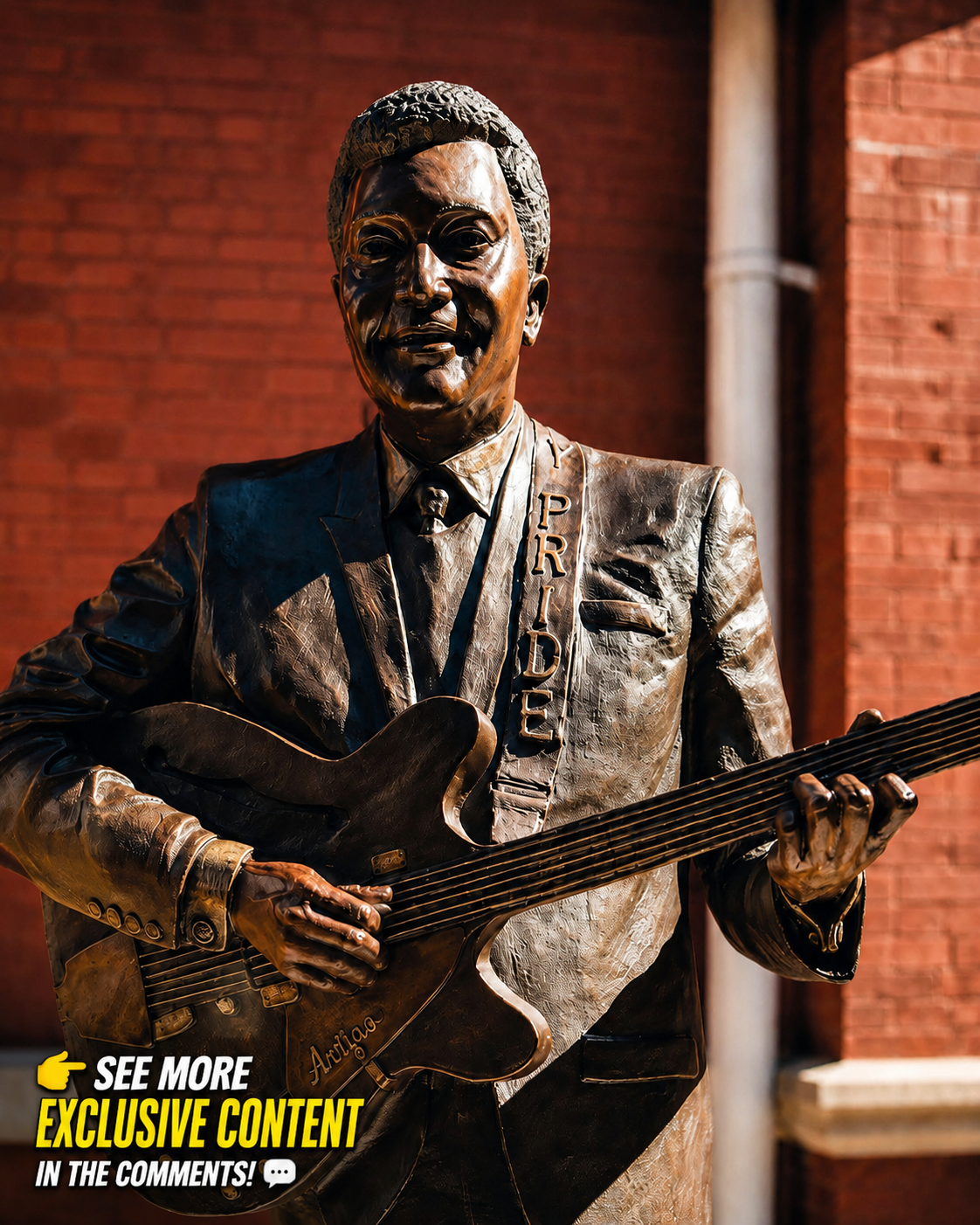
The Man Nashville Doubted Became One of Country Musicโ€™s Greatest Success Stories

Introduction

When Charley Pride first entered the country music world, he faced obstacles that had little to do with talent. During the 1960s, country music was an industry shaped by traditions, expectations, and unspoken barriers. Many believed a Black artist could never become a major star in a genre dominated by white performers.

Yet Pride never set out to challenge the system through confrontation. Instead, he relied on something far more powerfulโ€”his voice, his work ethic, and his unwavering belief that music belonged to everyone. What followed was one of the most remarkable careers in country music history.

A Singer Who Followed His Own Path

Charley Pride never viewed music through the lens of race. He simply sang the songs he loved and trusted his own voice. While others tried to place labels on artists and genres, Pride focused on storytelling and authenticity.

Raised in rural Mississippi, he understood the hardships that country songs often described. Long before recording hits, he experienced the realities of hard work, family struggles, and perseverance. Those experiences gave his performances a sincerity that resonated deeply with audiences.

His connection to country music was natural, not calculated. He wasn’t trying to prove a pointโ€”he was simply being himself.

Winning Over Audiences One Song at a Time

Letting the Music Speak

Rather than responding to criticism, Pride concentrated on performing. Night after night, he took the stage and earned respect through consistency and professionalism.

Many listeners arrived at concerts unsure of what to expect. They left impressed by a singer whose voice carried warmth, confidence, and genuine emotion. Over time, audiences became his greatest advocates.

Radio stations that once hesitated eventually embraced his music because fans demanded it. Record sales continued to grow, and each success made it harder for skeptics to dismiss him.

Breaking Records and Expectations

As his popularity soared, Charley Pride became one of the biggest stars in country music. His success at RCA Records reached extraordinary levels, with sales surpassed only by Elvis Presley.

This achievement was more than a business milestone. It demonstrated that talent could overcome barriers many believed were impossible to break. Pride proved that country music fans cared about great songs and authentic performances above all else.

The Power of Quiet Strength

Choosing Grace Over Division

Throughout his career, Pride maintained a remarkable sense of dignity. He understood the challenges he faced but refused to allow bitterness to define him.

Instead of fueling conflict, he focused on unity. His professionalism earned respect from fellow artists, industry leaders, and fans alike. He believed country music should bring people together rather than separate them.

That approach became one of his greatest strengths. By staying focused on his craft, he transformed perceptions without ever abandoning his values.

Expanding the Boundaries of Country Music

Charley Prideโ€™s success forced the industry to reconsider long-held assumptions. He showed that country music was not limited by race, background, or appearance.

His career opened doors for future generations of artists who might otherwise have felt excluded. More importantly, he demonstrated that authenticity and talent could connect with listeners regardless of who was standing behind the microphone.

A Legacy That Endures

Charley Prideโ€™s influence extends far beyond chart positions and awards. His story represents perseverance, excellence, and the courage to remain true to oneself despite resistance.

For millions of fans, he was not simply a groundbreaking figureโ€”he was one of country musicโ€™s finest voices. For aspiring artists, he became living proof that success is earned through dedication, determination, and belief in one’s abilities.

His impact continues to inspire because he never demanded acceptance. He earned it through decades of outstanding music and unwavering integrity.

Conclusion

Charley Pride changed country music without trying to change who he was. Through talent, resilience, and grace, he built a career that shattered expectations and redefined what was possible within the genre.

Today, his legacy stands as a reminder that true greatness is measured not only by records sold or awards won, but by the barriers broken and the lives inspired along the way. Charley Pride didn’t ask for a place in country music historyโ€”he created one, and no one could ever take it away.

You Missed

ERNEST TUBB LEFT THIS WORLD IN 1984. BUT CHARLEY PRIDE SPENT THE NEXT 36 YEARS SHOWING WHY ONE NIGHT IN JANUARY 1967 COULD NEVER BE FORGOTTEN. Charley Prideโ€™s road to country music history was never simple. In 1967, Nashville was still a place where a Black man stepping onto the Grand Ole Opry stage carried a weight far heavier than a guitar. He was the son of sharecroppers from Sledge, Mississippi. He grew up around cotton fields, a Sears guitar, a Philco radio, and a dream that first pointed toward baseball. Before country music ever opened its doors to him, Pride had already learned to love the sound from far away. Then came Ernest Tubb. The Texas Troubadour was not just another singer. He was one of the men who helped shape the world Charley Pride was hoping to enter. When Pride made his Grand Ole Opry debut in January 1967, it was Ernest Tubb who introduced him. That moment was more than a formal announcement. It was a country music legend lending his voice to a young man standing before an uncertain room. Pride was nervous, and anyone in his place would have been. But once he walked out, history changed. The boy from Mississippi cotton fields became one of the most powerful and important voices country music would ever know. When Ernest Tubb passed away on September 6, 1984, Charley Pride was 50 years old. His own journey was far from over. He would later become a Grand Ole Opry member in 1993, enter the Country Music Hall of Fame in 2000, and carry his legacy all the way to his final year in 2020. Some kindness can never be repaid with words. It lives on through the stages you respect, the doors you open, and the names you keep alive. Maybe the real story is not only what Ernest Tubb said that night. Maybe it is how many lives changed because he chose to say Charley Prideโ€™s name when the world was not fully ready to hear it. Listen this song in the ๐—ณ๐—ถ๐—ฟ๐˜€๐˜ ๐—ฐ๐—ผ๐—บ๐—บ๐—ฒ๐—ป๐˜

CONWAY TWITTY SANG MANY LOVE SONGS. BUT ONE OF THEM FELT SO INTIMATE, SO MATURE, AND SO QUIETLY BRAVE THAT IT SEEMED LIKE A PRIVATE PROMISE SPOKEN BEHIND A CLOSED DOOR. By the late 1970s, Conway Twitty already understood something rare. He did not need to sing loudly to own a song. He could lower his voice, bend a phrase gently, and make a simple lyric feel like it was meant for only one heart. People knew that voice. Smooth. Warm. Soft enough to comfort, yet powerful enough to make a room go still. Then Conway Twitty recorded a song that carried a different kind of feeling. It was not about young love rushing toward flowers, moonlight, or a perfect first kiss. This was something deeper. Something older. It sounded like a man looking at the woman who had walked through life with him and saying, โ€œI still see you. I still need you. I still choose you.โ€ That is why the song stayed with people. Conway Twitty made romance feel real โ€” shaped by years, memories, quiet talks, hard seasons, forgiveness, and a love that had not disappeared with age. Some listeners heard a beautiful love song. Others heard something more honest: a grown man singing about desire with tenderness, loyalty with confidence, and passion that time had not taken away. Conway Twitty was not singing about perfect love in a perfect moment. He was singing about love that had survived real life โ€” and still had a flame burning inside it. Maybe that is why so many never forgot it. Some love songs are made for the radio. This one felt like it was meant to stay in the room. Listen to this song in the ๐—ณ๐—ถ๐—ฟ๐˜€๐˜ ๐—ฐ๐—ผ๐—บ๐—บ๐—ฒ๐—ป๐˜

CHARLEY PRIDE ONLY RETURNED TO LITTLE ROCK FOR A SIMPLE CHECKUP. BUT BY THE END OF THAT VISIT, THE VOICE DOCTORS ONCE WORRIED HE MIGHT LOSE WAS ECHOING THROUGH THE ARKANSAS SENATE. Charley Pride had not come back to Arkansas searching for attention. He was there for a routine medical check on the same voice that had carried him across decades of country music history. Years before, doctors had discovered a tumor on his right vocal cord โ€” frightening news for any singer, and almost unimaginable for a man whose voice had become part of country musicโ€™s soul. That checkup brought him back to Little Rock. Then an invitation brought him somewhere unexpected: the Arkansas Senate. Suddenly, Charley Pride was not standing beneath concert lights. There was no band behind him, no roaring arena, no Grand Ole Opry audience waiting for the next song. Just Charley Pride, a microphone, and a room filled with people ready to hear the voice that had survived so much. And then he sang. No law changed because of that moment. No debate was settled. No political victory was claimed. But in a room made for speeches, votes, and decisions, everyone paused for something deeper. They heard a voice that had survived illness, fear, and doubt โ€” and they remembered why Charley Pride had always mattered. The checkup brought him back. The invitation placed him in the room. But the voice made the moment unforgettable. Listen to this song in the ๐—ณ๐—ถ๐—ฟ๐˜€๐˜ ๐—ฐ๐—ผ๐—บ๐—บ๐—ฒ๐—ป๐˜

GEORGE JONESโ€™ FIRST RECORD DIDNโ€™T ARRIVE LIKE THE BEGINNING OF A LEGEND โ€” IT SOUNDED LIKE A SHY 22-YEAR-OLD TRYING TO FIND HIS VOICE INSIDE A SMALL TEXAS ROOM. The song was called โ€œNo Money in This Deal,โ€ a title George Jones had written himself. At the time, it may have sounded almost playful. Years later, it felt strangely perfect. There was no fancy Nashville studio. No bright lights. No big-name producer waiting to crown him country musicโ€™s next great voice. It was recorded in Jack Starnesโ€™ home studio, a rough little setup where the walls were covered with egg crates and the soundproofing was so poor that passing trucks could interrupt a take. George was only twenty-two, recently out of the Marines, and still chasing the sounds of the singers he admired most. He leaned toward Lefty Frizzell, Hank Williams, and the country heroes who had shaped him before he ever shaped anyone else. There was no money in that room. No fame. No promise that anyone would remember the record. Just a nervous young man, a fragile recording session, and a voice that had not yet become โ€œthe Possum.โ€ That is what makes the story so powerful now. The first time George Jones stepped toward history, he was not fully himself yet. He was still borrowing pieces of other voices, still learning what his own pain could sound like. And one day, that uncertain young singer would become the voice that made millions of hearts ache. Listen to this song in the ๐—ณ๐—ถ๐—ฟ๐˜€๐˜ ๐—ฐ๐—ผ๐—บ๐—บ๐—ฒ๐—ป๐˜.