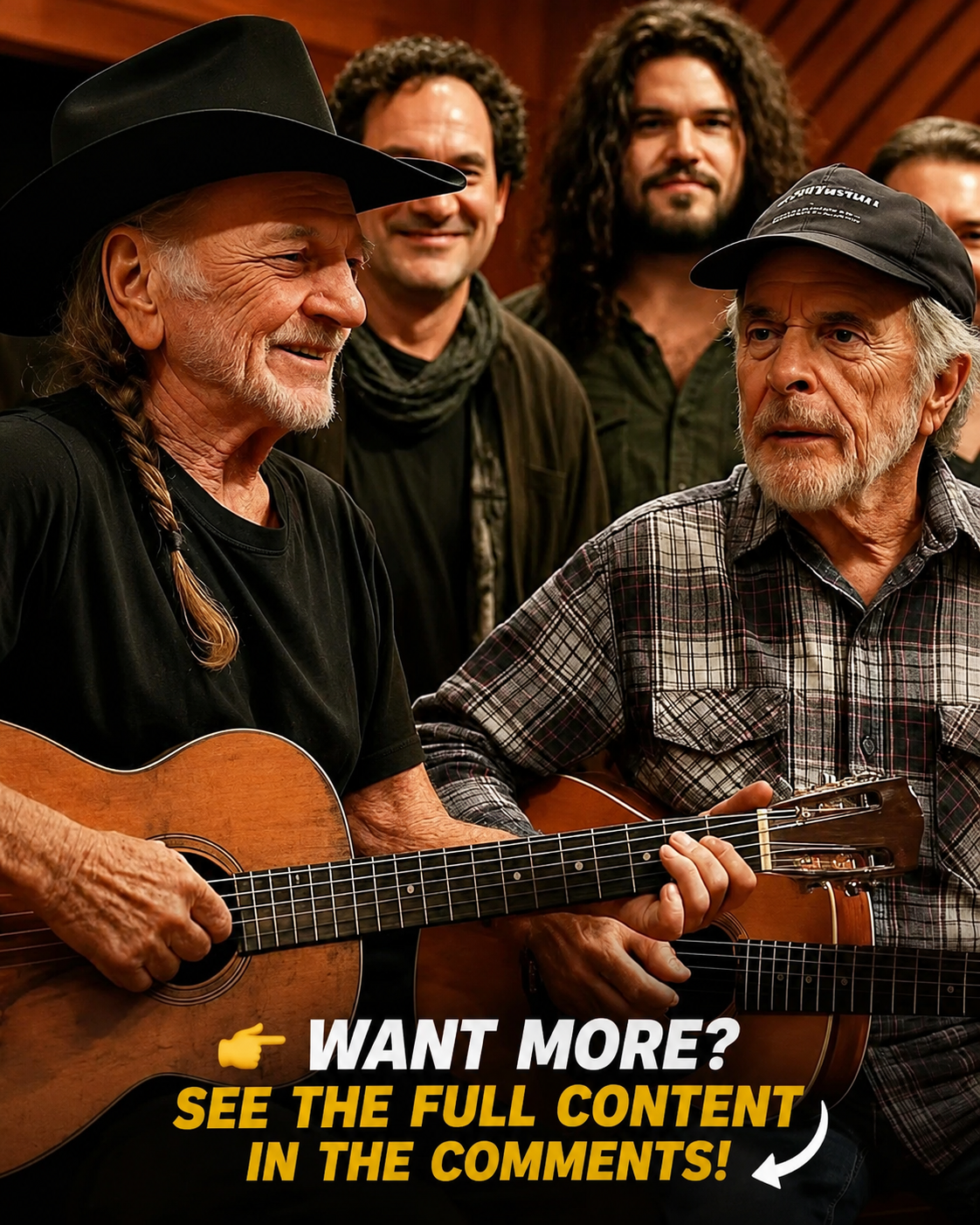
Willie Nelson and Merle Haggard’s Final Recording: A Last Chapter in Country Music History
Introduction
Country music has witnessed countless legendary partnerships, but few carried the authenticity and mutual respect shared by Willie Nelson and Merle Haggard. Their friendship spanned decades, built on a foundation of storytelling, hard-earned wisdom, and a deep love for traditional country music. What would become their final recording project together was never intended as a goodbye. Yet today, it stands as one of the most meaningful collaborations in the genre’s history—a lasting tribute to two icons whose influence continues to shape generations of artists and fans.
A Bond Forged Through Music and Life
Two Different Voices, One Shared Spirit
Willie Nelson and Merle Haggard came from different corners of country music, but they shared a common understanding of life’s struggles and triumphs. Haggard’s songs reflected the experiences of everyday Americans, while Nelson brought a unique blend of poetic songwriting and outlaw independence.
Over the years, the two artists developed a friendship that extended far beyond the stage. They toured together, recorded together, and built a connection rooted in mutual admiration. Their chemistry was effortless, making every collaboration feel natural and genuine.
The Album That Became Their Final Collaboration
Creating Django and Jimmie
In 2015, Nelson and Haggard entered the studio to record Django and Jimmie, an album inspired by two of their musical heroes—Django Reinhardt and Jimmie Rodgers. The project celebrated the influences that helped shape their careers while showcasing the timeless connection between the two legends.
The album blended humor, reflection, and classic country storytelling. Tracks carried the warmth of old friends exchanging memories, jokes, and observations about life. Rather than sounding like a farewell, the record captured two artists still enjoying the craft they loved most.
Music Without Expectations
What makes the album so special today is that neither man approached it as a final statement. There were no grand speeches or emotional goodbyes. Instead, they simply made music together, just as they had done many times before.
That authenticity gave the project a unique emotional weight after the fact. Fans now hear every song with the knowledge that it was the last time these two voices would share a studio recording.
The Loss of a Country Music Giant
Merle Haggard’s Final Goodbye
On April 6, 2016, Merle Haggard passed away on his 79th birthday. His death marked the end of an era in country music. As one of the genre’s most respected songwriters and performers, Haggard left behind a catalog that continues to inspire artists around the world.
For Willie Nelson, the loss was deeply personal. He had not only lost a musical partner but also a lifelong friend. Their final album suddenly became more than a collection of songs—it became a cherished reminder of the years they spent creating music together.
Willie Nelson Keeps the Legacy Alive
Honoring a Friend Through Song
Following Haggard’s passing, Nelson continued to celebrate his friend’s legacy during concerts and public appearances. Whether through stories shared on stage or performances of songs they once sang together, Nelson has helped ensure that Haggard’s influence remains alive.
Fans often revisit their final collaboration as a snapshot of a friendship that endured through decades of changing musical trends and personal challenges. The album serves as proof that genuine artistry never fades.
Why Their Final Session Still Matters
The enduring appeal of Willie Nelson and Merle Haggard’s last project lies in its sincerity. It was not created as a farewell tour or a carefully planned legacy piece. It was simply two friends doing what they loved most—making music together.
Years later, listeners continue to find comfort, joy, and nostalgia in those recordings. The songs remind us that true friendship can be preserved through art, allowing future generations to experience the connection that existed between two country music giants.
Conclusion
Willie Nelson and Merle Haggard spent their lives telling stories that reflected the heart of America. Their final recording together captured the essence of that journey—honest, unfiltered, and deeply human. While Merle Haggard may be gone, the music he created alongside Willie Nelson continues to resonate with fans around the world. Their last collaboration remains more than an album; it is a timeless testament to friendship, legacy, and the enduring power of country music.