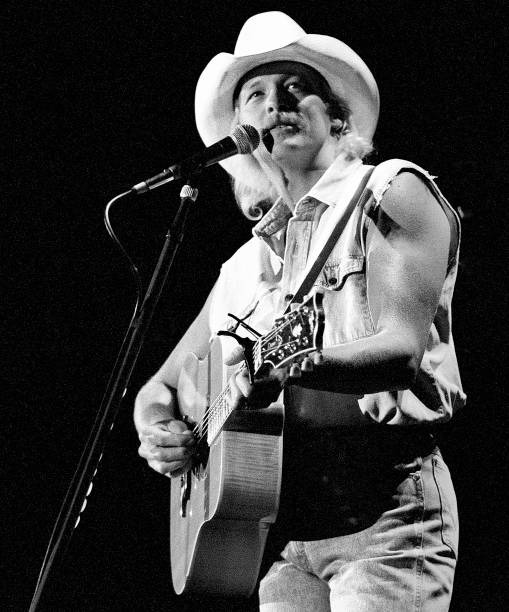
What Great Songwriting Looks Like: Why Alan Jackson Still Sets the Standard
Introduction
In an era where music often leans on production tricks and vocal theatrics, Alan Jackson stands as a reminder that great songwriting doesn’t need to be loud to be powerful. His work feels grounded, almost effortless—yet it carries a depth that many artists spend entire careers trying to achieve.
What makes his songs endure isn’t just nostalgia or genre loyalty. It’s the clarity of his storytelling, the restraint in his delivery, and the authenticity behind every line. If you’re trying to understand what great songwriting actually looks like—not in theory, but in practice—Alan Jackson’s catalog is one of the clearest examples available.
The Foundation: Simplicity That Carries Meaning
One of the defining traits of Alan Jackson’s songwriting is simplicity. His lyrics rarely rely on complex metaphors or abstract imagery. Instead, they focus on everyday experiences—love, loss, family, faith, and small moments that often go unnoticed.
This approach aligns with a core principle of strong songwriting: clarity over complexity.
Rather than trying to impress the listener, Jackson prioritizes connection. Songs like “Remember When” and “Drive (For Daddy Gene)” don’t overwhelm with lyrical density. They use straightforward language, but each line builds emotional weight through context and relatability.
This is what separates effective songwriting from decorative writing. The goal isn’t to sound clever—it’s to be understood.
Voice as a Storytelling Tool, Not a Performance
Another key element in Jackson’s success is how he uses his voice. Unlike many vocalists who aim to showcase range or power, his delivery is steady and conversational.
This matters more than it might seem.
When a singer over-performs a song, it can create distance between the listener and the message. Jackson does the opposite. His voice feels like someone speaking directly to you—calm, measured, and sincere.
According to coverage from Rolling Stone, this understated vocal style has been a defining feature of traditional country artists who prioritize storytelling over spectacle. Jackson fits squarely into that lineage, helping preserve a style that values narrative above all else.
Writing From Real Experience
Great songwriting often comes from lived experience, and Jackson’s work reflects that consistently. His songs don’t feel manufactured because they aren’t built around trends—they’re rooted in personal and cultural authenticity.
He frequently writes about:
- Small-town life
- Family relationships
- Faith and personal reflection
- The passage of time
These aren’t niche topics—they’re universal. But what makes his writing effective is specificity. Instead of broad statements, he focuses on particular moments that allow listeners to project their own experiences onto the song.
This is a technique widely recognized in songwriting analysis: the more specific the detail, the more universal the feeling becomes.
Consistency Over Trends
One of the most overlooked aspects of great songwriting is consistency. Alan Jackson’s career, which spans decades, shows a remarkable commitment to his core style.
While the music industry has shifted through multiple trends—from pop-country crossovers to digital streaming strategies—Jackson has remained largely unchanged in his artistic direction.
This consistency has contributed to his long-term credibility. Organizations like the Country Music Hall of Fame have recognized his contributions not just for commercial success, but for preserving the integrity of traditional country songwriting.
He was inducted into the Hall of Fame in 2017, a milestone that reflects both influence and longevity.
Commercial Success Backed by Substance
It’s easy to assume that simplicity might limit commercial success—but Jackson’s career proves otherwise.
According to data from the Recording Industry Association of America, he has sold tens of millions of records in the United States alone. He has also earned numerous chart-topping hits, many of which were self-written or co-written.
On platforms tracked by Billboard, Jackson has consistently appeared on country charts throughout his career, demonstrating that authentic songwriting can compete at the highest commercial level.
This balance—artistic integrity and mainstream success—is rare, and it reinforces an important point: strong songwriting doesn’t need to compromise to reach a wide audience.
The Role of Restraint in Emotional Impact
One of the most subtle yet powerful techniques in Jackson’s songwriting is restraint.
Instead of forcing emotion through dramatic lyrics or vocal intensity, he allows the listener to arrive at the feeling naturally. This creates a more lasting impact because it feels earned rather than imposed.
For example, many of his songs build gradually. They don’t peak immediately. They unfold over time, giving the listener space to process and connect.
This approach aligns with broader songwriting principles:
- Let the story lead the emotion
- Avoid over-explaining
- Trust the listener’s interpretation
These are not easy techniques to execute, but when done well—as in Jackson’s case—they create songs that remain meaningful long after the first listen.
Influence and Legacy
Alan Jackson’s influence extends beyond his own recordings. He has helped shape the expectations of what country songwriting should prioritize.
Many modern artists cite traditionalists like Jackson as key influences, particularly in an industry that often shifts toward production-driven hits.
His legacy can be summarized in three key contributions:
- Preserving storytelling as the core of country music
- Demonstrating that simplicity can outperform complexity
- Proving that authenticity has long-term value
In a landscape where trends change rapidly, these principles remain stable—and increasingly rare.
Conclusion
So what does great songwriting actually look like?
In Alan Jackson’s case, it looks like restraint instead of excess. Clarity instead of complexity. Authenticity instead of performance.
His songs don’t demand attention—they earn it. And over time, they don’t just stay relevant; they become part of how people understand their own experiences.
That’s why his music can feel familiar even on the first listen. It’s not trying to be something new. It’s reflecting something that was already there.
And once you recognize that, you start hearing his songs differently—not just as music, but as a blueprint for what songwriting can be when it’s done right 🎧
SEO Title
What Great Songwriting Looks Like: Lessons from Alan Jackson’s Timeless Music
Meta Description
Discover what makes Alan Jackson’s songwriting timeless. Learn how simplicity, authenticity, and storytelling define great music that truly connects.
Slug URL
what-great-songwriting-looks-like-alan-jackson
Alternative Subheadings
- Why Alan Jackson’s Simplicity Makes His Songs Stronger
- The Hidden Techniques Behind Timeless Country Songwriting
- How Authentic Storytelling Built Alan Jackson’s Legacy
Sources
- Billboard
- Rolling Stone
- Recording Industry Association of America (RIAA)
- Country Music Hall of Fame
- Official Alan Jackson Website