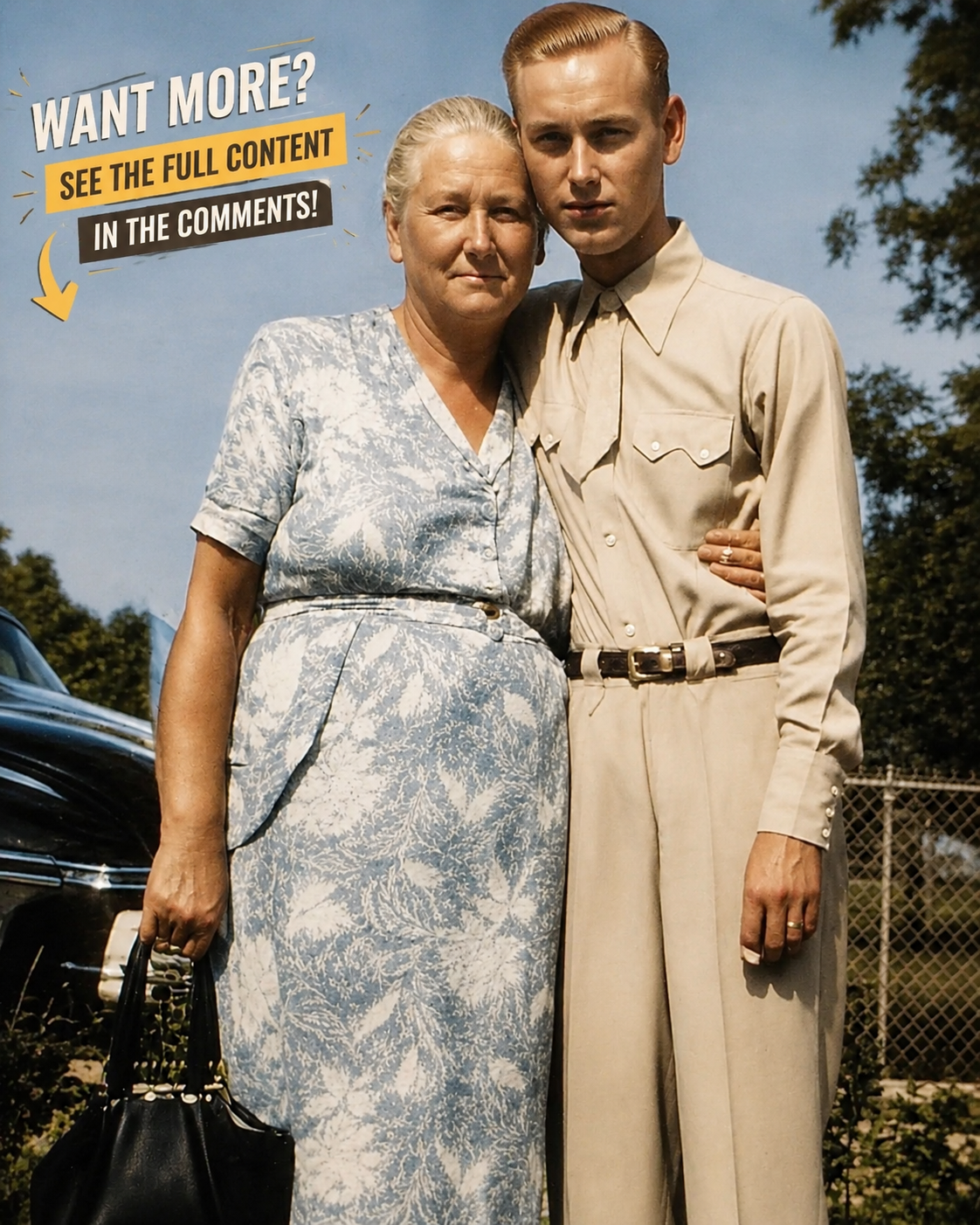
When George Jones Sang to the Mother Who Could Only Listen From Home
Introduction
Before George Jones became one of the most haunting voices in country music, he was a little boy in Texas listening to the Grand Ole Opry through a radio. Long before the awards, the hit records, and the nickname “The Possum,” there was a child who waited for the sound of Roy Acuff on Saturday nights.
And there was his mother, Clara Jones.
She could not give George an easy childhood. She could not protect him from every hardship that surrounded their home. She could not buy him a front-row seat in Nashville or place a guitar in his hands with the promise that fame would come one day.
But she gave him something that may have mattered even more.
She listened with him. She understood what music meant to him. And when young George was too tired to stay awake, she promised she would wake him when the songs came on.
That simple act of love became part of the foundation of one of country music’s greatest voices.
A Promise Made Beside the Radio
When George Jones was only seven years old, the Grand Ole Opry was not just entertainment to him. It was a window into another world.
Every Saturday night, the sounds of Nashville traveled through the radio and entered the Jones family home in Texas. For a boy growing up with struggle around him, those songs carried comfort, wonder, and possibility. The voices on the Opry seemed to come from somewhere brighter than the life he knew.
George especially loved Roy Acuff. He did not want to miss him. So he asked his mother to wake him if he fell asleep before Acuff performed.
Clara Jones kept that promise.
It was not a grand gesture. It did not cost money. It did not change their circumstances overnight. But in a home where life could be difficult, that promise became a quiet form of devotion.
A mother heard her son’s dream before the world did.
The Music That Found George Jones Early
Clara Jones had music in her own life. She played piano in the Pentecostal church, and that connection to song likely helped her understand why the radio meant so much to her son.
George Jones did not grow up in comfort. His early life carried pain, fear, and instability. Those wounds would follow him into adulthood, shaping both the man and the voice that later made millions believe every word he sang.
But music gave him a place to go.
He did not need to be in Nashville to feel close to the Opry. He did not need a ticket, a stage, or a famous name. All he needed was a radio, a Saturday night, and a mother who cared enough to wake him when the moment arrived.
That is where the story becomes bigger than country music.
Sometimes a dream does not begin with applause. Sometimes it begins in a small room, after dark, with a child listening carefully and a mother making sure he does not miss the song.
The Boy Who Finally Reached the Opry
In 1956, George Jones finally stepped onto the Grand Ole Opry stage.
For most singers, an Opry debut is a milestone. For George, it must have felt like walking into a place he had already visited thousands of times in his imagination. The stage he had heard through the radio was now beneath his feet. The dream that once came through a speaker had become real.
But the person who helped him hold on to that dream was not sitting in the room.
Clara Jones was back in Texas.
She was not in the audience watching her son become part of the world he had once stayed awake to hear. She did not get the perfect storybook moment of seeing him stand under the lights of the Grand Ole Opry. Life did not give her that seat.
Instead, she listened from home.
That detail makes the story painfully human. There was no dramatic reunion, no mother in the front row, no easy ending. There was only distance, pride, and the quiet ache of a woman hearing her son on the same kind of radio that had once carried his dream to him.
Singing Toward Texas
George Jones sang for the people in front of him that night. He sang for the Opry crowd, for the musicians, and for the country music world that was beginning to understand what kind of voice had arrived.
But beneath the performance, there is another image that stays with the heart.
A mother in Texas listening.
The same mother who once woke him up for Roy Acuff was now hearing her own son sing from the stage that had shaped his childhood imagination. She may not have been in the building, but her presence was woven into that moment.
George Jones did not become George Jones alone.
Behind the voice was a boy who had been allowed to dream. Behind the dream was Clara Jones, keeping a promise when no one else was watching.
The Loss That Stayed With Him
Clara Jones died on April 13, 1974. By then, George Jones was already a major name in country music. He had fame, success, and a voice many people considered unmatched.
But success did not erase pain.
George Jones lived a complicated life. He was admired by fans and fellow artists, but he also struggled deeply. His music often sounded as if it came from a place beyond ordinary sadness. When he sang heartbreak, it did not feel performed. It felt remembered.
That is why the story of Clara Jones matters.
The pain in George’s voice was not only romantic pain. It carried childhood, loneliness, regret, love, and the kind of longing that cannot always be explained. His songs often seemed to hold more than one sorrow at a time.
More Than One Ghost in the Song
When George Jones recorded “He Stopped Loving Her Today,” it became one of the defining songs in country music history. Many listeners heard it as the ultimate heartbreak ballad, a story of a man whose love lasted until death.
But with George Jones, songs rarely stayed on the surface.
His voice had a way of turning a lyric into something personal, even when he did not write the words himself. He could make a story feel like confession. He could make sorrow feel familiar. He could make silence feel heavy.
For that reason, it is easy to understand why people hear more than romance in his greatest performances. There is loss in them. There is memory. There is unfinished love.
And somewhere in that emotional shadow, Clara Jones remains.
“She Loved A Lot In Her Time” and a Son’s Quiet Tribute
Years after Clara’s passing, George Jones recorded “She Loved A Lot In Her Time.” The song did not become as famous as some of his biggest recordings, but it carried a different kind of weight.
It was a song about a woman who loved quietly. A woman whose sacrifices may not have been fully understood while she was alive. A woman who gave more than the world ever stopped to notice.
For George Jones, the song felt deeply connected to his mother’s memory.
When he sang it, the country legend disappeared for a moment, and the son remained. The man known for heartbreak was no longer just singing about lost romance. He was singing about gratitude, regret, and the kind of love that often goes unspoken until it is too late.
That is what makes the song so moving.
It feels like a public thank-you from a son to a mother who had spent much of her life in the background.
Why Clara Jones Still Belongs in the Story
Country music remembers George Jones as one of its greatest voices. His phrasing, pain, and emotional honesty made him unforgettable. But before the world claimed that voice, Clara Jones helped nurture it.
She may not have stood beside him on the Opry stage. She may not have received the applause. She may not have lived long enough to see every chapter of his legacy.
But she was there at the beginning.
She was there when the dream was still small. She was there when it lived inside a boy listening to the radio. She was there when George needed someone to believe that a song mattered enough to wake him for it.
That kind of love does not always appear in record books. It does not always receive awards. But it can shape a life forever.
Conclusion
The story of George Jones and Clara Jones is not only about music. It is about the quiet people behind great dreams. It is about the mothers who listen, sacrifice, encourage, and love without ever knowing how far their children may go.
George Jones gave country music a voice filled with pain, beauty, and truth. But before he gave that voice to the world, he was a boy beside a radio, waiting for the Grand Ole Opry.
And beside him was Clara Jones.
She was the mother who kept the promise. The mother who helped him hear the dream. The mother who was not in the room when he finally reached the stage, but who had been part of the song from the very beginning.