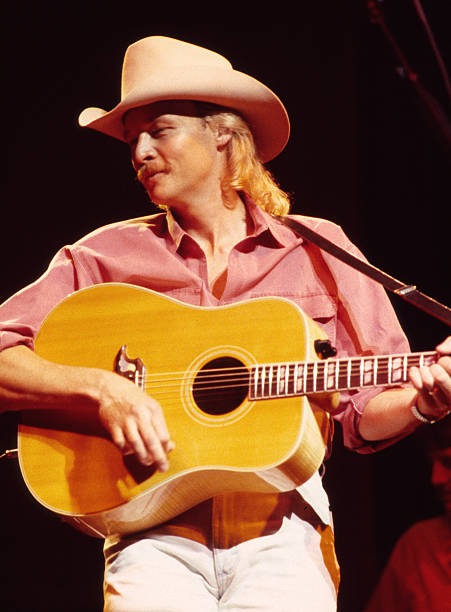
When Music Stopped Feeling Real: Why Alan Jackson’s Songs Still Matter
Introduction
There was a time when music felt grounded—less about spectacle, more about sincerity. Over the years, as production grew louder and trends shifted faster, many listeners began to feel a subtle disconnect. Songs became bigger, but not always deeper.
Yet somehow, the music of Alan Jackson continues to resonate across generations. Not because it chases attention, but because it never needed to. His songs remain present—not through constant promotion, but through quiet persistence: replayed in meaningful moments, rediscovered over time, and passed from one listener to another.
This raises an important question: what makes music feel “real,” and why does Alan Jackson’s catalog still carry that weight today?
A Brief Look at Alan Jackson’s Career
Before understanding his lasting impact, it helps to revisit the foundation of his career.
Alan Jackson emerged in the late 1980s and quickly became one of the defining voices of traditional country music. At a time when the genre was evolving, he stayed rooted in its core elements—storytelling, melody, and emotional honesty.
Key milestones:
- Over 60 million records sold worldwide (RIAA-certified)
- More than 50 Top 10 hits on the Billboard country charts
- Inducted into the Country Music Hall of Fame in 2017
- Known for timeless tracks like “Chattahoochee,” “Remember When,” and “Drive (For Daddy Gene)”
According to organizations like Billboard and the Country Music Hall of Fame, Jackson’s influence lies not just in his success, but in his consistency. He didn’t redefine country music—he preserved what made it meaningful.
Why Modern Music Sometimes Feels Less “Real”
To understand Jackson’s relevance, it’s worth acknowledging a broader shift in the music industry.
1. The Rise of Trend-Driven Production
Today’s music ecosystem moves quickly. Algorithms reward novelty, and artists often adapt their sound to stay visible. While this leads to innovation, it can also result in music that feels temporary—designed for the moment rather than longevity.
2. Overproduction and Emotional Distance
High-end production techniques can enhance a song, but they can also create distance. When every detail is polished, the rawness that connects listeners to the artist can fade.
3. Reduced Emphasis on Storytelling
Traditional country music was built on narrative. Many modern songs prioritize hooks and repetition over storytelling, which can make them easier to consume—but harder to remember.
This isn’t to say modern music lacks value. Rather, it highlights why artists like Alan Jackson stand out: they represent a different approach.
The Simplicity That Endures
One of the most consistent traits in Alan Jackson’s music is restraint.
He doesn’t overextend vocally. He doesn’t rely on dramatic arrangements. Instead, he allows the song itself to carry the meaning.
What makes this effective?
Clarity in Lyrics
Jackson’s songs are easy to understand—but not shallow. They focus on everyday experiences: family, memory, love, and loss. This clarity allows listeners to project their own experiences onto the music.
Consistent Musical Identity
Unlike artists who frequently reinvent their sound, Jackson has maintained a recognizable style. This consistency builds trust with listeners—they know what emotional space his music will occupy.
Emotional Honesty Without Excess
There’s no need to exaggerate emotion when it’s already present. Jackson’s delivery often feels conversational, which makes it more relatable.
Music That Evolves With the Listener
A key reason his songs remain relevant is their ability to change meaning over time.
A track like “Remember When” might feel nostalgic to one listener and reflective to another. Years later, that same listener might return to it and experience something entirely different.
This isn’t because the song changed—it’s because the listener did.
Why this matters:
- Songs become tied to personal milestones
- Emotional interpretations deepen with life experience
- Replay value increases over time
In this way, Jackson’s music doesn’t just exist—it grows alongside its audience.
Cultural Impact and Legacy
Alan Jackson’s influence extends beyond individual songs.
Preserving Traditional Country
During a period when country music was blending with pop and rock elements, Jackson remained committed to traditional sounds—steel guitar, fiddle, and narrative-driven songwriting.
Organizations like the Country Music Hall of Fame recognize him as a key figure in maintaining the genre’s identity.
Bridging Generations
His music appeals to both longtime country listeners and newer audiences. Younger listeners often discover his songs through family, playlists, or cultural references—rather than marketing campaigns.
Industry Recognition
- Multiple CMA and ACM Awards
- Grammy recognition
- Consistent chart performance over decades (Billboard)
These achievements reflect both critical and commercial respect—an important marker of long-term credibility.
Why His Music Keeps Coming Back
Alan Jackson’s songs don’t rely on visibility—they rely on relevance.
They return not because they are pushed, but because they fit.
- A memory triggers a melody
- A life moment matches a lyric
- A familiar voice brings clarity
This organic rediscovery is difficult to replicate in a system built on constant exposure.
The key difference:
Most songs try to stay present.
Jackson’s songs simply remain available—and that’s often enough.
Conclusion
When people say music doesn’t feel as “real” as it used to, they’re often describing a loss of connection—not quality.
Alan Jackson’s catalog reminds us that authenticity doesn’t require complexity. It requires clarity, consistency, and a willingness to let the music speak without excess.
His songs endure not because they resist change, but because they were never dependent on it.
And that may be the reason they still find their way back—quietly, but reliably—when listeners need them most.
SEO Title
Why Alan Jackson’s Music Still Feels Real in a Trend-Driven Industry
Meta Description
Discover why Alan Jackson’s timeless country music continues to resonate today, even as modern songs struggle to feel authentic and lasting.
Slug URL
alan-jackson-music-still-feels-real
Alternative Subheadings
- Why Simplicity in Music Still Matters Today
- The Lasting Power of Authentic Country Sound
- How Alan Jackson Built Music That Ages With You
Sources
- Billboard
- Recording Industry Association of America (RIAA)
- Country Music Hall of Fame
- Rolling Stone
- Official Alan Jackson Website