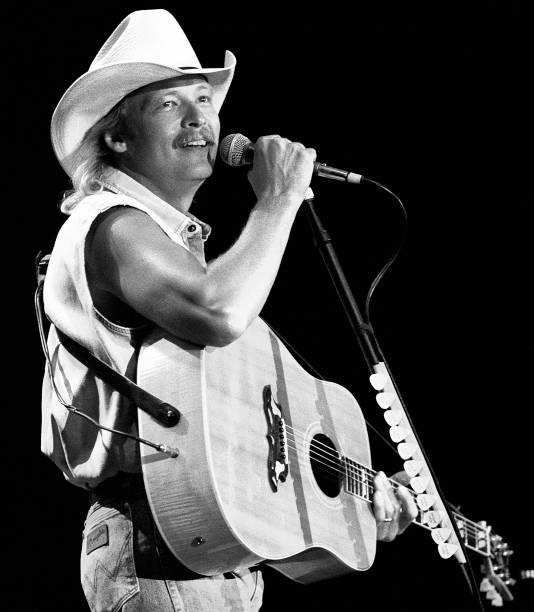
What If Alan Jackson Started His Career Today?
Introduction
Imagine a young artist walking into Nashville today with a demo tape full of traditional country songs—steel guitar, simple storytelling, and a voice that doesn’t try to follow trends. Would he stand out, or struggle to be heard in a landscape shaped by streaming algorithms and viral moments?
That question becomes especially interesting when applied to Alan Jackson, one of the defining figures of modern country music. His career, built on authenticity and consistency, raises a compelling thought experiment: if he were starting today, would the same qualities still lead to success?
A Brief Look at Alan Jackson’s Original Path
Before exploring the “what if,” it’s important to understand what made Alan Jackson’s real-world journey so impactful.
Born in Georgia in 1958, Jackson moved to Nashville in the mid-1980s and signed with Arista Nashville. His debut album Here in the Real World (1990) introduced a sound rooted in traditional country at a time when the genre was shifting.
Throughout the 1990s and early 2000s, Jackson became one of the most successful country artists of his era. According to organizations like RIAA, he has sold tens of millions of records, earning multiple platinum certifications. He also received recognition from institutions such as the Country Music Hall of Fame, solidifying his legacy.
His catalog includes hits like “Chattahoochee,” “Remember When,” and “Where Were You (When the World Stopped Turning),” each reflecting his signature storytelling style.
The Modern Music Landscape: A Different Playing Field
Streaming Over Radio
If Alan Jackson were starting today, one of the biggest differences would be how music reaches audiences. In his early career, radio airplay and label promotion were key. Today, platforms like Spotify and Apple Music dominate discovery.
Success is often tied to playlist placement and algorithmic recommendations. This system tends to favor frequent releases and immediate engagement—metrics that don’t always align with Jackson’s more deliberate, album-focused approach.
The Role of Social Media
Modern artists are expected to maintain a strong presence on platforms like TikTok, Instagram, and YouTube. Viral moments can launch careers overnight, but they also demand constant visibility.
Jackson’s public image has historically been understated. He rarely relied on flashy marketing or personal branding. In today’s environment, that low-key approach might make it harder to gain initial traction, even if the music itself resonates.
Would His Traditional Sound Still Work?
A Niche That Still Exists
While mainstream country has evolved—often blending pop and rock influences—there remains a dedicated audience for traditional sounds. Artists who lean into authenticity continue to find success, even if not always at the top of the charts.
Jackson’s style—clear narratives, relatable themes, and classic instrumentation—could still appeal to listeners seeking something more grounded. In fact, in an era of fast-changing trends, that consistency might even stand out more.
Competition and Differentiation
However, the challenge would be visibility. Today’s market is saturated, with thousands of songs uploaded daily. Standing out requires not just quality, but strategic positioning.
Jackson’s advantage would likely come from songwriting. His ability to tell stories with clarity and emotional restraint is a skill that remains rare and valuable.
Career Strategy: Then vs. Now
Label Support vs. Independent Routes
In the past, signing with a major label like Arista Nashville provided access to production, promotion, and distribution. Today, many artists build careers independently before partnering with labels.
If starting now, Jackson might initially release music independently, building a following through streaming and live performances. His steady, consistent output could help him grow organically over time.
Touring and Live Performance
Live music remains one of the most reliable ways for artists to build loyal audiences. Jackson’s music has always translated well to live settings, where storytelling and simplicity can create strong emotional connections.
Even in today’s digital-first industry, this could be a major strength.
Achievements in a Modern Context
If Alan Jackson were emerging today, his path to major awards and recognition might look different—but not impossible.
Organizations like Billboard and Rolling Stone still recognize artists who demonstrate longevity and artistic integrity. While chart-topping hits might be less frequent, sustained quality could still earn critical acclaim.
In the streaming era, success is often measured differently—monthly listeners, playlist reach, and engagement rates. Jackson’s catalog, known for long-term appeal, could perform well over time rather than through short bursts of popularity.
His Musical Identity: A Timeless Advantage
One of the most defining aspects of Alan Jackson’s career is his refusal to chase trends. He maintained a consistent sound even as the industry evolved around him.
If he started today, this same trait could serve as both a challenge and an advantage.
- Challenge: Slower initial growth in a trend-driven ecosystem
- Advantage: Stronger long-term identity and loyal fanbase
In many ways, modern audiences are increasingly drawn to authenticity. Listeners often seek artists who feel genuine rather than manufactured. Jackson’s approach aligns naturally with that demand.
Influence and Legacy—Would It Still Happen?
It’s unlikely that Alan Jackson would follow the exact same trajectory if he started today. The industry has changed too much for a direct comparison.
However, influence is not only about scale—it’s about impact.
Jackson helped define an era of country music by preserving its core elements during a time of transition. If he emerged today, his role might be similar: not necessarily dominating trends, but quietly shaping the direction of the genre.
Over time, artists who value storytelling and tradition could look to him as a reference point, just as many already do.
Conclusion
So, what if Alan Jackson started his career today?
He might not rise as quickly or dominate radio in the same way he once did. The modern industry demands visibility, adaptability, and constant engagement—areas that don’t naturally align with his style.
Yet, his strengths—authentic songwriting, consistency, and a clear musical identity—remain just as relevant as ever.
In a world driven by trends, those qualities may take longer to be recognized, but they often last longer too. And if history is any indication, longevity is where Alan Jackson has always stood apart.
SEO Title
What If Alan Jackson Started His Career Today? A Realistic Look at His Chances
Meta Description
Would Alan Jackson succeed in today’s music industry? Explore how his traditional style, career path, and legacy might translate in the modern streaming era.
Slug URL
what-if-alan-jackson-started-today
Alternative Headlines
- Could Alan Jackson Make It in Today’s Country Music Scene?
- Alan Jackson in the Streaming Era: Would He Still Succeed?
- How Alan Jackson’s Career Might Look If He Debuted Today
Sources
- Recording Industry Association of America (RIAA)
- Country Music Hall of Fame
- Billboard
- Rolling Stone
- Official artist discography and public biographies