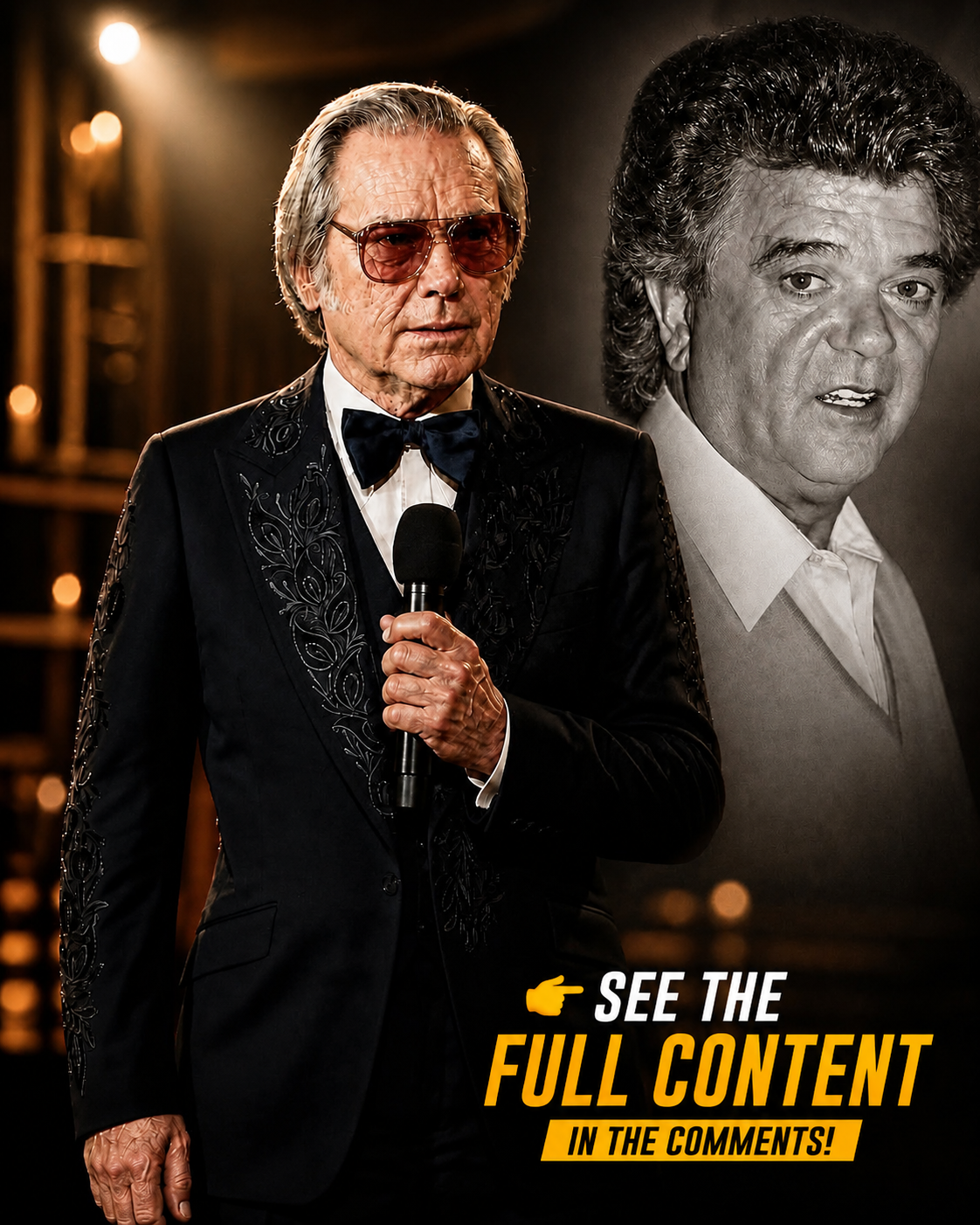
The Night George Jones Sang to an Empty Chair: A CMA Awards Tribute to Conway Twitty
Introduction
Some performances are remembered for their technical brilliance. Others are remembered because they captured a feeling that words alone could never explain. At the Country Music Association Awards following Conway Twitty’s passing, George Jones delivered one of those rare moments. What began as a tribute song became a heartfelt farewell, honoring not only a legendary artist but also a lifelong friend whose absence could be felt throughout the room.
A Friendship Built Beyond the Spotlight
George Jones and Conway Twitty shared a connection that went far deeper than the music industry. Their friendship was forged over decades of touring, performing, and experiencing the unique challenges that come with life on the road.
Neither man needed grand displays of loyalty to prove their bond. They understood each other through shared experiences, from crowded arenas to lonely hotel rooms after the applause had faded. Both knew the rewards of fame and the sacrifices that often accompanied it.
When Conway Twitty passed away unexpectedly in 1993 after becoming ill while touring, country music lost one of its most distinctive voices. Fans mourned the loss of a singer whose songs felt personal, intimate, and timeless.
Why George Jones Was Chosen
When the CMA Awards planned a tribute to Conway Twitty, the decision to have George Jones perform carried special meaning.
The choice was not simply about finding a singer capable of performing a Conway Twitty classic. It was about selecting someone who could communicate the emotion behind the music. George Jones possessed a rare ability to express sorrow with honesty and restraint, making him the perfect artist to honor his friend’s legacy.
The evening carried a different atmosphere from a typical awards show. Conversations were quieter, smiles were less certain, and everyone seemed aware that they were preparing to say goodbye to one of country music’s most beloved figures.
The Emotional Performance of “Hello Darlin’”
As George Jones stepped to the microphone and began singing “Hello Darlin’,” the audience immediately understood the significance of the moment.
The song had become inseparable from Conway Twitty. Its opening greeting, simple on the surface, had long carried an emotional weight that only Twitty seemed able to deliver. Rather than trying to imitate the original performance, George Jones approached the song with humility and respect.
A Voice Carrying Grief
The first verse unfolded gently, but listeners could hear the emotion beneath every line. There was no dramatic display or attempt to create a spectacle. Instead, Jones sang with the sincerity of a man honoring a friend he deeply respected.
As the performance continued, the mood in the room shifted. Applause disappeared. Conversations stopped. The audience became completely absorbed in the tribute.
For those few minutes, it felt as though Jones was singing not to the crowd, but directly to the memory of Conway Twitty.
Loretta Lynn Joins the Farewell
The tribute grew even more powerful when Loretta Lynn took the stage to perform “It’s Only Make Believe.”
Loretta Lynn and Conway Twitty had created some of country music’s most beloved duets, and her presence added another layer of emotion to the evening. Her performance reminded everyone that Twitty’s influence extended far beyond his recordings.
Music as a Final Goodbye
Neither George Jones nor Loretta Lynn needed lengthy speeches to explain what Conway Twitty meant to them. The songs carried the message more effectively than words ever could.
Their performances reflected genuine grief—not polished or rehearsed emotion, but the kind of sadness that reveals itself through quiet moments, trembling voices, and memories attached to every lyric.
A Tribute That Lasted Beyond One Night
The CMA Awards performance did not mark the end of George Jones’s tribute. Later, he recorded his own version of “Hello Darlin’,” further honoring the friend he had lost.
The recording served as more than a cover song. It became a lasting gesture of respect, preserving the emotional connection between two of country music’s greatest voices.
For George Jones, the song became a way of keeping Conway Twitty’s memory alive, allowing future listeners to hear not only the melody but also the friendship behind it.
Conclusion
The CMA Awards tribute to Conway Twitty remains one of country music’s most moving moments because it was built on authenticity. George Jones did not perform to impress an audience or earn praise. He performed to honor a friend.
That night demonstrated a truth that every great country artist understands: the stage is not always a place for celebration. Sometimes it becomes a place of remembrance. As George Jones stood beneath the lights singing “Hello Darlin’,” the absence of Conway Twitty felt as real as any performer on stage.
In the end, the most unforgettable duet of the evening was not between two singers. It was between one voice, one memory, and one empty chair.