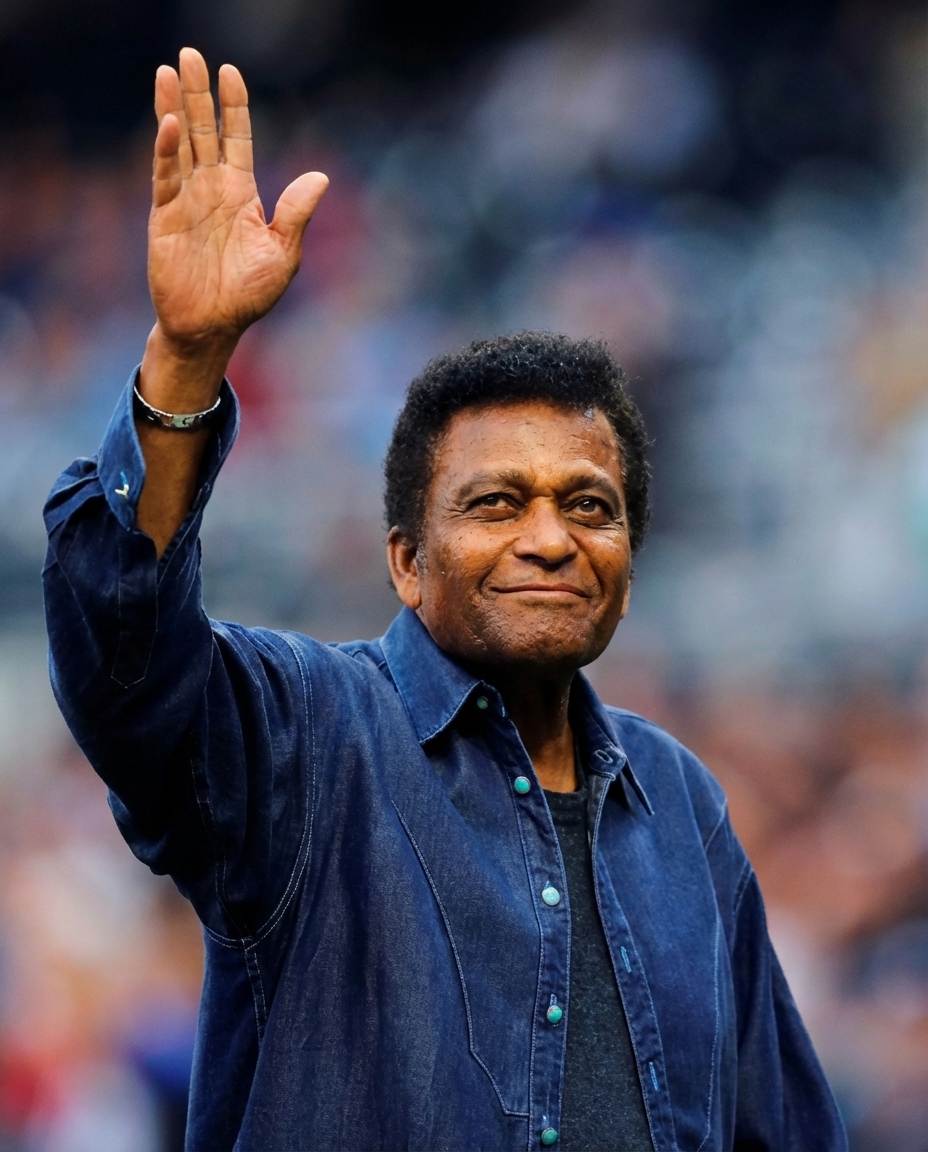
A Quiet Evening, a Loud Legacy
The hospital room was calm that evening. Outside, the world continued its relentless pace, but inside, Charley sat surrounded by the life he had built — a life soundtracked by country melodies, steel‑string guitars, and lyrics that seemed to speak straight to the heart. He had spent decades giving voice to the joys and sorrows of everyday people, yet in those final hours, one thought rose above all others: music is too important to disappear.
Friends close to Pride would later share that he spoke softly about how much the songs he’d sung meant to him — not as trophies or career highlights, but as bridges between human experiences. Even then, his mind turned not inward to his own struggle, but outward to the art he had devoted his life to preserving.
From Mississippi Farmfields to Global Stages
Born Charley Frank Pride on March 18, 1934, in Sledge, Mississippi, Pride’s early life was far from glamorous. One of 11 children raised by sharecroppers, he learned hard work from an early age and carried that ethic into everything he did — from handling tobacco fields to pursuing his first dream: baseball.
Before he ever picked up a guitar with professional intent, Charley pitched and played the outfield in the Negro American League with the Memphis Red Sox and later spent time in other minor leagues — living the classic dual‑life of a performer by night and laborer by day.
It wasn’t until the mid‑1960s that his musical gifts were discovered. After submitting his demo tapes, RCA Records head Chet Atkins signed him — but with one notable condition: the first singles were released without his photo so radio stations would judge his music on pure sound rather than racial identity.
Breaking Barriers — and Rewriting the Rules of Country Music
Once Pride’s identity became known, some stations initially resisted playing his songs. But listeners didn’t care — he was a voice that resonated. Over a three‑decade career, Pride scored more than 50 Top 10 hits, including fan favorites like “Kiss an Angel Good Mornin’” and “Is Anybody Goin’ to San Antone,” becoming one of country music’s most successful performers.
He transformed country music not with controversy, but with grace, humility, and authenticity — a style that cut across color lines and brought people together through stories, emotion, and raw musical talent.
Remembering What Truly Matters
Despite a career that earned Grammy nominations, CMA awards, and induction into the Grand Ole Opry and Country Music Hall of Fame, Pride never lost sight of what made music meaningful. In interviews, he often said that music was the greatest communicator on the planet, capable of dissolving fear, prejudice, and misunderstanding, and uniting people through shared emotion.
It’s fitting, then, that as the end of his life approached, Pride’s final thoughts weren’t about accolades or legacy — they were about continuation.
One of the most powerful moments in his last days was when Pride, despite his own suffering, emphasized to those close to him that his music should continue, not as relics of the past, but as living expressions of life’s moments, both big and small. His plea wasn’t dramatic or grand — just earnest, heartfelt, and deeply reflective of the philosophy that guided his life: music should always play on.
A Legacy That Still Sings
Charley Pride’s death rocked the country music world. Fans, musicians, and industry figures mourned the passing of a man who had defied expectations and remained humble to the end. Leaders from within and outside the music community praised his contributions and the warmth of his personality that made him beloved by millions.
His final public appearance came just a month before his passing at the 2020 Country Music Association Awards, where he was honored with the Willie Nelson Lifetime Achievement Award — a recognition that punctuated just how deeply his influence had shaped the genre.
But beyond awards, chart successes, and accolades, what remains is Pride’s true legacy: the richness of his voice woven into the soundtrack of people’s lives — songs played on porches, at weddings, in lonely cars driving home at night, and in quiet moments of reflection.
The Song Never Stops
In that quiet hospital room, as Charley Pride spoke his hopes for the music that meant so much to him, he was expressing something universal: music isn’t just entertainment. It’s memory, connection, comfort, and identity.
Pride wasn’t just hoping his songs would be remembered. He was hoping music itself would continue to be a source of understanding, healing, and joy long after the voices behind it fall silent.
And in that, he gave the world more than music — he gave us a reason to keep listening.