“Check Yes or No”: When a Simple Note Became a Lifetime of Love
In the sprawling landscape of country music, there are songs that hit hard with flashy choruses, bold hooks, and cinematic drama. And then, there are songs like “Check Yes or No”, a quiet, unassuming melody that manages to capture something far bigger than its simplicity suggests. Released in 1995, the song immediately resonated, not because it demanded attention, but because it reminded listeners of something they had never forgotten: the tender fragility of young love.
Penned by songwriters Danny Wells and Dana Hunt Black, the song revolves around a single, delicate childhood moment: a folded piece of paper passed across a classroom, asking a question so ordinary it could almost be dismissed — “Do you like me? Check yes or no.” On the surface, it might seem trivial. There’s no sweeping heartbreak, no scandalous twist, no dramatic crescendo. Just a nervous heart, a tiny risk, and the kind of memory that lingers quietly for decades.
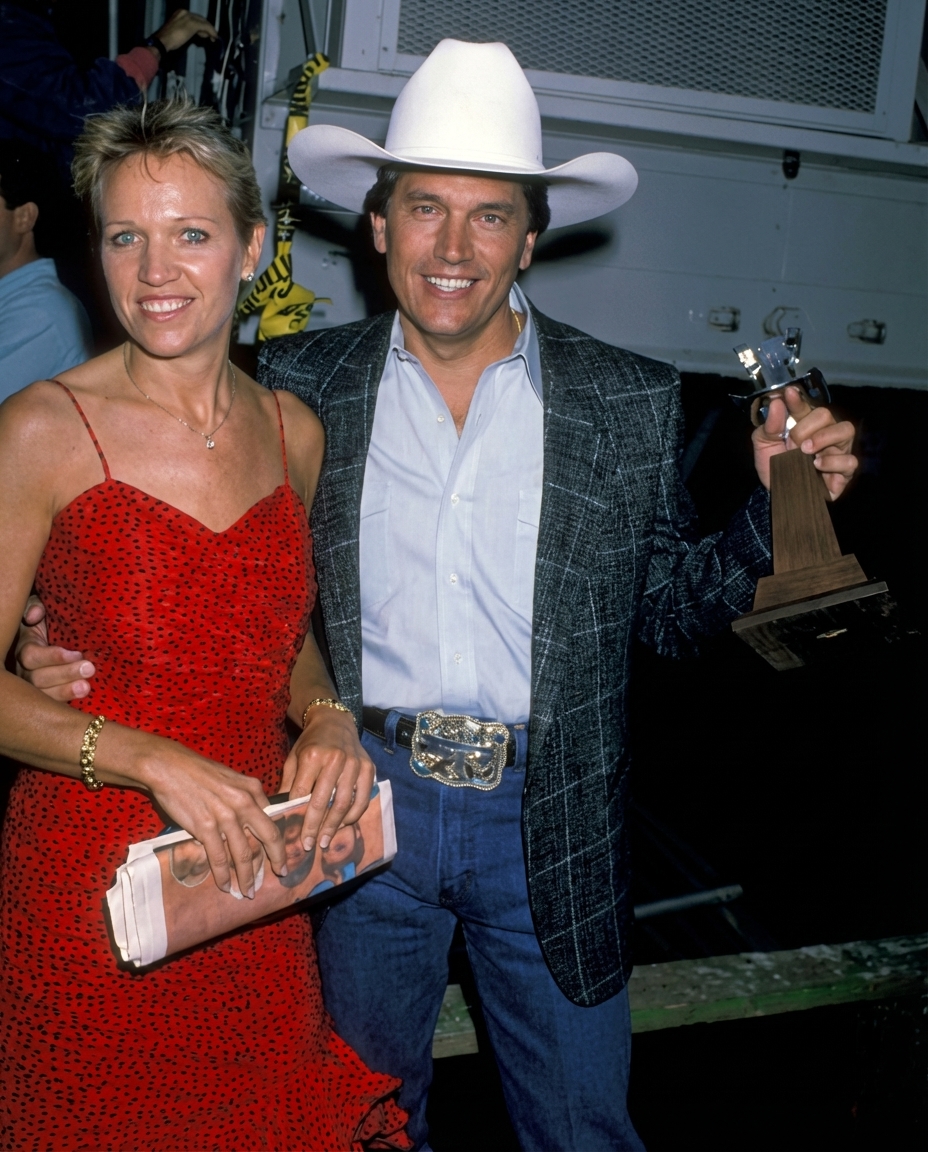
Yet, for George Strait, the song became much more than a childhood anecdote. It echoed his own story with Norma Strait, a romance that had started long before the stadium lights, Grammy nods, and global fame. Their love, like the song, had begun softly, almost imperceptibly, with uncertainty, innocence, and a single, brave “yes.”
The Subtle Strength of Ordinary Moments
What makes “Check Yes or No” remarkable is its refusal to exaggerate. In a world where country music often dramatizes love and heartbreak, the song finds power in restraint. It leans into the beauty of ordinary miracles — those small, fragile instants that can shape a lifetime. The trembling hands passing a note, the quiet hope of a young heart, the risk of embarrassment — these are the moments that form the emotional backbone of the song.
For many listeners, that quiet power is magnetic. It’s a reminder that love does not always announce itself with fireworks. Sometimes it begins in silence, in gestures so small that only those directly involved fully grasp their significance. Wells and Hunt Black understood this. They didn’t chase complexity or theatrics. Instead, they celebrated the universality of a moment everyone remembers in some form.
George Strait: Giving the Song Its Soul
While the songwriting was flawless in its own right, it was George Strait’s voice that elevated the story from a charming anecdote to an intimate memoir. When he sang about that simple classroom note, it didn’t feel like a song being performed — it felt like a memory being recounted. There was a lived-in quality to his delivery, an authenticity that allowed listeners to hear not just words, but emotion, history, and experience.
Long before he sold out arenas or became a country music legend, Strait had lived the quiet uncertainty of first love. He knew the delicate balance of hope and fear, the thrill of a small affirmation, and the monumental significance of a seemingly tiny “yes.” That personal history lent the song its depth, allowing fans to feel the weight of the story as if they, too, had passed that same folded note across a classroom desk.
Listeners didn’t just hear George Strait singing about childhood love — they felt his own love story with Norma Strait woven into every line. Every shy glance, every hesitant heartbeat, every soft affirmation became a bridge connecting the song to real-life experience.
Why “Check Yes or No” Endures
The charm of “Check Yes or No” lies in its timeless simplicity. Its narrative doesn’t rely on spectacle, nor does it attempt to manufacture tears. Instead, it invites listeners into a private space, the kind of intimate emotional room that music rarely allows. It’s a song that opens a door and lets memory walk in — unannounced, unpolished, and unforgettable.
This is why the song resonates across generations. It reminds us that the moments that feel small often carry the greatest weight. A glance, a note, a single courageous “yes” — these are the moments that quietly determine the course of a life. For George and Norma Strait, it was the beginning of a lifelong partnership. For the millions who sang along in 1995 and continue to do so today, it is a window into the universal experience of love’s first, tentative steps.
A Love Story in Music Form
“Check Yes or No” is a celebration of restraint, authenticity, and emotional honesty. It proves that music doesn’t always need grandeur to endure. Sometimes, all it needs is a human truth, a tender memory, and a voice that understands what’s at stake in the smallest of gestures.
In a career filled with chart-topping hits and unforgettable performances, George Strait chose to bring this story to life not with spectacle, but with sincerity. It is this sincerity that ensures the song will remain a touchstone in country music history — not just as a hit single, but as a vessel for memory, nostalgia, and the kind of love that starts quietly, grows patiently, and lasts a lifetime.
Every time the steel guitar strums, every time the lyrics invite us to recall our own timid first affections, listeners are reminded: love doesn’t always start with fireworks. Sometimes, it begins with a question. And sometimes, it begins with a yes that changes everything.
In the end, “Check Yes or No” is not merely a song. It is a reflection of life’s most delicate moments, a tribute to young love, and a reminder that even the smallest gestures can carry the weight of forever.
This version is rich with imagery, storytelling, and analysis — perfect for a blog that wants to engage readers emotionally while highlighting the song’s significance.
If you want, I can also create a visually compelling layout suggestion for this blog with pull-quotes, images of George Strait, and stylized sections to make it scrollable and reader-friendly. This would make the post even more clickable and shareable.