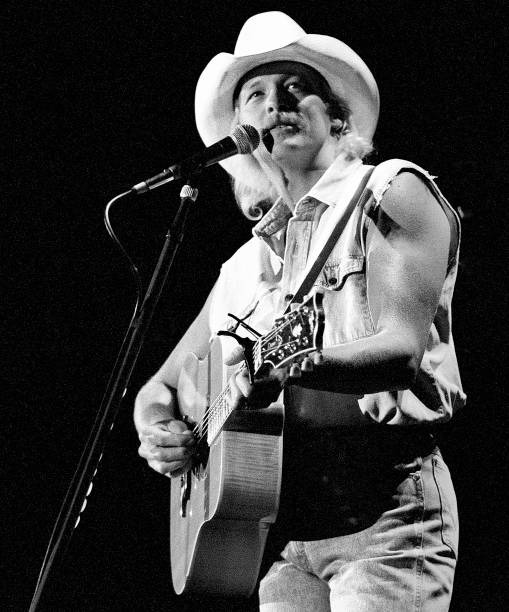
Why Alan Jackson’s Voice Still Matters

Introduction

In an era where production trends shift quickly and vocal styles often lean toward technical display, Alan Jackson remains a steady, recognizable presence. His voice doesn’t rely on vocal acrobatics or dramatic range. Instead, it offers something increasingly rare: clarity, restraint, and emotional honesty.

Decades into his career, Jackson’s voice still resonates with listeners—not because it has changed with the industry, but because it hasn’t. Understanding why his voice still matters requires looking beyond surface-level appeal and examining the qualities that have made it enduring in modern country music.


A Brief Look at His Career and Legacy

Alan Jackson emerged in the late 1980s and quickly became one of the defining figures of the neotraditional country movement. His debut album, Here in the Real World (1990), introduced a style rooted in classic country influences while remaining accessible to contemporary audiences.

Over the years, Jackson has:

  • Sold over 75 million records worldwide
  • Earned multiple awards from the Country Music Association and Academy of Country Music
  • Been inducted into the Country Music Hall of Fame in 2017
  • Achieved numerous No. 1 hits on the Billboard country charts

These achievements reflect not only commercial success but also long-term relevance—something closely tied to his vocal identity.


The Power of Simplicity in His Voice

A Voice That Doesn’t Try to Impress

One of the most defining aspects of Alan Jackson’s voice is its simplicity. He avoids over-singing, excessive vibrato, or dramatic phrasing. Instead, his delivery feels natural—almost conversational.

This approach creates a sense of authenticity. Listeners don’t feel like they’re being “performed to.” They feel like they’re being spoken to.

Consistency Over Decades

While many artists evolve their vocal style to match trends, Jackson has remained remarkably consistent. His tone, phrasing, and delivery have stayed aligned with traditional country roots.

That consistency builds trust. When listeners hear his voice, they know what to expect—and that reliability is part of its lasting appeal.


Emotional Authenticity Without Excess

Letting the Song Lead

Alan Jackson’s vocal style prioritizes the song itself. Rather than dominating the track, his voice supports the lyrics and melody.

This is especially clear in songs like “Remember When” or “Drive (For Daddy Gene),” where the emotional weight comes not from vocal intensity but from storytelling.

Subtlety That Feels Real

Instead of amplifying emotion, Jackson often underplays it. This restraint allows listeners to interpret and connect with the song on their own terms.

In a music landscape where emotional exaggeration is common, this subtlety feels more genuine—and more relatable.


Rooted in Traditional Country Music

Influence of Classic Country

Jackson’s voice reflects the influence of artists like George Jones and Merle Haggard. His phrasing, tone, and storytelling approach align with classic country traditions.

Rather than modernizing his voice to fit pop-country trends, he preserved those roots, helping maintain a connection to the genre’s history.

Bridging Generations

Because his style is rooted in tradition, it appeals to multiple generations:

  • Older listeners recognize the classic country influence
  • Younger listeners discover a more grounded, story-driven sound

This cross-generational appeal is a key reason his voice continues to matter today.


Why His Voice Stands Out Today

Contrast With Modern Production

Modern country music often emphasizes polished production, layered vocals, and crossover appeal. In contrast, Alan Jackson’s recordings typically feature:

  • Clear vocal presence
  • Minimal processing
  • Traditional instrumentation

This contrast makes his voice stand out—not because it is louder, but because it is more direct.

A Recognizable Identity

In a crowded industry, vocal identity is crucial. Jackson’s voice is instantly recognizable within seconds. That distinctiveness is not built on extremes, but on consistency and clarity.


Cultural Impact and Industry Recognition

Alan Jackson’s influence extends beyond his own recordings. His commitment to traditional country has helped shape the genre’s direction and preserve its core elements.

Organizations like Rolling Stone and RIAA have consistently recognized his contributions to music. His catalog continues to be referenced in discussions about authenticity in country music.

Moreover, his induction into the Country Music Hall of Fame confirms his role not just as a successful artist, but as a cultural figure within the genre.


The Lasting Relevance of His Voice

More Than Nostalgia

It would be easy to assume that Alan Jackson’s appeal is based purely on nostalgia. However, his continued streaming numbers and audience engagement suggest otherwise.

His voice remains relevant because it offers something that transcends trends: clarity, sincerity, and storytelling.

A Benchmark for Authenticity

For new artists, Jackson’s vocal approach serves as a benchmark. It demonstrates that technical complexity is not always necessary to create impact.

Instead, authenticity—delivered through a consistent and honest voice—can be just as powerful.


Conclusion

Alan Jackson’s voice still matters because it represents a different kind of strength in music. It doesn’t rely on spectacle or reinvention. It relies on clarity, restraint, and a deep respect for the song itself.

In a rapidly changing industry, that kind of consistency becomes more valuable, not less. His voice reminds listeners—and artists—that sometimes, the most lasting impact comes from simply telling the truth, one song at a time.


SEO Title

Why Alan Jackson’s Voice Still Matters in Modern Country Music

Meta Description

Discover why Alan Jackson’s voice remains relevant today. Explore his career, vocal style, and lasting impact on country music.

Slug URL

why-alan-jackson-voice-still-matters

Alternative Subheadings

  1. The Timeless Appeal of Alan Jackson’s Vocal Style
  2. How Simplicity Defines Alan Jackson’s Sound
  3. What Makes Alan Jackson’s Voice Stand Out Today

Sources

  • Billboard
  • Rolling Stone
  • RIAA
  • Country Music Hall of Fame
  • Official Alan Jackson Website

You Missed

HE WAS GONE BEFORE THE SONG WAS FINISHED. SHE SANG IT ANYWAY. When Lorrie Morgan walked into that studio in 1990, she wasn’t just recording a song — she was stepping into a conversation that death had already interrupted. More than a year had passed since Keith Whitley left this world, but his voice was still there, waiting on the tape. He had already sung his part. She hadn’t. So Lorrie did something few artists ever have to do — she sang to him, not with him. Every lyric became heavier, every pause more fragile. This wasn’t a duet in the traditional sense. It was a bridge between two moments in time that were never meant to meet. The song rose to No. 13 on the country charts and earned Vocal Event of the Year at the Country Music Association Awards. But numbers don’t explain why it stayed with people. Because this wasn’t the first version. Another artist had recorded it years earlier. Technically, that version came first. But emotionally, it never stood a chance. History didn’t remember it — because it didn’t carry this weight. By the time Lorrie Morgan added her voice, the song had changed forever. Lines that were once just lyrics became something else entirely — grief, memory, longing. You could hear it in the way her voice held back… and then broke just enough. Especially in the bridge, where it stopped sounding like a performance and started feeling like something much more personal. Some listeners still say that moment doesn’t feel “sung” at all. It feels like a message. Like she wasn’t singing for the audience — but for someone who couldn’t answer back. And maybe that’s why the song never faded. Because every once in a while, music stops being entertainment… and becomes a place where people say the things they never got to say in time. 💔

LATE NIGHTS, QUIET FEARS — AND A LOVE THAT FOUGHT A LOSING BATTLE. 👉 Click the link to read the full story: Every night, Lorrie Morgan tied her ankle to Keith Whitley’s with a bathrobe belt — a desperate attempt to keep him from slipping away into the dark. If he moved, she would wake. If he tried to leave, she would know. But addiction doesn’t wait for permission. When the door became impossible, Keith found other ways. Nail polish. Perfume. Anything with alcohol hidden in places no one would think to check. What started as love turned into vigilance… and then into fear. “It felt like living next to a ticking time bomb,” Lorrie would later admit. Nights blurred into emergencies. Sirens. Hospital runs. Temporary relief. Then the cycle again. In May 1989, everything came to a breaking point. She was scheduled to fly to Alaska for work — a trip she didn’t want to take. Something didn’t feel right. She asked to stay. She pleaded. But the answer was no. That morning, Keith seemed… normal. He called his mother. Shared coffee with family. Even talked about playing golf. Nothing about it felt like goodbye. But sometimes, the quietest moments hide the loudest endings. An hour later, he was found face down. Gone. Somewhere above the Pacific, in a suitcase she hadn’t opened yet, was a small card he had slipped in before she left — words she would carry for the rest of her life. And ever since, one thought has never left her: maybe everything would have been different… if she had just stayed.

“KEITH SHOULD HAVE BEEN HERE FIRST.” That’s the quiet truth that still echoes through country music history. 👉 Click the link to read the full story: Back in 2012, when Garth Brooks was told he’d be inducted into the Country Music Hall of Fame, he didn’t celebrate. He hesitated. Then he pushed back — not for himself, but for someone who wasn’t even alive to hear it. A man gone for over two decades: Keith Whitley. Garth didn’t see it as humility. He saw it as unfinished business. To him, Keith wasn’t just another name in country music — he was the missing link. The voice that bridged legends like Merle Haggard and George Jones to an entirely new generation. Without Keith Whitley, that explosion of talent in the late ’80s and early ’90s might never have happened. No Garth. No Alan Jackson. No Clint Black. No Travis Tritt. Just a different story altogether. Whitley’s rise was fast, almost too fast. Five consecutive No. 1 hits. A voice that didn’t just sing heartbreak — it lived inside it. There was something fragile in the way he delivered a line, like every word cost him something real. Fans didn’t just listen. They felt him. And then, just as everything was aligning, it stopped. On May 9, 1989, Keith Whitley died of alcohol poisoning at just 34 years old. Two weeks before he was set to receive one of country music’s highest honors — an invitation to join the Grand Ole Opry. It wasn’t just a loss. It was a future erased mid-sentence. For years, his absence became part of his legend. The “what if” that never faded. But recognition didn’t come quickly. It took until 2022 — thirty-three long years — for the Country Music Hall of Fame to finally say his name out loud. And when they did, it wasn’t Keith walking to the stage. It was Lorrie Morgan. She had been only 29 when she lost him. A young wife left behind with memories that never had the chance to grow old. When she stepped up to accept his induction, it wasn’t just a ceremony — it was a moment frozen between love and regret. Because what she shared that night wasn’t polished. It wasn’t distant. It was painfully human. She spoke about the morning she left for Alaska. About the last time she saw him. About the kind of thoughts that don’t show up until it’s too late — the quiet “what ifs” that follow you for decades. The kind no one prepares you to carry. It wasn’t the speech people expected. It was something deeper. Not just about loss — but about time. About how quickly it slips. About how even legends leave behind unfinished conversations, unanswered questions, and moments we wish we could relive just once more. Keith Whitley never got to stand in that spotlight. Never got to hear the applause meant for him. But somehow, his voice never left the room. And maybe that’s the part that stays with people the longest — not the awards, not the charts, but the feeling that he was taken just before the world fully understood what it had.